CM Chandrababu Orders 48-Hr Power Restore Plan for Cyclone Murasu
Synopsis
Chief Minister Chandrababu Naidu has ordered Andhra Pradesh's electricity department to restore power within 48 hours of Cyclone Murasu's impact, citing lessons from the Arnab cyclone and projections of 6,000–8,000 electricity poles being damaged.
Key Takeaways
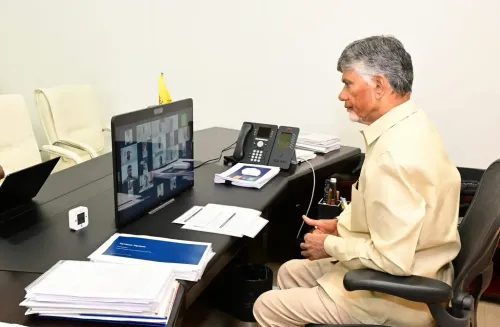
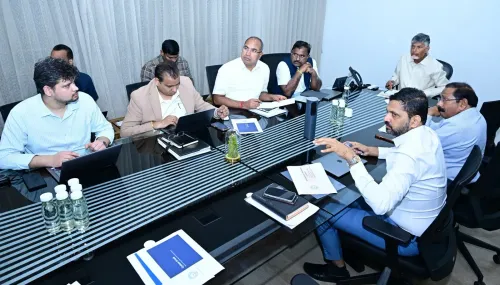
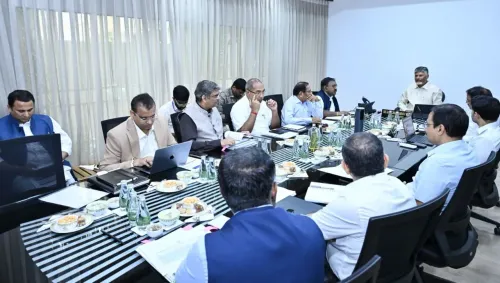
CM Nara Chandrababu Naidu chaired a pre-cyclone review meeting on November 1, 2026 ahead of Cyclone Murasu .
Officials project 6,000 to 8,000 electricity poles could be damaged by the cyclone.
The CM set a strict 48-hour deadline to restore power supply after infrastructure damage.
The review explicitly drew on experience from Arnab cyclone relief and rehabilitation operations.
Special Chief Secretary Sri Vijayanand and CMDs of power distribution companies attended the meeting.
Andhra Pradesh's 1,000-km Bay of Bengal coastline makes cyclone preparedness a standing governance priority.
With Cyclone Murasu bearing down on Andhra Pradesh's coastline, Chief Minister Nara Chandrababu Naidu has ordered state officials to draw on every lesson learned from the Arnab cyclone relief operations — and be ready for something potentially bigger. The electricity department, he warned on Sunday, November 1, 2026, must be the most battle-hardened unit in the room.
The 48-Hour Power Restoration Mandate
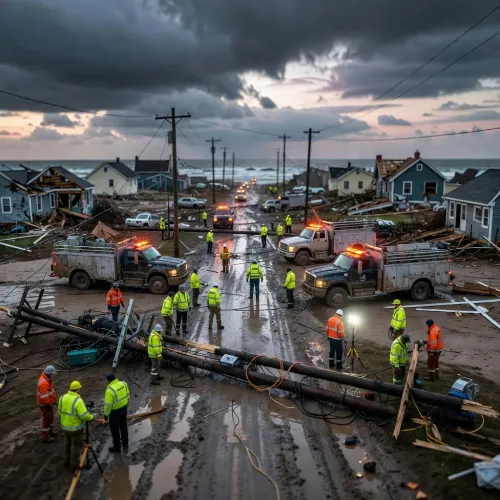
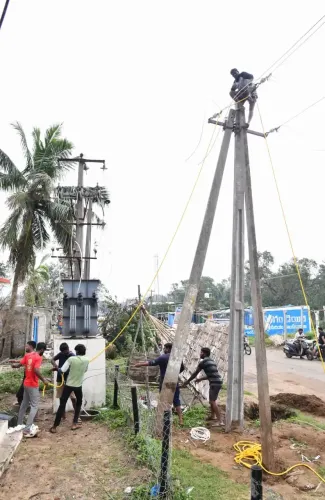
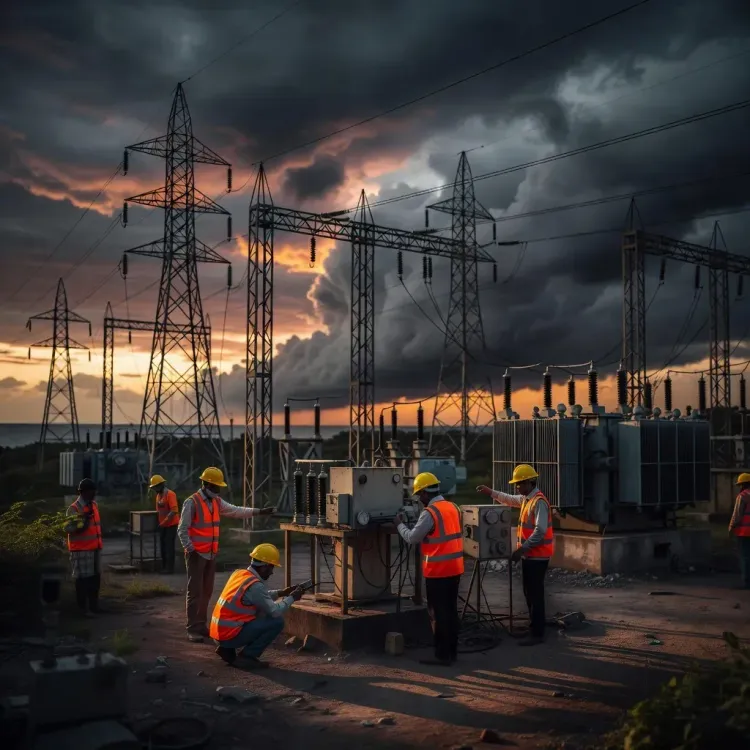
At the heart of CM Naidu's directive is a hard deadline: once the grid takes a hit, crews must restore power supply within 48 hours. Officials at the review meeting projected that Cyclone Murasu could damage anywhere between 6,000 and 8,000 electricity poles — a scale that would cause severe disruptions to supply across affected districts. The CM made clear that this number is not a surprise but a planning figure, and preparation must match it.
'The electricity department must be ready to face any situation,' Naidu directed, signalling that post-storm delay in power restoration — a chronic sore point in past disaster responses — would not be tolerated this time. Special Chief Secretary of the Electricity Department, Sri Vijayanand, along with CMDs of the power distribution companies and other senior officials, attended the review meeting.
Arnab's Shadow: Learning From the Last Cyclone
The explicit reference to the Arnab cyclone relief and rehabilitation experience is telling. Andhra Pradesh has long used past storms as institutional classrooms — after Cyclone Hudhud in 2014, the state developed enhanced protocols for coastal power infrastructure, embedding 48-to-72-hour restoration targets into its disaster management playbook. Murasu is, in effect, a test of how much those lessons have stuck.
Andhra Pradesh's roughly 1,000-kilometre Bay of Bengal coastline makes cyclonic exposure a near-annual reality, not an exception. Successive governments have treated electricity restoration speed as the single most visible metric of disaster response competence — because it directly determines whether hospitals run, water pumps work, and communication systems stay alive in the hours after landfall.
What the Review Meeting Signals
Holding a high-level review before the cyclone makes landfall — rather than scrambling after — reflects a governance posture that officials have been trying to institutionalise since Hudhud's devastation. Having the electricity department's top leadership in the room alongside the Chief Minister sends a message down the chain: no department gets to call this a surprise.
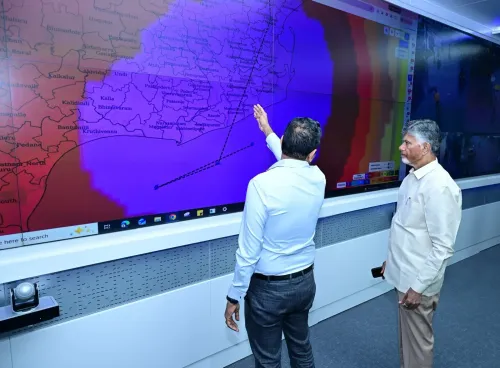
The India Meteorological Department's official track updates for Murasu will be the next critical data point, and any divergence between the projected 6,000–8,000 pole damage estimate and actual ground figures post-storm will be a rigorous test of the state's modelling and preparation systems.
For millions of coastal Andhra residents, the next 48 hours after landfall won't just be about shelter — they'll be counting the hours until the lights come back on. The Chief Minister has already told his team what number he expects on the clock.
Point of View
One his government has chosen to define on its own terms. The 48-hour benchmark echoes the post-Hudhud protocols that Andhra Pradesh built into its disaster playbook over a decade ago, suggesting institutional memory is being actively leveraged rather than reinvented. By placing the electricity department at the centre of the review — not just revenue or NDRF units — the CM is signalling that citizen welfare metrics, specifically 'time without power', will be the headline by which this cyclone response is judged. This posture is also a quiet rebuke of the slower, reactive responses that defined earlier administrations during coastal emergencies.
NationPress
2 Nov 2026
Frequently Asked Questions
What is Cyclone Murasu and where is it expected to hit?
Cyclone Murasu is an approaching cyclonic storm in the Bay of Bengal that is expected to impact Andhra Pradesh's coastline. Official track details are being monitored by the India Meteorological Department.
How many electricity poles could Cyclone Murasu damage in Andhra Pradesh?
Officials have estimated that Cyclone Murasu could damage between 6,000 and 8,000 electricity poles , causing severe disruptions to power supply across affected areas.
What is the government's target for restoring electricity after Cyclone Murasu?
Chief Minister Chandrababu Naidu has directed the electricity department to restore power supply within 48 hours of any infrastructure damage caused by the cyclone.
What was the Arnab cyclone and why is it relevant to Murasu preparations?
The Arnab cyclone was a previous cyclonic event that impacted Andhra Pradesh. CM Naidu has directed officials to apply the relief and rehabilitation lessons learned from that experience while preparing for Cyclone Murasu.
Who attended the Cyclone Murasu review meeting with CM Chandrababu Naidu?
The meeting was attended by Special Chief Secretary of the Electricity Department Sri Vijayanand , the CMDs of power distribution companies, and other senior government officials.