Transforming Agriculture: Doda Farmers Gain Insight at Horticulture Workshop
Synopsis
Farmers in Doda, J&K, are experiencing a transformative shift through a two-day horticulture awareness workshop. With expert insights and practical sessions, they are embracing sustainable practices to enhance productivity and profitability.
Key Takeaways
Empowerment: Local farmers are gaining crucial insights into sustainable agriculture.
Government Support: Significant subsidies are available to enhance farming practices.
Climate-Smart Practices: Workshops are educating farmers on modern techniques.
Community Engagement: The event fostered a sense of community among farmers.
Pathway to Prosperity: Agriculture is evolving into a profitable venture for many.
Doda (Jammu & Kashmir), March 23 (NationPress) Nestled in the serene hills of Doda, where terraced fields thrive on the mountainsides and the seasonal rhythms govern daily life, a significant transformation was unfolding.
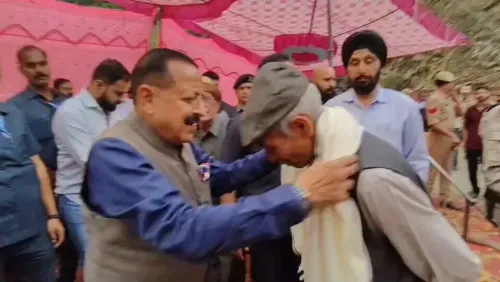
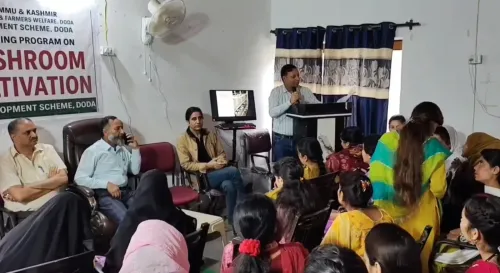
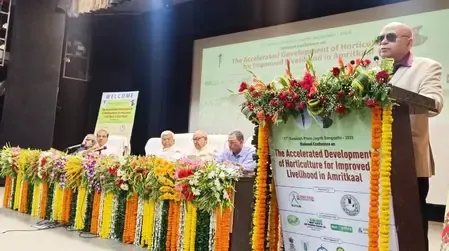
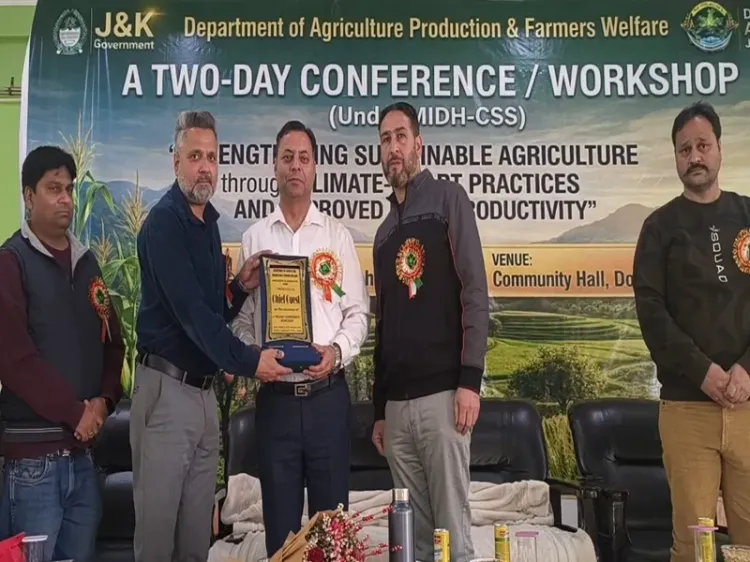
At the Community Hall, farmers from all corners of the district convened for a two-day workshop organized by the Department of Agricultural Production and Farmers' Welfare, under the auspices of the Mission for Integrated Development of Horticulture.
The focus of the event, “Enhancing Sustainable Agriculture through Climate-Smart Techniques and Higher Farm Productivity,” resonated throughout the hall.
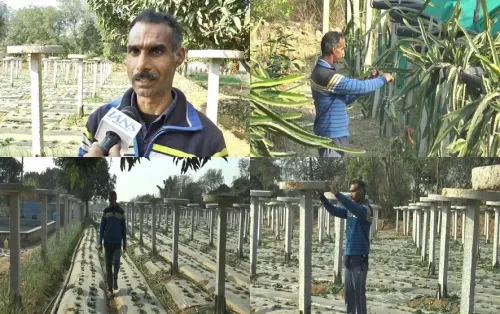
Among the participants was Basharat Ali Malik, a farmer who embarked on his agricultural journey in 2006. Malik attentively absorbed the insights shared by experts on various subjects, including subsidies, polyhouses, and contemporary farming methods.
He voiced his experiences, stating: "I make between Rs 5 lakh and 6 lakh every year from my agricultural pursuits. These initiatives have truly altered our situation. We are no longer just surviving; we are thriving."
The atmosphere was charged with enthusiasm. For many younger farmers, Basharat served as a testament to the potential of agriculture to be both sustainable and financially rewarding when modernized and supported.
On stage, Mushroom Development Officer Susheel Rattan Sharma addressed the assembly.
His tone was steady, yet his message was compelling. “Our mission is straightforward,” he asserted. “Every farmer in Doda should gain from these initiatives—whether they stem from the Central Government or the Union Territory. Everyone deserves a chance.”
He elaborated on the ongoing efforts to enroll farmers under the MIDH, which provides up to a 60% subsidy—rising to 90% in Himalayan regions—for projects such as nurseries, plantation expansion, and post-harvest management. For a region like Doda, where geographical constraints often limit opportunities, such assistance is transformative.
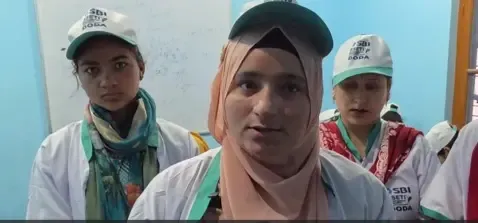
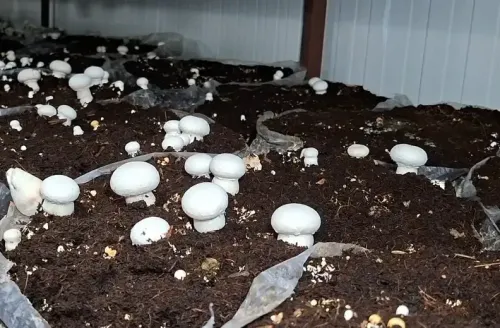
Farmers received training on the cultivation of fruits, vegetables, mushrooms, spices, and flowers during the sessions.
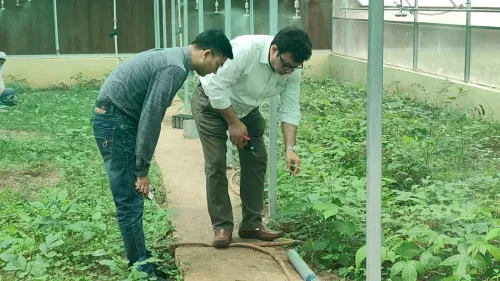
Discussions centered around climate-smart practices, efficient irrigation, and enhanced productivity methods. What once seemed daunting now appeared achievable. The benefit of the workshop was that attending farmers acquired substantial knowledge about innovative cultivation techniques.
At the conclusion of the workshop, participants departed not merely with brochures and data, but with a revitalized sense of purpose. In Doda, agriculture was evolving beyond a mere livelihood; it was paving the way toward prosperity.
Point of View
The workshop represents an essential step towards empowering farmers in Doda, emphasizing the importance of sustainable agricultural practices. The commitment to support local farmers through government initiatives is commendable, fostering a brighter future for the agricultural sector in this region.
NationPress
23 Sept 2026
Frequently Asked Questions
What was the purpose of the workshop?
The workshop aimed to empower farmers in Doda through awareness of sustainable agricultural practices and government support initiatives.
Who organized the conference-workshop?
The Department of Agricultural Production and Farmers' Welfare organized the workshop under the Mission for Integrated Development of Horticulture.
What topics were covered during the sessions?
Topics included subsidies, polyhouses, modern cultivation techniques, climate-smart practices, and efficient irrigation methods.
What financial support is available for farmers?
Farmers can benefit from up to a 60% subsidy for projects under the MIDH scheme, which can increase to 90% in Himalayan regions.
How did attendees react to the workshop?
Farmers left the workshop inspired and motivated, equipped with new knowledge and a renewed sense of purpose in their agricultural endeavors.