UMEED SHGs in J&K border villages lift women's income to ₹20,000 a month
Synopsis
Women in Self-Help Groups along J&K's India-Pakistan border are now earning nearly ₹20,000 a month each under the UMEED scheme — a figure that would have been difficult to imagine before 2019. Their accounts point to a quiet economic shift in one of India's most sensitive border belts, driven by spice production, local goods, and expanded access to central welfare schemes post-Article 370 revocation.
Key Takeaways
Women in UMEED SHGs along J&K's India-Pakistan border now earn nearly ₹20,000 per month each.
Around ten women are currently enrolled, with the group's combined annual income reportedly running into lakhs of rupees .
Key businesses include production of spices and chilli products , supported by the 'Vocal for Local' initiative.
Beneficiary Sushma said access to the Ladli Scheme became possible only after the abrogation of Articles 370 and 35A in 2019 .
Women are now participating in workshops and exhibitions , with more eager to join the programme.
Women associated with UMEED Self-Help Groups (SHGs) in Jammu and Kashmir's border villages along the India-Pakistan International Border are reporting a marked rise in earnings, with each member now earning nearly ₹20,000 per month, according to beneficiaries. The transformation, they say, has accelerated since the revocation of Article 370 on 5 August 2019, which integrated Jammu and Kashmir more closely with the rest of India.
What UMEED Is Doing on the Ground
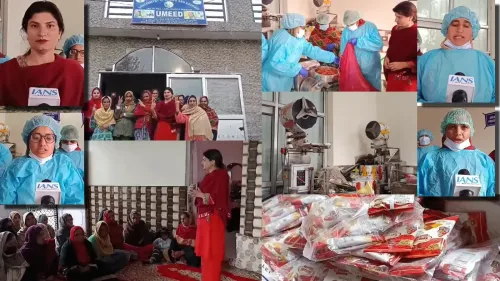
The UMEED scheme, operating under the Jammu and Kashmir Rural Livelihood Mission, provides financial support and livelihood training to women in rural areas. Around ten women are currently associated with the SHGs in the border belt, engaged in businesses such as production of spices, chilli products, and other locally-made goods. The group's combined annual income has reportedly touched figures in lakhs of rupees.
Beneficiaries say that for the past three years, the scale of their operations has grown considerably. They attribute part of this growth to Prime Minister Narendra Modi's 'Vocal for Local' initiative, which has expanded the market for their products.
A Beneficiary's Account
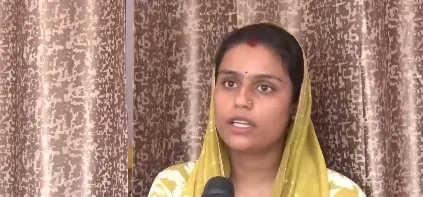
Sushma, one of the programme's beneficiaries, said the real turning point in her life came after 5 August 2019. Before the abrogation of Articles 370 and 35A, she had sought to avail benefits under the Ladli Scheme for her daughter's future but was unable to access them. Following the constitutional changes, she was able to receive those benefits — something she described as a direct outcome of the policy shift.
Sushma also noted that residents of border areas now report a greater sense of freedom and security compared to years past, though the challenges of living in a border zone remain.
Participation and Outreach Growing
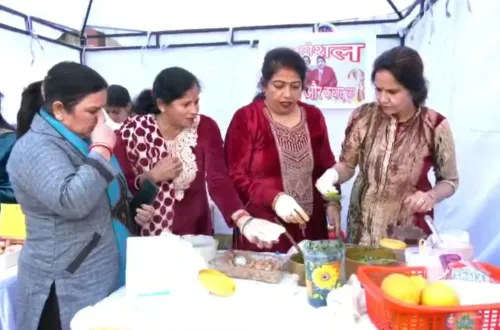
Other beneficiaries echoed similar sentiments, saying the scheme has enabled them to support their families and achieve greater financial independence. Several women are now participating in workshops and exhibitions, bringing regional visibility to their locally-produced goods.
Beneficiaries added that more women have joined the initiative since it expanded, and that several others are eager to enrol. The programme's reach in border villages is seen as part of a broader push to bring welfare schemes to areas that were previously underserved.
Broader Context
The UMEED scheme's reported gains in Jammu and Kashmir come as the Union Territory continues its post-reorganisation integration. Schemes that were previously inaccessible to residents — including those tied to central government welfare programmes — have been extended following the 2019 constitutional changes. The SHG model, long used across other Indian states to drive rural women's economic participation, is now being scaled in J&K with similar objectives.
How the programme performs over the next few years — particularly in sustaining income levels and expanding membership in remote border villages — will be a key measure of its long-term impact.
Point of View
But a group of ten women earning ₹20,000 each in a single cluster is a data point, not a trend — and the article does not provide district-wide or UT-level figures to contextualise scale. The conflation of scheme benefits with the Article 370 narrative is worth noting: welfare access and constitutional change are related but distinct variables, and attributing income gains solely to the 2019 revocation risks obscuring the independent role of the SHG model, which has delivered results in other states without any such political event. The real question is whether UMEED's J&K rollout has the administrative depth to reach the most remote border villages at scale, not just the ones accessible to outreach visits.
NationPress
19 Sept 2026
Frequently Asked Questions
What is the UMEED scheme in Jammu and Kashmir?
The UMEED scheme is a livelihood support programme under the Jammu and Kashmir Rural Livelihood Mission that helps women in rural areas form Self-Help Groups, access credit, and build income-generating businesses. It mirrors SHG models used across other Indian states to drive women's economic participation.
How much are UMEED SHG members earning in J&K border villages?
According to beneficiaries, each member of the UMEED SHGs in border villages is currently earning nearly ₹20,000 per month, with the group's combined annual income reportedly running into lakhs of rupees.
What businesses are the SHG women running?
The women are primarily engaged in production of spices, chilli products, and other locally-made goods. Their products are being promoted under Prime Minister Narendra Modi's 'Vocal for Local' initiative.
How has the revocation of Article 370 affected these women?
Beneficiaries say the 2019 revocation of Articles 370 and 35A expanded their access to central government welfare schemes that were previously unavailable in J&K. One beneficiary, Sushma, said she was able to access the Ladli Scheme for her daughter only after the constitutional changes.
Are more women joining the UMEED programme in J&K?
Yes, according to beneficiaries, several more women have joined the initiative since it expanded, and others are reportedly eager to enrol. Participation in workshops and exhibitions has also grown.