MP CM Yadav: SHGs clock ₹1,000 Cr in farm, dairy business
Synopsis
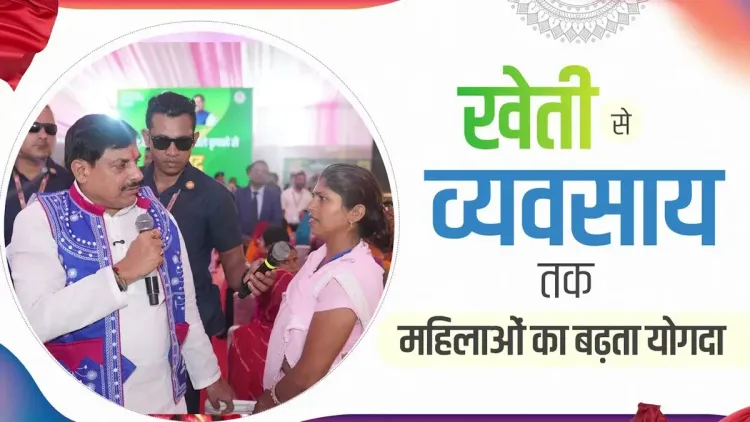
Madhya Pradesh CM Dr. Mohan Yadav announced that over 11,900 women-led self-help groups have generated nearly ₹1,000 crore in business through vegetable cultivation, organic farming, and dairy production, linking more than 1.56 lakh families to livelihood and social security.
Key Takeaways
Mohan Yadav announced on 31 July 2026 that MP's women SHGs have generated nearly ₹1,000 crore in business.
More than 11,900 self-help groups are active across the state, operating in vegetable cultivation, organic farming, and dairy production.
Over 1.56 lakh families are connected to livelihood and social security through the SHG network.
The initiative operates under the DAY-NRLM framework, India's flagship rural livelihoods mission launched in 2011.
Madhya Pradesh has specifically promoted organic farming and dairy value chains to diversify SHG incomes beyond rain-dependent single crops.
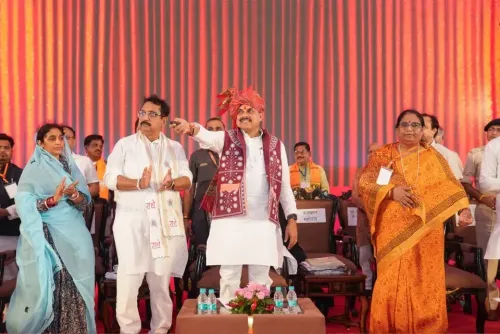
Nearly 1.56 lakh families in Madhya Pradesh are no longer waiting on a single harvest or a single wage — they are running businesses. Chief Minister Dr. Mohan Yadav, speaking on Friday, 31 July 2026, credited the state's women-led self-help groups with generating close to ₹1,000 crore in combined business through vegetable cultivation, organic farming, and dairy production.
11,900 groups, one economic shift
The numbers are striking. More than 11,900 self-help groups (SHGs) are currently active across the state, each one a micro-enterprise woven into the rural economy. CM Yadav, tagging the Ministry of Panchayat and Rural Development, framed the achievement as a 'new example of economic empowerment' — aarthik sashaktikaran ka naya udaharan — set by the 'sisters of Madhya Pradesh's self-help groups.'
Three sectors are doing the heavy lifting: vegetable production, organic farming, and milk production. Each represents a deliberate diversification away from rain-dependent single-crop dependence — the chronic vulnerability of central India's agrarian belt.
From NRLM to ₹1,000 crore: the policy engine behind the number
This did not happen overnight. The backbone is the Deendayal Antyodaya Yojana – National Rural Livelihoods Mission (DAY-NRLM), launched in 2011, which systematically scaled SHGs across states by linking women's collectives to formal credit, skilling, and market access. Madhya Pradesh has layered its own push on top — specifically promoting organic farming and dairy value chains to give SHG members income streams that survive monsoon failure.
The model is not unique to MP, but the scale being claimed here is. Across India, SHGs have formed the spine of rural poverty alleviation since the 1990s. What shifts when they cross a ₹1,000 crore threshold in a single state is the narrative: these are no longer welfare recipients. They are market participants.
What 1.56 lakh families gaining livelihood security actually means
The 1 lakh 56 thousand families figure is the human denominator behind the headline number. Each family connected to an SHG gains not just income but what CM Yadav specifically called aajivika evam samajik suraksha — 'livelihood and social security.' That pairing matters: SHG membership typically comes with group savings, micro-insurance access, and a peer network that functions as an informal safety net.
For Dr. Mohan Yadav, who has made rural women's empowerment a visible plank since taking charge in December 2023, the announcement consolidates a political and policy narrative heading into the next phase of state governance. The integration of SHG output with agriculture marketing reforms — something state legislators are expected to examine in upcoming sessions — will determine whether this ₹1,000 crore becomes a floor or a ceiling.
The sisters of Madhya Pradesh's villages did not just grow vegetables. They grew an economy — and the state is now watching to see how far it can scale.
Point of View
000 crore SHG business figure, if sustained, marks a qualitative shift in how Madhya Pradesh positions rural women — from beneficiaries of welfare schemes to drivers of agricultural commerce. For CM Yadav, the announcement reinforces a BJP governance narrative that links women's empowerment to measurable economic output rather than entitlement spending. The DAY-NRLM framework gives the state a credible policy spine, but the real test lies ahead: whether SHG produce can access formal markets and command fair prices, or whether the turnover remains locked in informal, low-margin local trade. Upcoming legislative scrutiny of SHG credit linkages and agri-marketing integration will reveal how deep the structural change actually runs.
NationPress
15 Sept 2026
Frequently Asked Questions
What is the total business done by self-help groups in Madhya Pradesh?
According to CM Dr. Mohan Yadav's statement on 31 July 2026, women-led self-help groups in Madhya Pradesh have conducted nearly ₹1,000 crore in business through vegetable production, organic farming, and dairy activities.
How many self-help groups are active in Madhya Pradesh?
More than 11,900 self-help groups are currently active in Madhya Pradesh, as stated by Chief Minister Dr. Mohan Yadav.
How many families benefit from SHGs in Madhya Pradesh?
Over 1 lakh 56 thousand (156,000) families are connected to livelihood and social security through the active self-help group network in Madhya Pradesh.
What government scheme supports self-help groups in India?
The Deendayal Antyodaya Yojana – National Rural Livelihoods Mission (DAY-NRLM), launched in 2011, is the central government programme that scales self-help groups by linking women's collectives to credit, skilling, and market access across states including Madhya Pradesh.
What sectors are MP's self-help groups working in?
Madhya Pradesh's women-led SHGs are primarily active in vegetable cultivation, organic farming, and milk (dairy) production, according to CM Yadav's 31 July 2026 statement.