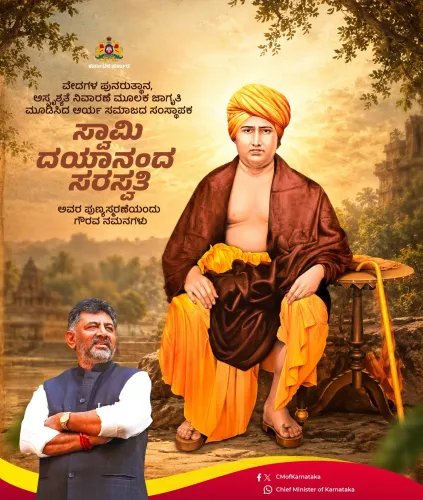
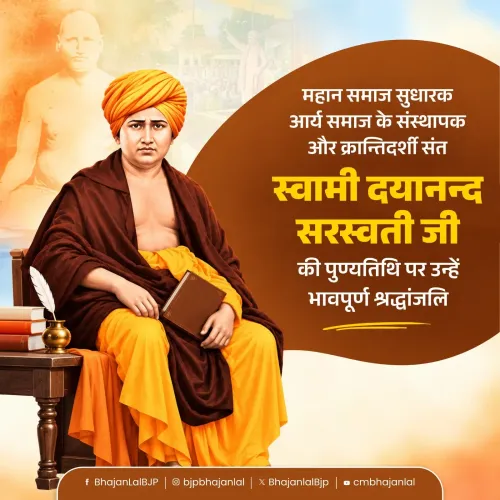
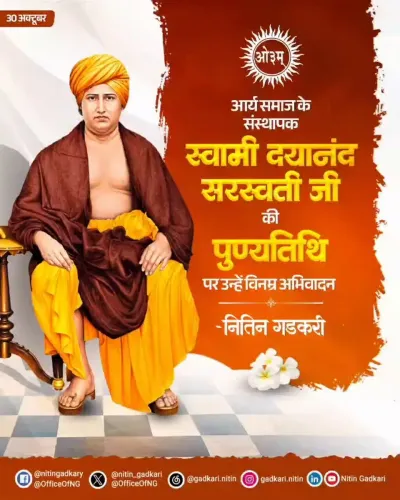
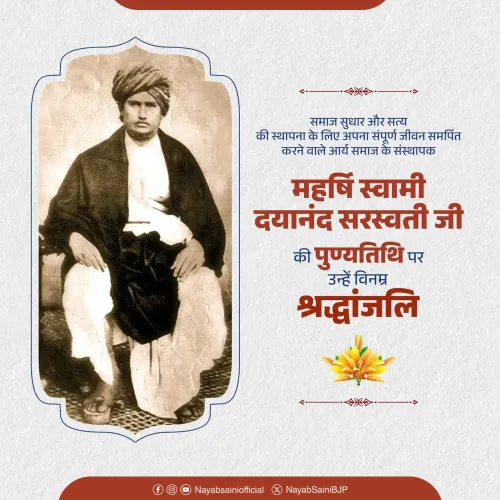
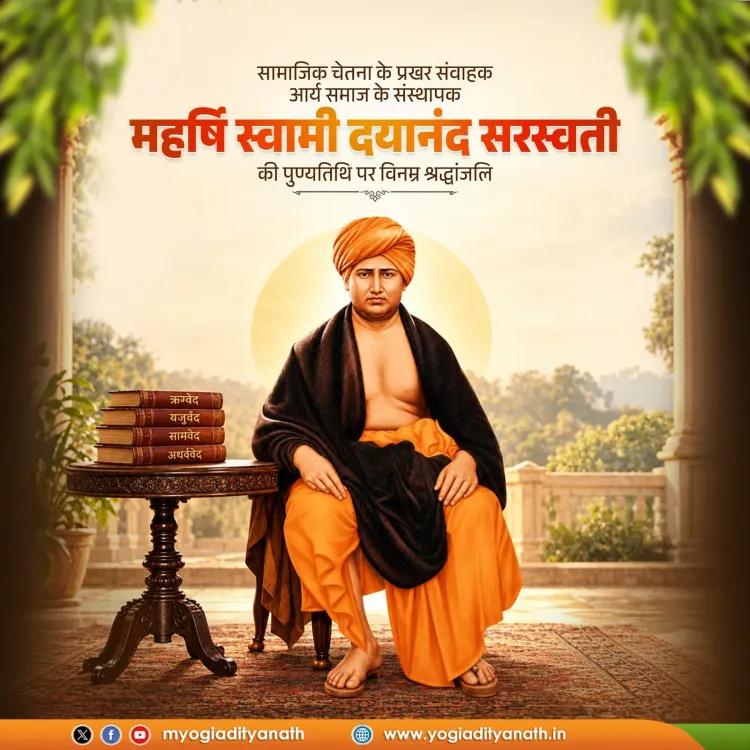
CM Yogi pays tribute to Arya Samaj founder Dayanand Saraswati
Synopsis
UP CM Yogi Adityanath honoured Arya Samaj founder Maharshi Swami Dayanand Saraswati on his death anniversary, praising his teachings against ignorance, social evils and caste discrimination as a timeless guide to social awakening and truth-centred values.
Key Takeaways
CM Yogi Adityanath posted a tribute to Maharshi Swami Dayanand Saraswati on 30 October 2026 , his death anniversary.
Dayanand Saraswati founded the Arya Samaj in 1875 , championing Vedic monotheism and opposing idol worship, untouchability and caste discrimination.
CM Yogi described him as a 'blazing bearer of social consciousness' whose teachings address the eradication of ignorance and social evils.
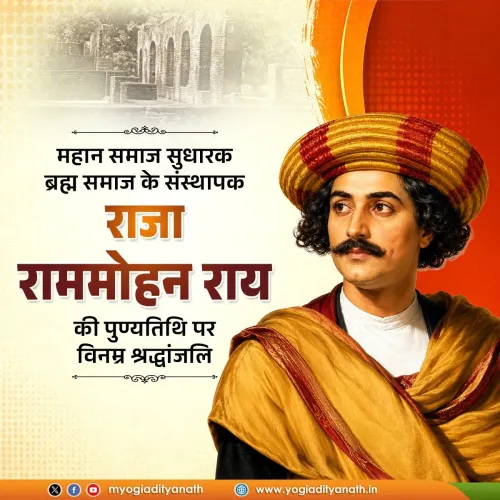
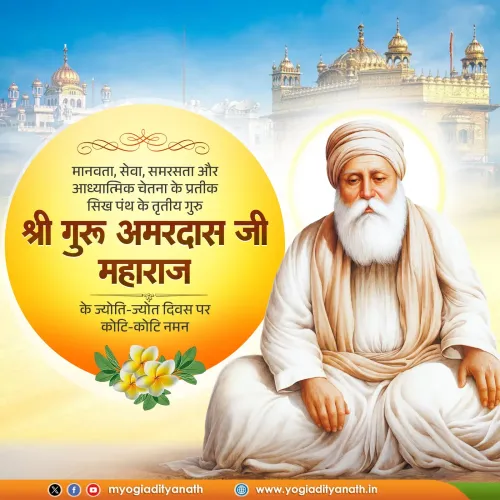
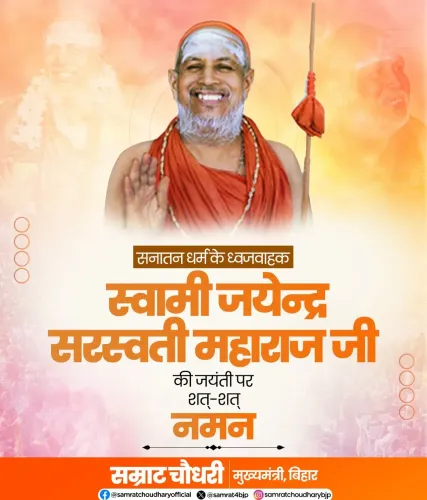
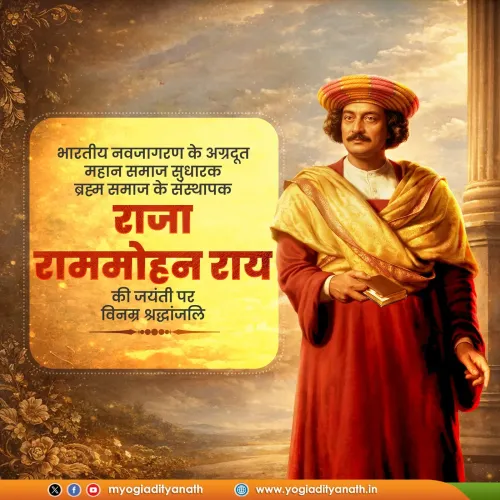
The tribute aligns with BJP leaders' practice of honouring 19th-century social reformers to underscore themes of cultural awakening.
As head of the Gorakhnath Math , Yogi Adityanath frequently connects religious and social reform legacies with governance messaging.
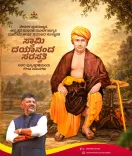
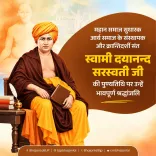
On the death anniversary of one of modern India's most consequential reformers, Uttar Pradesh Chief Minister Yogi Adityanath on Friday, 30 October 2026 offered homage to Maharshi Swami Dayanand Saraswati, the 19th-century visionary who shook the foundations of social orthodoxy and gave birth to the Arya Samaj movement.
In his post, CM Yogi described Dayanand Saraswati as a 'saamaajik chetna ke prakhar samvaahak' — 'a blazing bearer of social consciousness' — paying tribute to a reformer whose teachings, he wrote, 'pave the way for the eradication of ignorance, ostentation and social evils while establishing awakening, harmony and truth-centred values in society.'
The reformer who challenged an era
Maharshi Swami Dayanand Saraswati founded the Arya Samaj in 1875, building a movement rooted in Vedic monotheism and a fierce rejection of idol worship, untouchability, and the caste hierarchy that structured 19th-century Indian society. His clarion call — Back to the Vedas — was as much a social manifesto as a spiritual one, positioning education and reason as tools of liberation for ordinary Indians.
The Arya Samaj went on to become one of the most influential reform organisations in colonial India, shaping debates on caste, gender, and religious practice that continue to reverberate today. Dayanand's death anniversary falls on 30 October, observed each year by Arya Samaj followers and public figures across India.
Reform legacies and BJP's political memory
As head of the Gorakhnath Math in Gorakhpur — itself a centre of the Nath tradition of social egalitarianism — CM Yogi has consistently drawn on the legacy of reformers who challenged orthodoxy from within Hindu tradition. BJP leaders regularly mark the anniversaries of 19th-century social reformers, weaving themes of cultural awakening and Vedic values into contemporary political messaging.
The tribute to Dayanand Saraswati fits that pattern: a solemn acknowledgement of a reformer whose opposition to superstition and caste discrimination carries resonance for a party that frames governance as a continuation of civilisational renewal.
Point of View
The Gorakhnath Math's own tradition of social egalitarianism gives these tributes a degree of institutional authenticity beyond routine political messaging. The emphasis on 'eradication of social evils' and 'harmony' also serves a dual purpose: honouring a historical legacy while projecting a governance philosophy for Uttar Pradesh's religiously and socially diverse electorate.
NationPress
30 Oct 2026
Frequently Asked Questions
Who was Maharshi Swami Dayanand Saraswati?
Maharshi Swami Dayanand Saraswati was a 19th-century Hindu reformer who founded the Arya Samaj in 1875. He advocated Vedic monotheism, opposed idol worship, caste discrimination and superstitions, and is regarded as a seminal figure in India's social reform movement.
When is Dayanand Saraswati's death anniversary observed?
Dayanand Saraswati's death anniversary, known as his punyatithi, is observed on 30 October each year. It is marked by Arya Samaj followers and public figures across India.
What is the Arya Samaj?
The Arya Samaj is a Hindu reform movement founded by Dayanand Saraswati in 1875. It promotes monotheism, Vedic education, and the eradication of untouchability and superstitions, and has had a significant influence on Indian social and political thought.
Why did CM Yogi Adityanath pay tribute to Dayanand Saraswati?
CM Yogi Adityanath paid tribute on Dayanand Saraswati's death anniversary, praising his teachings for combating ignorance and social evils. BJP leaders regularly honour 19th-century reformers to connect themes of cultural awakening and Vedic values with contemporary governance.
What is the Gorakhnath Math and its connection to social reform?
The Gorakhnath Math in Gorakhpur is a religious institution of the Nath tradition, headed by Yogi Adityanath. The Nath tradition has a historical association with social egalitarianism, which informs Adityanath's frequent references to reform legacies in his public messaging.