CM Majhi Calls Out Congress Over 'Selective' ECI Criticism
Synopsis
Odisha Chief Minister Mohan Charan Majhi accused Congress of hypocrisy on November 3, 2026, arguing the party questions the Election Commission's credibility only when electoral outcomes disappoint it, and called for consistent respect for constitutional institutions.
Key Takeaways
Odisha CM Mohan Charan Majhi posted on November 3, 2026 accusing Congress of 'selective outrage' against the Election Commission of India .
He argued that questioning institutional credibility based on electoral outcomes undermines democracy.
The BJP has led Odisha's first-ever BJP government since June 2024 , giving Majhi a fresh electoral mandate to cite.
The Supreme Court in 2023 directed a committee including the Prime Minister, Leader of Opposition, and Chief Justice to advise on Election Commissioner appointments — later amended by Parliament.
Opposition criticism of the ECI over EVMs and voter list discrepancies has been a recurring pattern after the 2019 and 2024 Lok Sabha elections .
The statement was paired with a full editorial authored by Majhi, signalling a sustained political argument rather than a one-off remark.
A pointed political broadside landed on Tuesday, November 3, 2026, when Odisha Chief Minister Mohan Charan Majhi publicly accused the Congress party of hypocrisy on the Election Commission of India (ECI) — arguing that the principal opposition questions democratic institutions only when election results do not go its way.
The Charge: Selective Outrage, Constitutional Double Standards
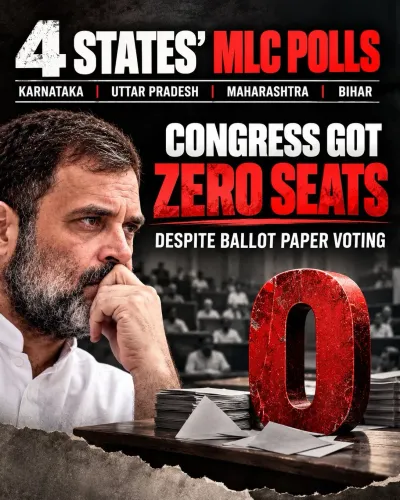
Majhi's post was unambiguous in its framing. 'The Congress party's selective outrage over the Election Commission exposes a clear contradiction,' he wrote, adding that while the party questions the electoral process, it must simultaneously 'recognise the constitutional autonomy of institutions and respect democratic mandates.' The closing line carried the sharpest edge: 'Institutions deserve respect, not credibility judged by political convenience.'
The statement was accompanied by a link to an editorial authored by Majhi, articulating the argument at length. The BJP's Odisha chief minister rarely misses an opportunity to frame the national opposition debate in constitutional terms — and this post squarely places the ECI's independence at the centre of that contest.
A Pattern Older Than the Current Dispute
The broader backdrop is well-established. Indian opposition parties, including Congress, have periodically raised concerns about the ECI's credibility after electoral defeats — flagging issues ranging from Electronic Voting Machines (EVMs) to voter list discrepancies. The ruling dispensation, meanwhile, has consistently invoked institutional independence as a rebuttal. This cycle intensified sharply after the 2019 and 2024 Lok Sabha elections.
The ECI's appointment process itself became a flashpoint in 2023, when the Supreme Court directed that a committee comprising the Prime Minister, the Leader of the Opposition, and the Chief Justice of India should advise on Election Commissioner appointments — a ruling that Parliament subsequently amended through legislation. That legislative move drew fresh criticism from opposition benches, keeping institutional trust as a live fault-line in Indian politics.
Why Majhi's Voice Carries Weight Here
Majhi leads the first-ever BJP government in Odisha, having assumed office in June 2024 after the party ended nearly two decades of Biju Janata Dal rule in the state. His positioning — as a regional leader defending central institutions against a national opposition — fits a well-worn BJP communications template but carries local credibility given his government's electoral freshness. He is speaking from the winning side of a democratic mandate, and he knows it.
The combative editorial framing signals that this is less a one-day post and more the opening of a sustained argument: that accepting democratic outcomes and respecting constitutional bodies are two sides of the same coin. For Congress, the challenge is to respond without appearing to validate the charge — a needle that has proved difficult to thread before.
Point of View
Thereby delegitimising the complaint before it can gain traction. The timing — in the wake of the Supreme Court's contentious 2023 ruling and the Parliament's subsequent amendment to Election Commissioner appointments — means this debate carries real constitutional weight, not just partisan noise. For Congress, the bind is genuine: engaging on the merits risks normalising the 'selective acceptance' framing, while silence reads as concession. The longer this argument runs, the more it shifts public discourse from 'is the ECI independent?' to 'is the opposition consistent?' — a terrain far more comfortable for the ruling party.
NationPress
3 Nov 2026
Frequently Asked Questions
Why is Odisha CM Mohan Majhi criticising Congress over the Election Commission?
Majhi accused Congress of challenging the Election Commission's credibility selectively — only after electoral defeats — while ignoring the body's constitutional autonomy when outcomes favour the party.
What is the Election Commission of India's constitutional status?
The Election Commission of India is an independent constitutional body established under Article 324 of the Indian Constitution, responsible for administering elections to Parliament and state legislatures.
What did the Supreme Court rule about Election Commissioner appointments in 2023?
In 2023, the Supreme Court directed that a committee comprising the Prime Minister, the Leader of the Opposition, and the Chief Justice of India should advise on Election Commissioner appointments. Parliament later passed legislation that altered this composition.
Has Congress raised ECI credibility concerns before?
Yes, Congress and other opposition parties have periodically questioned the ECI's functioning after electoral losses, citing concerns about EVMs and voter roll discrepancies, particularly after the 2019 and 2024 Lok Sabha elections.
When did Mohan Charan Majhi become Odisha Chief Minister?
Mohan Charan Majhi became Chief Minister of Odisha in June 2024, heading the first BJP government in the state's history.