Dr. Jitendra Singh flags new Seismological Observatory in Kishtwar
Synopsis
Union Minister Dr. Jitendra Singh acknowledged the Ministry of Earth Sciences for establishing a seismological observatory in Kishtwar, J&K, strengthening real-time earthquake monitoring and disaster preparedness across the seismically active Himalayan district and the erstwhile Doda region.
Key Takeaways
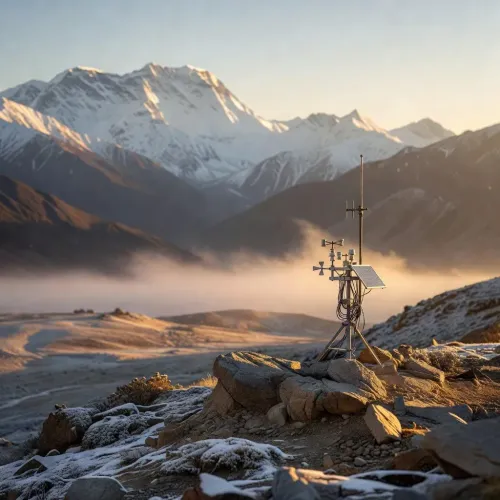
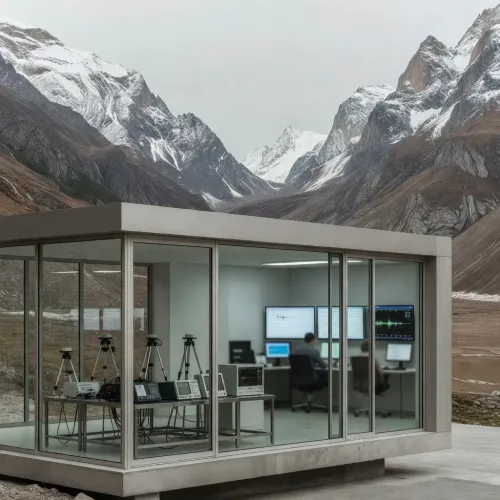
The Ministry of Earth Sciences has established a Seismological Observatory at Kishtwar , Jammu and Kashmir.
The station strengthens seismic monitoring for both Kishtwar district and the areas of the erstwhile Doda district .
J&K Leader of Opposition Sunil Sharma publicly acknowledged the ministry's efforts, prompting Dr.
The observatory is part of incremental upgrades to India's National Seismological Network in the Himalayan high-risk belt, accelerated after the 2005 Kashmir earthquake .
Singh, an elected MP and native of the region, described the development as a 'humble contribution' to the safety of local residents under PM Narendra Modi's leadership.
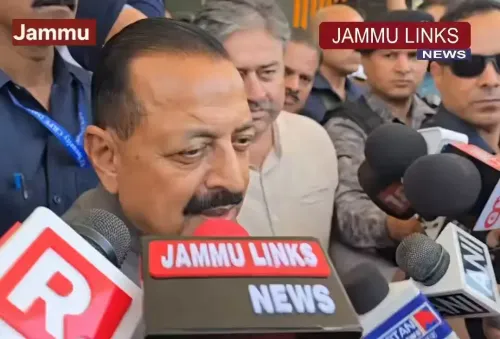
A seismological observatory in one of Jammu and Kashmir's most earthquake-prone corners — that is what Union Science and Technology Minister Dr. Jitendra Singh spotlighted on Tuesday, 3 November 2026, thanking Leader of Opposition in the J&K Legislative Assembly Sunil Sharma for publicly acknowledging the Ministry of Earth Sciences (MoES) achievement.
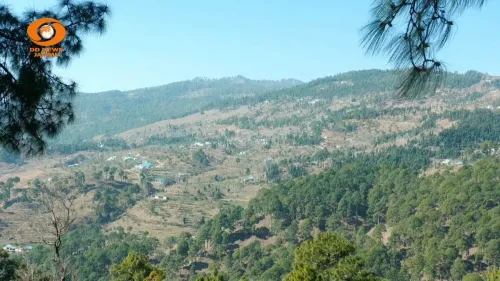
Kishtwar, nestled deep in the Himalayan belt, sits inside one of the subcontinent's most seismically restless zones. Its elevation, terrain, and proximity to active fault lines make real-time monitoring not a bureaucratic checkbox but a matter of lives. The new observatory directly addresses that vulnerability, extending seismic watch over both Kishtwar district and the areas of the erstwhile Doda district — a region that has historically had limited scientific infrastructure for ground-motion detection.
Why Kishtwar sits at the top of India's seismic risk map
The Himalayan arc running through Jammu and Kashmir has produced some of South Asia's deadliest earthquakes. After the catastrophic 2005 Kashmir earthquake, the Ministry of Earth Sciences began expanding India's National Seismological Network with additional stations in the mountain belt. The Kishtwar observatory fits squarely within that long-running upgrade — a station designed to feed real-time data into state and national early-warning pipelines under the National Disaster Management framework. Better data means faster alerts. Faster alerts mean fewer casualties.The LoP's acknowledgement and what it signals
What makes this moment noteworthy beyond the infrastructure itself is its political texture. Sunil Sharma, as Leader of Opposition in the J&K Assembly, crossed the partisan line to credit a central ministry's work in his own region. Dr. Singh, himself an elected MP and, by his own account, a native of this region, framed the gratitude in personal terms — calling it a 'divine opportunity to make a humble contribution in seeking the safety and well-being of the people among whom I grew up.' He credited the expansion to the broader infrastructure push under Prime Minister Narendra Modi.What the observatory means for Kishtwar and Doda residents
For the roughly quarter-million people across the Kishtwar and former Doda belt, the practical benefit is tangible: a closer monitoring node means faster and more accurate detection of local tremors that a distant station might catch only weakly. That data feeds district administration, the State Disaster Response Force, and national agencies — compressing the window between a seismic event and a coordinated ground response. The next question the region will be watching is whether this single station becomes the anchor of a wider sensor grid across J&K's under-monitored high-altitude districts.Point of View
Publicly tying the project to both his ministerial portfolio and his personal roots in Kishtwar-Doda is a calculated move to anchor a central government achievement within a regional identity narrative. The watch item now is whether the station catalyses a broader sensor grid in J&K's high-altitude, under-monitored districts.
NationPress
3 Nov 2026
Frequently Asked Questions
What is the new Seismological Observatory at Kishtwar?
It is a Ministry of Earth Sciences monitoring station established in Kishtwar district, Jammu and Kashmir, designed to detect and record ground motion in real time to strengthen earthquake early-warning and disaster preparedness in the area.
Why is Kishtwar considered seismically high-risk?
Kishtwar lies within the Himalayan seismic belt, one of the most tectonically active zones in South Asia, making it vulnerable to significant ground shaking from both local and regional earthquakes.
What did J&K LoP Sunil Sharma say about the observatory?
Sunil Sharma, Leader of Opposition in the J&K Legislative Assembly, acknowledged the Ministry of Earth Sciences' efforts in establishing the observatory — a public cross-party recognition that prompted Union Minister Dr. Jitendra Singh's response on X.
How does the Kishtwar observatory fit India's broader seismic network?
It is part of ongoing upgrades to India's National Seismological Network in the Himalayan region, a process that gained momentum after the 2005 Kashmir earthquake, aimed at improving real-time data collection for national and state disaster management agencies.
What areas does the Kishtwar observatory cover?
According to Dr. Singh, the station strengthens seismic monitoring across Kishtwar district and the areas of the erstwhile Doda district, a broader footprint that historically had limited ground-motion monitoring infrastructure.