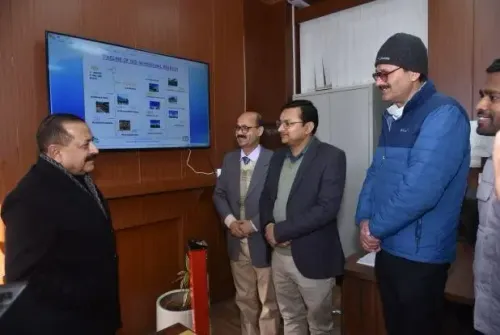
Dr. Jitendra Singh Highlights IMD Initiatives in Jammu
Synopsis
Union Minister Dr. Jitendra Singh highlighted the India Meteorological Department's work in Jammu on June 6, 2026, drawing attention to the region's expanding meteorological infrastructure and its role in early-warning systems for flash floods and extreme weather in the Himalayan belt.
Key Takeaways
Union Science and Technology Minister Dr.
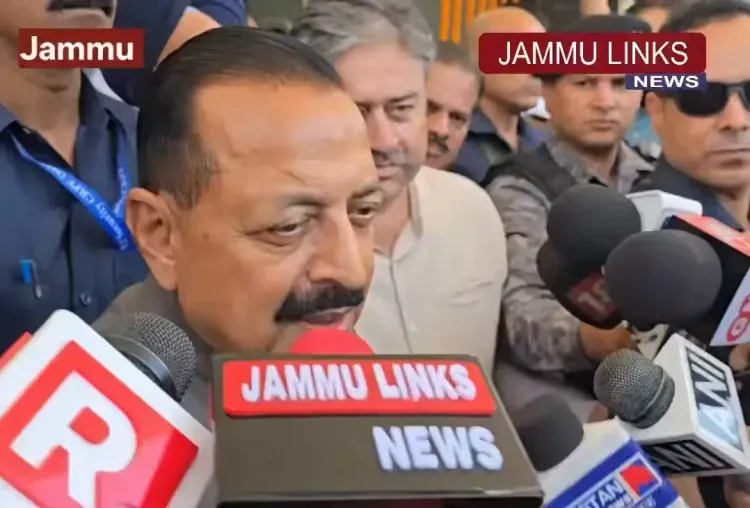
Jitendra Singh posted about IMD and Jammu on June 6, 2026 , sharing a video on X.
The India Meteorological Department has been expanding its observational network in Jammu and Kashmir through Doppler radars and automatic weather stations.
Jammu's Himalayan foothills geography makes robust meteorological coverage critical for flash flood, avalanche, and extreme-weather early warnings.
Post- 2019 reorganisation , the central government has accelerated integration of earth-observation data with disaster management frameworks in the Union Territory.
Residents, farmers, and tourism operators in Jammu and Kashmir are the primary beneficiaries of improved IMD infrastructure.
A dedicated regional IMD centre in Jammu and integration with the National Framework for Climate Services are among the developments being tracked.
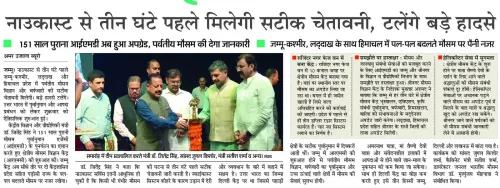
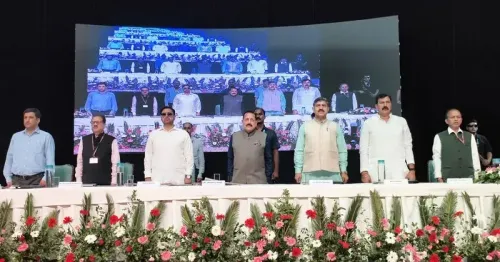
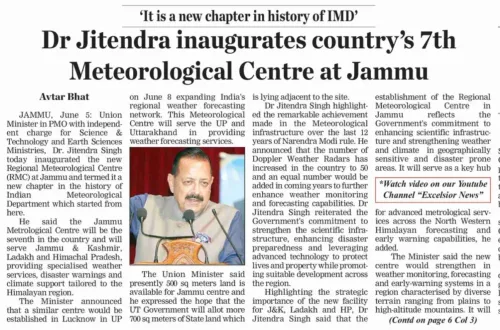
Union Science and Technology Minister Dr. Jitendra Singh on Saturday, June 6, 2026, drew attention to the India Meteorological Department's work in Jammu, sharing a video post on X that underscored the region's growing importance in India's national weather-monitoring network.
Context
The post, tagged with #IMD and #Jammu, accompanied a video highlighting meteorological activity or infrastructure in the Jammu region. As the minister holding independent charge of the Ministry of Earth Sciences, which oversees the India Meteorological Department (IMD), Dr. Singh has consistently used his public platform to spotlight weather-science developments in Jammu and Kashmir.
Jammu, the winter capital of Jammu and Kashmir, sits in the Himalayan foothills — a geography that demands robust meteorological coverage for timely warnings on flash floods, avalanches, and extreme rainfall events.
Policy Backdrop
The India Meteorological Department has been undergoing a sustained modernisation drive since the early 2010s, including the installation of Doppler weather radars and automatic weather stations (AWS) across northern and mountainous states. These upgrades are part of successive five-year investment cycles aimed at closing observational gaps in difficult terrain.
Following the 2019 reorganisation of the erstwhile state of Jammu and Kashmir, the central government accelerated efforts to integrate earth-observation data with state-level disaster management frameworks. The Ministry of Earth Sciences has been a key driver of this integration, linking IMD outputs with the National Disaster Management Authority and local administration in the Union Territory.
Stakeholders and Impact
The residents of Jammu and the broader agricultural community of Jammu and Kashmir stand to benefit most directly from enhanced meteorological infrastructure. Farmers in the region depend on accurate, localised forecasts for sowing and harvesting decisions, while tourism operators and pilgrimage administrators — particularly along routes to Vaishno Devi — rely on real-time weather data to manage visitor safety.
Improved IMD coverage in the Himalayan belt also has strategic dimensions: early-warning systems for extreme weather reduce the burden on the National Disaster Response Force (NDRF) and state disaster agencies, enabling faster, better-targeted relief operations.
What's Next
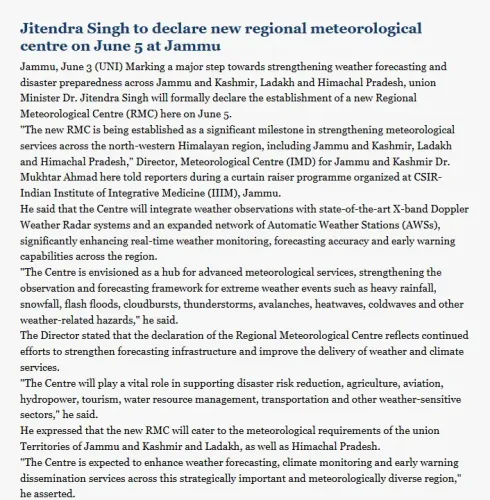
Policy watchers are tracking the possible rollout of additional automatic weather stations across Jammu and Kashmir, as well as the potential establishment of a dedicated regional IMD centre in Jammu. Integration with the forthcoming National Framework for Climate Services is also on the horizon, which would link IMD's granular, district-level forecasts to agriculture, health, and urban-planning departments across the Union Territory. Dr. Singh's continued public emphasis on IMD's Jammu operations signals that the region will remain a focal point of the ministry's infrastructure push in the near term.
Point of View
Particularly around science and technology investments. By spotlighting IMD in Jammu, the minister links the broader national meteorological modernisation programme to a region that carries both strategic and political salience post-reorganisation. The emphasis on earth-sciences infrastructure also reflects the Ministry of Earth Sciences' push to elevate its public profile alongside higher-visibility ministries. Sustained ministerial attention to IMD's Jammu operations could accelerate administrative approvals for new observational assets in the Union Territory.
NationPress
21 Oct 2026
Frequently Asked Questions
What did Dr. Jitendra Singh post about IMD and Jammu?
Dr. Jitendra Singh, Union Minister for Science and Technology and Earth Sciences, shared a video post on X on June 6, 2026, highlighting the India Meteorological Department's work in Jammu, using the hashtags #IMD and #Jammu.
What does IMD do in Jammu and Kashmir?
The India Meteorological Department operates weather-monitoring infrastructure in Jammu and Kashmir, including Doppler weather radars and automatic weather stations, to provide forecasts and early warnings for flash floods, avalanches, and extreme weather events in the Himalayan region.
Why is weather monitoring important for Jammu?
Jammu sits in the Himalayan foothills, making it vulnerable to flash floods, landslides, and sudden extreme weather. Accurate, localised IMD forecasts are critical for agriculture, tourism, pilgrimage safety, and disaster response in the region.
How has IMD's network in Jammu and Kashmir expanded?
Since the early 2010s, IMD has installed Doppler weather radars and automatic weather stations across northern and mountainous states, including Jammu and Kashmir, as part of a national modernisation programme supported by successive five-year plans.
What is the National Framework for Climate Services?
The National Framework for Climate Services is an upcoming policy initiative aimed at linking IMD's district-level weather forecasts to key sectors such as agriculture, health, and urban planning, with Jammu and Kashmir expected to be among the regions integrated into the framework.