Dr. Jitendra Singh raises MoES and IMD matters in Lok Sabha

Synopsis
Union Minister Dr. Jitendra Singh highlighted Ministry of Earth Sciences and IMD affairs in Lok Sabha on 22 July 2026. The post, tagged #MoES, #IMD and #LokSabha, draws attention to parliamentary oversight of India's national weather and earth-science services infrastructure.
Key Takeaways
Jitendra Singh posted on X on 22 July 2026 referencing MoES , IMD , and Lok Sabha .
The India Meteorological Department was established in 1875 and operates under the Ministry of Earth Sciences .
IMD modernisation phases between 2007 and 2017 introduced Doppler weather radars and improved numerical modelling.
The National Monsoon Mission , launched in 2012 , upgraded seasonal and extended-range forecasting capabilities.
Key stakeholders dependent on IMD services include farmers , disaster management agencies , and the aviation sector .
Parliamentary sessions routinely scrutinise IMD forecast accuracy, radar network expansion, and budgetary allocations for earth-system observation.
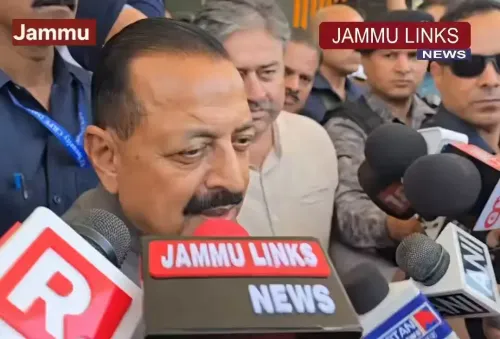
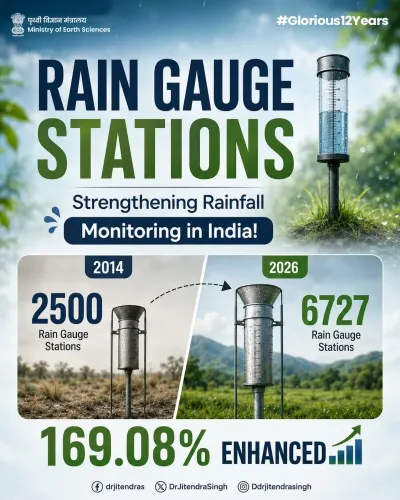
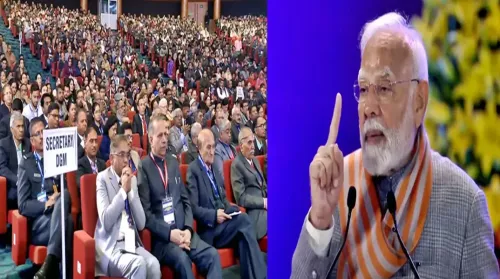
Union Minister of State (Independent Charge) for Science and Technology and Earth Sciences Dr. Jitendra Singh took to X on Wednesday, 22 July 2026, to flag matters relating to the Ministry of Earth Sciences (MoES) and the India Meteorological Department (IMD) in the context of Lok Sabha proceedings, sharing a post accompanied by an image.
Context
The post, carrying the hashtags #MoES, #IMD, and #LokSabha, signals that the minister engaged with parliamentary business concerning India's principal earth-sciences and weather-services infrastructure. The Lok Sabha Monsoon Session is a routine but consequential arena where ministers field starred and unstarred questions on departmental performance, budgetary outlays, and operational targets.
The India Meteorological Department, established in 1875, functions as the country's national weather service under the Ministry of Earth Sciences. It is responsible for operational weather forecasting, cyclone early warnings, and long-range monsoon outlays — services that directly affect agriculture, aviation, and disaster management across the country.
Policy Backdrop
IMD has undergone successive modernisation drives over the past two decades. Phase-wise upgrades between 2007 and 2017 introduced Doppler weather radars and strengthened numerical weather prediction models. The National Monsoon Mission, launched in 2012, further upgraded seasonal and extended-range forecasting capabilities to improve prediction accuracy for the critical June-September monsoon season.
Parliamentary scrutiny of IMD typically centres on forecast verification metrics, expansion of the Doppler radar network, satellite data assimilation, and budget allocations for earth-system observation infrastructure. These are recurring themes that successive governments have treated as integral to India's national disaster-risk reduction and climate-adaptation architecture.
Stakeholders and Impact
The work of MoES and IMD touches a wide cross-section of Indian society. Farmers across the country depend on accurate monsoon forecasts for sowing and harvesting decisions. State and national disaster management agencies rely on cyclone and extreme-weather early warnings to plan evacuations and pre-position relief. The aviation sector uses IMD data for flight safety and route planning.
Parliamentary engagement on these subjects by the minister signals that accountability mechanisms for weather and earth-science services remain active, with lawmakers seeking updated data on coverage gaps and performance benchmarks.
What's Next
Observers will watch for the specific questions tabled in Lok Sabha relating to MoES and IMD during the ongoing session, including any fresh proposals for expanding radar coverage or satellite data infrastructure. Ministerial responses on forecast accuracy and early-warning reach are expected to shape the policy conversation around India's preparedness for extreme weather events in a changing climate.
Point of View
As IMD's performance is most publicly scrutinised when the June-September monsoon is active and forecast accuracy has direct economic consequences. The dual hashtag strategy linking a technical ministry to a parliamentary forum suggests an effort to build public awareness around earth-science governance, a domain that rarely draws mass attention outside of disaster events. How the ministry responds to specific Lok Sabha questions on radar coverage and forecast verification will be a concrete test of this communication posture.
NationPress
21 Oct 2026
Frequently Asked Questions
What is the Ministry of Earth Sciences responsible for in India?
The Ministry of Earth Sciences oversees meteorology, oceanography, seismology and related earth-system science services in India, including the India Meteorological Department, which provides weather forecasts, cyclone warnings and monsoon outlays.
What did Dr. Jitendra Singh post about IMD and MoES in Lok Sabha?
On 22 July 2026, Dr. Jitendra Singh posted on X with the hashtags #MoES, #IMD and #LokSabha, indicating engagement with parliamentary matters related to the Ministry of Earth Sciences and the India Meteorological Department.
When was the India Meteorological Department established?
The India Meteorological Department was established in 1875 and is India's principal government agency for weather services, operating under the Ministry of Earth Sciences.
What is the National Monsoon Mission?
The National Monsoon Mission was launched in 2012 to upgrade India's seasonal and extended-range monsoon forecasting capabilities, improving prediction accuracy for the critical June-September monsoon season.
Why does Lok Sabha question the Ministry of Earth Sciences?
Lok Sabha members regularly table starred and unstarred questions on IMD's forecast accuracy, Doppler radar network expansion, satellite data assimilation, and budget allocations, as these directly affect farmers, disaster management agencies and the aviation sector.