Dr. Jitendra Singh addresses MoES and IMD matters in Lok Sabha

Synopsis
Union Minister Dr. Jitendra Singh engaged with the Lok Sabha on Ministry of Earth Sciences and IMD affairs on 22 July 2026, continuing parliamentary accountability on India's meteorological and Earth Sciences mandate.
Key Takeaways
Jitendra Singh , Union Minister for Science, Technology, and Earth Sciences, addressed Lok Sabha on 22 July 2026 on MoES and IMD matters.
The post was tagged #MoES , #IMD , and #LokSabha , indicating a parliamentary engagement on Earth Sciences affairs.
The India Meteorological Department , founded in 1875 , operates under MoES and is India's primary weather and climate service agency.
The Ministry of Earth Sciences was established in 2006 , consolidating meteorology, oceanography, and seismology under one ministry.
Key stakeholders in IMD's parliamentary oversight include farmers and disaster management agencies dependent on accurate forecasts.
Future Lok Sabha sessions are expected to focus on IMD modernisation budgets and observational infrastructure expansion.
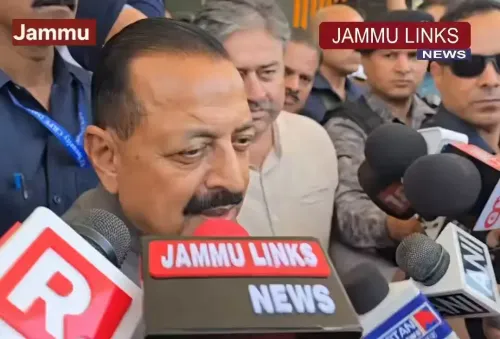
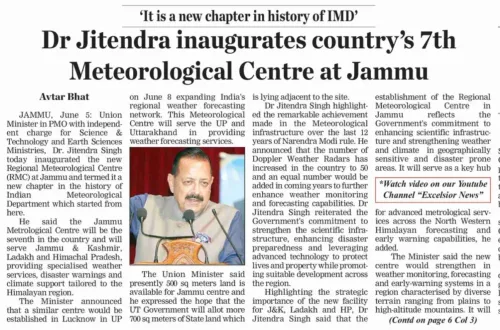
Union Minister of State (Independent Charge) for Science and Technology and Earth Sciences Dr. Jitendra Singh engaged with the Lok Sabha on matters relating to the Ministry of Earth Sciences (MoES) and the India Meteorological Department (IMD) on Wednesday, 22 July 2026, sharing the proceedings on his official social media handle.
Context
The post, tagged with #MoES, #IMD, and #LokSabha, was accompanied by an image, indicating the minister was responding to or making a statement on Earth Sciences and meteorological affairs in the lower house of Parliament. Parliamentary sessions are a primary forum through which ministers are held accountable on departmental performance, including the functioning of weather and climate services.
The India Meteorological Department, established in 1875, is India's principal government agency for weather forecasting, climate monitoring, and extreme-weather warnings. It operates under the Ministry of Earth Sciences, which was constituted in 2006 by consolidating meteorological, oceanographic, and seismological bodies under a single administrative umbrella.
Policy Backdrop
Parliamentary engagement on IMD and MoES matters has been a consistent feature of successive governments, particularly during monsoon sessions when questions around forecast accuracy, disaster preparedness, and agricultural advisories are most prominent. Ministers routinely use Lok Sabha proceedings to present updates on observational infrastructure, modernisation budgets, and the department's performance during extreme-weather events.
The Ministry of Earth Sciences oversees a wide mandate spanning meteorology, seismology, oceanography, and polar research. IMD's forecasts directly inform decisions by disaster management agencies and farmers across the country, making parliamentary accountability on these matters a matter of significant public interest.
Stakeholders and Impact
The primary stakeholders in any Lok Sabha discussion on IMD include farmers, who depend on accurate monsoon and rainfall forecasts for sowing and harvesting decisions, and state and national disaster management agencies, which rely on early-warning systems for cyclones, floods, and heatwaves. Improved meteorological services have a direct bearing on lives and livelihoods across India's agrarian and coastal communities.
Parliamentary scrutiny of MoES also shapes future budget allocations and policy priorities for weather observation networks, research stations, and climate modelling capabilities — areas that have seen sustained government attention in recent years.
What's Next
Observers will watch for any formal announcements emerging from the current parliamentary session regarding IMD modernisation, expansion of observational networks, or enhanced funding for Earth Sciences research. Questions tabled in subsequent Lok Sabha sittings on monsoon performance and extreme-weather preparedness are expected to keep MoES in the legislative spotlight through the remainder of the session.
Point of View
Scrutiny of IMD's performance and funding is likely to intensify in coming sessions. This moment fits a pattern where Earth Sciences ministry visibility is deliberately elevated through both legislative and digital channels.
NationPress
22 Oct 2026
Frequently Asked Questions
What did Dr. Jitendra Singh say about IMD in Lok Sabha?
Dr. Jitendra Singh addressed Lok Sabha on matters relating to the Ministry of Earth Sciences and the India Meteorological Department on 22 July 2026. The specific content of his statement or the questions he responded to were shared via an image on his official social media account.
What is the Ministry of Earth Sciences responsible for?
The Ministry of Earth Sciences, formed in 2006, oversees meteorology, seismology, oceanography, and polar research in India. It is the parent ministry of the India Meteorological Department, which provides weather forecasts and extreme-weather warnings.
Who is Dr. Jitendra Singh?
Dr. Jitendra Singh is the Union Minister of State (Independent Charge) for Science and Technology and Earth Sciences, and also holds the position of Minister of State in the Prime Minister's Office and for Personnel.
Why is IMD discussed in Parliament?
IMD is regularly discussed in Parliament because its forecasts directly affect farmers, disaster management agencies, and coastal communities. Parliamentary sessions allow ministers to report on forecast accuracy, infrastructure modernisation, and budget allocations for weather services.
When was the India Meteorological Department established?
The India Meteorological Department was established in 1875, making it one of India's oldest scientific institutions. It serves as the national weather and climate service agency under the Ministry of Earth Sciences.