Dr. Jitendra Singh Raises DAE Matters in Rajya Sabha

Synopsis
Union Minister Dr. Jitendra Singh engaged with Department of Atomic Energy matters in Rajya Sabha on 23 July 2026, reflecting ongoing parliamentary oversight of India's nuclear science and energy programmes amid the country's push for energy security and low-carbon growth.
Key Takeaways
Jitendra Singh , Union Minister (Independent Charge) for Science and Technology, referenced DAE in Rajya Sabha on 23 July 2026 .
The Department of Atomic Energy was established in August 1954 and operates under the direct charge of the Prime Minister.
India's nuclear energy policy is built on the three-stage nuclear power programme formulated by Dr.
Homi Bhabha in the 1950s .
Rajya Sabha proceedings on DAE cover nuclear capacity expansion, safety standards, and budgetary allocations.
The forthcoming Union Budget and subsequent parliamentary sessions will be key moments to watch for further DAE disclosures.
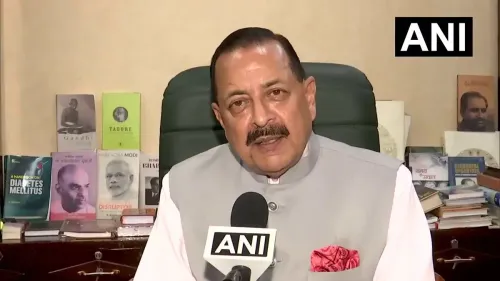
Union Minister of State (Independent Charge) for Science and Technology Dr. Jitendra Singh on Thursday, 23 July 2026 referenced the Department of Atomic Energy (DAE) in the context of Rajya Sabha, signalling parliamentary engagement on India's nuclear science and atomic energy agenda.
Context
The post, shared by Dr. Jitendra Singh on his official X account, carried the hashtags #DAE and #RajyaSabha, indicating that the minister was engaged in parliamentary proceedings related to the Department of Atomic Energy. While the precise subject of the exchange was not elaborated in the post, such references typically correspond to ministerial responses to questions or discussions tabled in the upper house.
The Department of Atomic Energy, established in August 1954, operates under the direct charge of the Prime Minister and is responsible for nuclear research, technology development, and the management of India's atomic energy programmes. It is among the most strategically sensitive portfolios in the Indian government.
Policy Backdrop
India's nuclear energy framework is anchored in the three-stage nuclear power programme conceived in the 1950s by Dr. Homi Bhabha, designed to achieve long-term energy independence by leveraging the country's indigenous thorium reserves. Successive governments have reaffirmed this roadmap as central to both energy security and low-carbon development goals.
Parliamentary oversight of the DAE through Rajya Sabha questions and debates is a routine but critical mechanism by which legislators scrutinise allocations, project timelines, safety standards, and capacity expansion under this programme. Ministers holding charge of science and technology portfolios are frequently called upon to respond to such questions in both houses of Parliament.
Stakeholders and Impact
The primary stakeholders in DAE-related parliamentary discussions include nuclear scientists, energy policymakers, parliamentarians from across party lines, and communities in regions hosting nuclear installations. Decisions or disclosures made during Rajya Sabha sessions can shape public understanding of India's nuclear capacity, safety protocols, and future investment plans.
India's push to expand nuclear power generation as part of its broader energy transition makes DAE proceedings in Parliament increasingly consequential. Any ministerial statement on project progress or budget priorities carries weight for both domestic energy planning and international non-proliferation commitments.
What's Next
Subsequent Rajya Sabha sessions are expected to carry further questions on DAE project timelines, safety reviews, and funding allocations. The forthcoming Union Budget cycle will also be watched for signals on the government's financial commitment to expanding nuclear power capacity and advancing research under the three-stage programme. Dr. Jitendra Singh's continued engagement with DAE matters in Parliament underscores the government's intent to maintain active legislative accountability over India's strategic science and energy programmes.
Point of View
Even without elaboration, reflects the government's pattern of using social media to signal active parliamentary engagement on strategic science portfolios. As India accelerates its nuclear energy ambitions to meet clean-energy targets, ministerial visibility on DAE matters in the upper house serves a dual purpose: reinforcing legislative accountability and projecting policy seriousness to a technocratic audience. The timing, mid-session, suggests a question-and-answer or statement context rather than a debate, pointing to routine but necessary oversight. Sustained parliamentary attention to DAE will be a reliable indicator of how seriously the government is treating its nuclear expansion commitments.
NationPress
22 Oct 2026
Frequently Asked Questions
What is the Department of Atomic Energy in India?
The Department of Atomic Energy (DAE) is a Government of India body established in August 1954, operating under the direct charge of the Prime Minister, responsible for nuclear research, technology development, and management of India's atomic energy programmes.
Why did Dr. Jitendra Singh post about DAE and Rajya Sabha?
Dr. Jitendra Singh's post on 23 July 2026 indicated his engagement with Department of Atomic Energy matters during Rajya Sabha proceedings, likely in the context of ministerial responses to parliamentary questions on nuclear energy.
What is India's three-stage nuclear power programme?
India's three-stage nuclear power programme was conceived by Dr. Homi Bhabha in the 1950s to achieve long-term energy independence by utilising indigenous uranium and thorium resources through a phased approach to nuclear reactor technology.
What role does Rajya Sabha play in overseeing atomic energy in India?
Rajya Sabha, as India's upper house of Parliament, provides legislative oversight of the Department of Atomic Energy through question hours, debates, and budget discussions, holding ministers accountable for nuclear project progress and safety standards.
Who is Dr. Jitendra Singh and what ministry does he hold?
Dr. Jitendra Singh is the Union Minister of State (Independent Charge) for Science and Technology and Earth Sciences, and also holds charge as Minister of State in the Prime Minister's Office and for Personnel.