CM Rekha Gupta Vows to Restore Yamuna's Free Flow
Synopsis
Delhi Chief Minister Rekha Gupta renewed her vow on 22 October 2026 to restore the Yamuna to free, uninterrupted flow, tying the pledge to the #ViksitDelhi vision and reviving a promise that has eluded multiple governments since 1993.
Key Takeaways
Delhi CM Rekha Gupta publicly pledged on 22 October 2026 to restore the Yamuna River's aviral (free, perennial) flow.
The post used the hashtag #ViksitDelhi , linking the environmental promise to the BJP's Viksit Bharat 2047 development narrative.
India launched its first Yamuna Action Plan in 1993 and a second phase in 2004 , neither of which fully reversed the river's ecological decline.
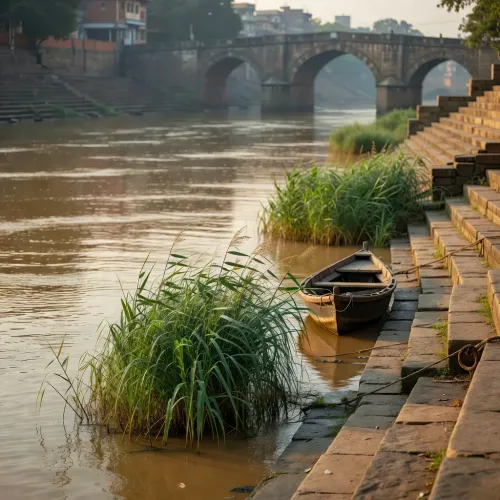
The Yamuna flows through Delhi and is a critical water and cultural resource for millions of residents in the river basin.
Analysts will watch for concrete coordination with Central programmes such as extensions of the Namami Gange scheme targeting the Yamuna.
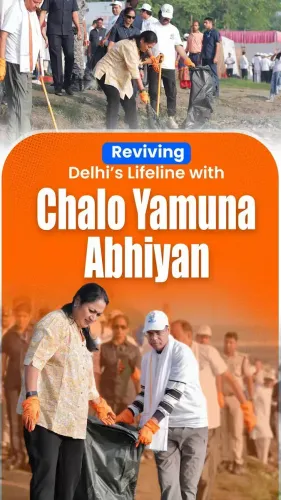
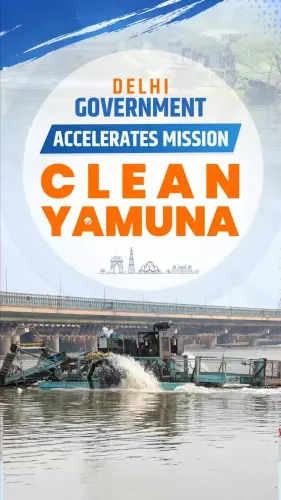
A promise as old as Delhi's political memory — a clean, free-flowing Yamuna — has been renewed. Delhi Chief Minister Rekha Gupta on Thursday, 22 October 2026, declared that her administration will fulfil its commitment to restore the Yamuna River to its natural, uninterrupted flow, framing it as a non-negotiable pledge to the city's residents.
Posting under the hashtag #ViksitDelhi, Gupta wrote in Hindi: 'Jo sankalp liya hai use poora karenge. Maa Yamuna ko ek baar phir se aviral roop mein hum Delhi ko denge.' — 'We will fulfil the resolve we have taken. We will once again give Delhi the gift of a free-flowing Mother Yamuna.' The language is deliberate: aviral, meaning uninterrupted or perennial flow, is a word that carries both ecological weight and spiritual resonance for river communities across India.
A River That Has Waited Decades
The Yamuna's distress is not new. The river enters Delhi carrying the lifeline of northern India but exits it as one of the country's most polluted stretches, choked by untreated sewage, industrial effluents, and encroachments that have throttled its natural flow. India's first Yamuna Action Plan was launched in 1993, followed by a second phase in 2004 — multi-crore efforts that, by most ecological assessments, fell far short of reversing the river's decline.
That history makes every fresh pledge both urgent and politically loaded. For Delhi's residents — millions of whom depend on the river basin for groundwater, livelihoods, and cultural identity — the question is not whether the commitment is sincere, but whether this administration's approach will cut through where previous plans did not.
Where the Local Promise Meets the National Vision
Gupta's post is more than a local environmental statement. The #ViksitDelhi tag explicitly ties the Yamuna pledge to the broader Viksit Bharat 2047 development vision that BJP-led administrations at the Centre and in the states have championed — a framework that positions river rejuvenation alongside infrastructure, health, and economic growth as pillars of a developed India.
The national Namami Gange Programme has already directed thousands of crores toward cleaning the Ganga and its tributaries. The Yamuna, flowing through Delhi and several BJP-governed states, is a natural candidate for convergence with such Central schemes. Whether Gupta's renewed vow translates into concrete coordination with Central river-cleaning missions will be the metric that analysts and citizens alike will watch.
The Yamuna has been a political battleground in Delhi for years. Whoever can finally show a visibly cleaner, flowing river wins not just an environmental argument — they win the city's trust. Gupta has drawn the line in the sand; the river itself will be the verdict.
Point of View
Setting a high benchmark she will be judged against. The real test is institutional: cleaning the Yamuna requires sewage infrastructure, inter-state coordination, and Central funds — none of which a social media post alone can unlock. For BJP, a visibly improved Yamuna in Delhi before the next electoral cycle would be a transformative proof point; failure to move the needle risks making this vow the latest entry in a long line of unfulfilled river promises.
NationPress
22 Oct 2026
Frequently Asked Questions
What did Delhi CM Rekha Gupta say about the Yamuna River?
On 22 October 2026, Rekha Gupta posted that her government will fulfil its resolve to restore the Yamuna to an 'aviral' — free-flowing and uninterrupted — state, gifting Delhi a revived river.
What is 'aviral' flow of the Yamuna?
'Aviral' means uninterrupted or perennial flow — a state where the river runs continuously without being choked by pollution, diversions, or encroachments, which is the ecological condition the Yamuna has largely lost through Delhi.
What is the history of Yamuna cleaning efforts in Delhi?
India launched the Yamuna Action Plan in 1993 and a second phase in 2004 to reduce pollution and improve flow, but the river's condition through Delhi has remained severely degraded despite these multi-crore programmes.
What is #ViksitDelhi?
#ViksitDelhi is a hashtag used by Delhi's BJP-led government to frame its development agenda, linking local projects — including environmental restoration — to the national Viksit Bharat 2047 vision.
How does the Namami Gange programme relate to the Yamuna?
The Namami Gange Programme is a Central government flagship for cleaning the Ganga and its tributaries, including the Yamuna. Coordination between Delhi's state government and this scheme is seen as key to any meaningful Yamuna revival.