CM Rekha Gupta Launches Rs 1,000 Cr Yamuna Clean-Up Push
Synopsis
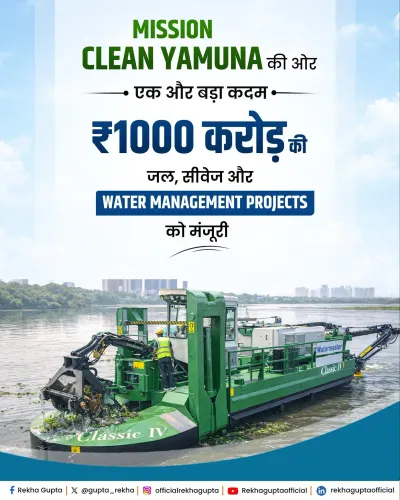
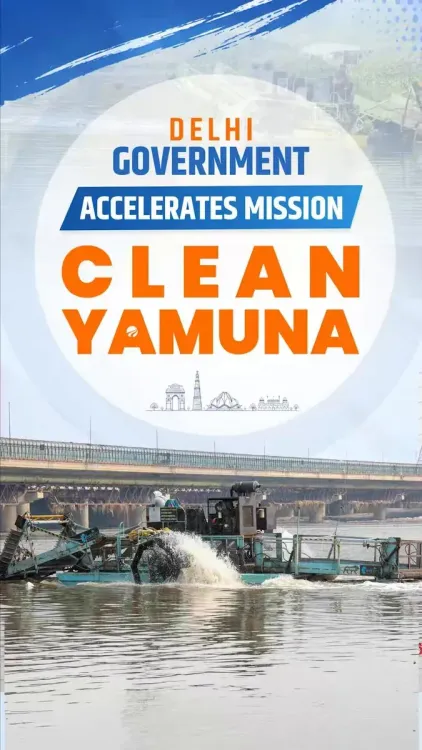
Delhi Chief Minister Rekha Gupta has announced Rs 1,000 crore-plus in new water and sewage projects to clean the Yamuna, including new STPs, modernised sewer networks, and rainwater harvesting — framing the drive as a mission-mode priority from day one of her government.
Key Takeaways
Delhi Chief Minister Rekha Gupta announced Yamuna rejuvenation projects worth more than Rs 1,000 crore on 30 May 2026 .
The package includes new Sewage Treatment Plants (STPs) , a modernised sewage network, and rainwater harvesting infrastructure.
The government has framed Yamuna cleaning as a mission-mode priority since its first day in office.
The Yamuna has faced chronic pollution for decades; the NGT has issued repeated compliance directives to Delhi and neighbouring states.
Lasting improvement depends on inter-state coordination with Haryana and Uttar Pradesh on upstream discharge controls.
Progress will be tracked against NGT -mandated pollution monitoring benchmarks and funding utilisation reports.
Delhi Chief Minister Rekha Gupta announced on Saturday, 30 May 2026 that her government is pursuing Yamuna rejuvenation in 'mission mode' since its first day in office, backing the drive with new water and sewage projects worth more than Rs 1,000 crore. The initiative includes new sewage treatment plants, modernised sewer networks, and rainwater harvesting systems aimed at making the Yamuna River clean, pollution-free, and free-flowing.
Context
In her post, Rekha Gupta wrote: 'सरकार गठन के पहले दिन से ही हम माँ यमुना को स्वच्छ और निर्मल बनाने के लिए मिशन मोड में कार्य कर रहे हैं' — 'From the very first day of government formation, we have been working in mission mode to clean and purify Mother Yamuna.' She added that new water and sewage projects worth more than Rs 1,000 crore will give fresh momentum to this campaign. The announcement was made under the hashtag #CleanYamuna.
The Yamuna, a major tributary of the Ganga, passes through Delhi and has faced severe, chronic pollution from untreated sewage, industrial effluents, and solid waste for decades. The Delhi stretch of the river consistently records pollution levels far exceeding prescribed standards, particularly during dry seasons when river flow is minimal.
Policy Backdrop
Efforts to clean the Yamuna date back to the Yamuna Action Plan launched in 1993 with Japanese assistance, which focused on building sewage infrastructure along the riverbanks. The Centre's Namami Gange programme, approved in 2014, extended this effort to the Ganga basin including the Yamuna, channelling funds toward sewage treatment capacity and riverfront rehabilitation in Delhi and upstream states.
The National Green Tribunal (NGT) issued time-bound Yamuna cleaning directives in 2015, though deadlines were subsequently extended due to persistent implementation gaps. Between 2018 and 2022, successive Delhi administrations announced multiple STP augmentation projects to bridge treatment capacity shortfalls, yet pollution indices in the river have remained stubbornly high.
The newly announced projects — comprising new Sewage Treatment Plants (STPs), modernised sewage networks, and rainwater harvesting infrastructure — align with the broader national framework under the Ministry of Jal Shakti, which coordinates Yamuna abatement across Delhi, Haryana, and Uttar Pradesh.
Stakeholders and Impact
The primary beneficiaries of improved Yamuna water quality are Delhi's approximately 2 crore residents, for whom the river is both a cultural landmark and a source of groundwater recharge. Farmers in the Yamuna basin downstream stand to gain from reduced contamination of irrigation water, while environmental advocacy groups have long demanded accountability on measurable pollution reduction.
Environmental organisations and the NGT are likely to track whether the announced investment translates into verifiable improvements in Biochemical Oxygen Demand (BOD) and dissolved oxygen levels at key monitoring points. Coordination with Haryana and Uttar Pradesh on upstream industrial and sewage discharge controls will remain critical to any lasting improvement in the Delhi stretch.
What's Next
Attention will now turn to the rollout timelines and funding utilisation for the projects announced by Chief Minister Rekha Gupta. Compliance reports submitted to the NGT and periodic pollution monitoring data will serve as independent benchmarks for measuring progress against the stated mission-mode commitment.
Potential inter-state coordination meetings under the Jal Shakti framework could follow, as upstream discharge from Haryana and industrial zones remains a key variable that Delhi alone cannot control. The success of this Rs 1,000 crore push may also shape how future central funds under Namami Gange are allocated to the capital.
Point of View
000 crore announcement is the BJP-led Delhi government's most concrete infrastructure signal yet on Yamuna rejuvenation, a politically charged issue that has defined electoral narratives in the capital for years. By framing the effort as 'mission mode from day one,' the administration is explicitly positioning itself against the record of its predecessor — a familiar but potent rhetorical device in Delhi politics. The real test, however, lies in execution: a long trail of STP projects announced since 1993 under multiple governments warns against treating capital outlay alone as a proxy for river health. Independent pollution monitoring data and NGT compliance filings will ultimately determine whether this push breaks the cycle of ambitious announcements followed by incremental outcomes.
NationPress
15 Sept 2026
Frequently Asked Questions
What is CM Rekha Gupta's Yamuna cleaning plan?
Chief Minister Rekha Gupta has announced new water and sewage projects worth more than Rs 1,000 crore for the Yamuna, including new sewage treatment plants, a modernised sewer network, and rainwater harvesting systems aimed at making the river clean and pollution-free.
Why is the Yamuna River so polluted in Delhi?
The Yamuna in Delhi receives large volumes of untreated sewage, industrial effluents, and solid waste. Insufficient sewage treatment capacity and gaps in the sewer network have historically meant that a significant share of the city's wastewater enters the river without adequate treatment.
What is the Namami Gange programme and how does it relate to the Yamuna?
Namami Gange is a central government programme approved in 2014 to rejuvenate the Ganga basin and its tributaries, including the Yamuna. It funds sewage infrastructure and riverfront works in Delhi and upstream states under the Ministry of Jal Shakti framework.
What has the National Green Tribunal said about Yamuna pollution?
The NGT issued time-bound Yamuna cleaning directives in 2015, monitoring compliance by Delhi, Haryana, and Uttar Pradesh. Deadlines have been extended multiple times due to implementation shortfalls, and the tribunal continues to track pollution levels at key monitoring points.
Will Delhi's efforts alone be enough to clean the Yamuna?
No. While Delhi's sewage infrastructure upgrades are essential, a lasting improvement requires coordination with Haryana and Uttar Pradesh to control upstream industrial and sewage discharge — a challenge that has persisted across multiple governments and action plans.