Amit Shah launches ₹8,941 cr Delhi water projects for Yamuna
Synopsis
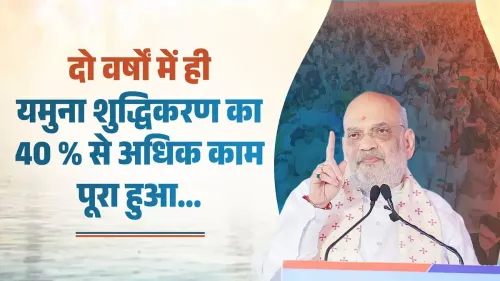
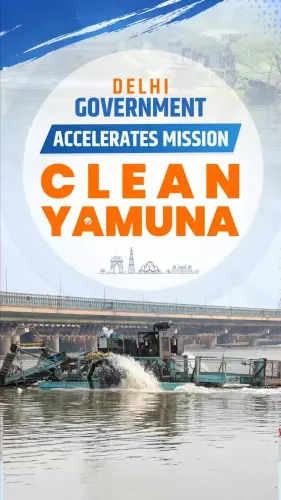
Union Home Minister Amit Shah on 22 October 2026 launched ₹8,941 crore in Delhi water and sewerage infrastructure — water treatment plants, STPs, recycling plants, and household sewer connections — targeting complete Yamuna purification by May 2029, while blaming Congress and AAP for the river's decades of pollution.
Key Takeaways
₹8,941 crore in water and sewerage projects inaugurated and foundation-stoned by Amit Shah in Delhi on 22 October 2026 .
Projects include water treatment plants , sewage treatment plants , recycling plants , sewage pumping stations , and household sewer connections .
Delhi government has set a target of complete Yamuna purification by May 2029 under PM Modi's leadership.
Shah blamed Congress and the Aam Aadmi Party for converting the Yamuna into a 'dirty drain' through years of neglect.
Household sewer connections are a key focus, addressing the long-standing gap between STP capacity and actual sewage being treated.
The Namami Gange programme (launched 2014) provides the broader national policy framework for Yamuna rejuvenation.
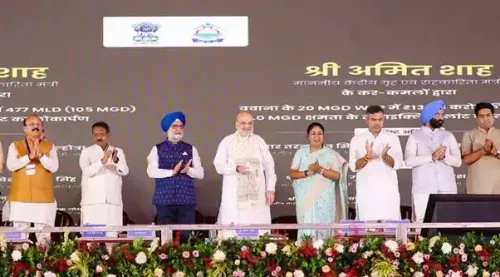
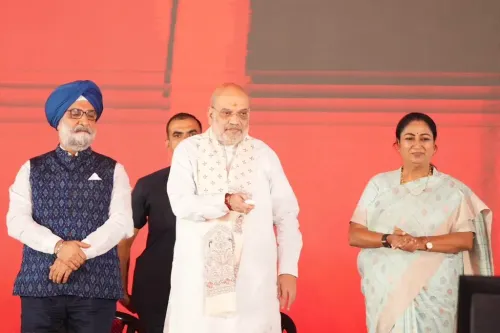
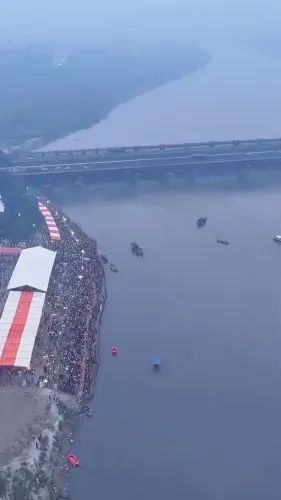
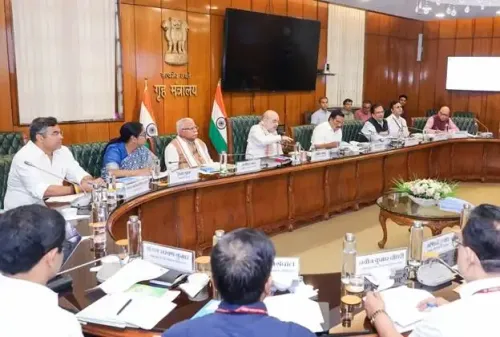
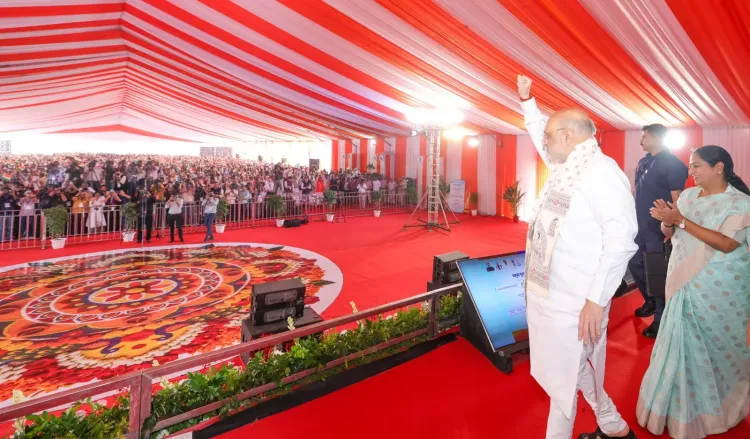
A river choked by decades of untreated sewage is now at the centre of a ₹8,941 crore infrastructure push — and Union Home Minister Amit Shah made that the headline in Delhi on Thursday, 22 October 2026, inaugurating and laying the foundation stones for a sweeping package of water and sewerage works the BJP-led Delhi government says will drive the Yamuna toward full purification by May 2029.
What ₹8,941 crore buys on the Yamuna
The projects span the full chain of urban water management: water treatment plants, recycling plants, sewage treatment plants (STPs), sewage pumping stations, and household sewer connections. The stated outcome is that millions of litres of wastewater that currently flow raw into the river will instead be treated before reaching it — a direct attack on the single biggest driver of the Yamuna's pollution load inside Delhi.
Shah framed the announcement in pointed political terms, writing that Congress and the AAP-led government had, by dumping 'hazaron tonne gandagi' ('thousands of tonnes of filth') into the river every day, reduced it to a 'dirty drain.' The current Delhi government, he said, is committed to complete purification under Prime Minister Narendra Modi's leadership.
The Yamuna's long descent — and who gets blamed
The Yamuna River, a major Ganga tributary that bisects the capital, has been on environmental distress lists for decades. Rapid urbanisation, inadequate sewerage networks, and insufficient treatment capacity turned stretches of the river through Delhi into what pollution surveys have repeatedly described as near-dead waterways. The Namami Gange programme, launched in 2014, set river rejuvenation — including Yamuna tributaries — as a national priority, channelling funds into STP construction and industrial effluent control across the basin.
The BJP's political argument has been consistent: that successive state governments, first Congress and then the Aam Aadmi Party (which governed Delhi from 2015), failed to build or operate sewage infrastructure at the pace the city demanded. AAP, for its part, has long countered that Yamuna cleaning requires central coordination and funding that was slow to arrive. The BJP won the Delhi assembly election earlier in 2025, giving it control of both the state government and this narrative.
The May 2029 deadline — and what it will take
A deadline of May 2029 for 'complete purification' is an ambitious one for a river that carries the sewage of a metropolitan area of over 30 million people. Sewage treatment capacity, household connection density, and real-time pollution monitoring will all be test metrics. The announced household sewer connections are particularly significant — experts have long noted that even where STPs exist, large swathes of Delhi's colonies remain unconnected to the trunk sewer network, meaning treated capacity sits underused while raw sewage bypasses it entirely.
The ₹8,941 crore package is designed to close exactly that gap, building the last-mile infrastructure that ties individual homes to treatment plants and, ultimately, to a cleaner river.
Pattern: big infrastructure, political clock
Today's ceremony fits a broader BJP template of high-visibility infrastructure launches in urban India — large rupee figures, a senior leader at the dais, and an explicit contrast with predecessor governments. The political dividend is clearest in Delhi, where the Yamuna's condition has been a live electoral issue for three successive assembly cycles. Whether the projects deliver on schedule will be tracked closely by both the courts — the National Green Tribunal has monitored Yamuna remediation for years — and by voters heading into the next Delhi election.
For now, the concrete and the pipes are the story. A river that has waited decades for a working drain underneath it may finally be getting one.
Point of View
941 crore package is the BJP's most concrete electoral and environmental statement on the Yamuna since it retook Delhi's state government — converting a long-running opposition attack line into a governance deliverable with a hard deadline. By anchoring the May 2029 target to PM Modi's leadership, the party is also setting a reputational stake: if pollution indices do not improve, the accountability loop closes back on the ruling coalition rather than predecessors. The emphasis on household sewer connections signals a more technically sophisticated approach than past announcements, since last-mile connectivity has historically been the gap between STP investment and actual river quality improvement. Watch the National Green Tribunal's monitoring reports and independent water-quality data as the real verdict on whether this infrastructure push translates into a measurably cleaner river.
NationPress
22 Oct 2026
Frequently Asked Questions
What are the Delhi water projects inaugurated by Amit Shah worth?
The projects are worth ₹8,941 crore and cover water treatment plants, sewage treatment plants, recycling plants, sewage pumping stations, and household sewer connections across Delhi.
By when will the Yamuna river be cleaned according to the Delhi government?
The Delhi government has set a deadline of May 2029 for the complete purification of the Yamuna river.
What is the Namami Gange programme and how does it relate to Yamuna cleaning?
The Namami Gange programme was launched in 2014 to clean the Ganga and its tributaries, including the Yamuna, primarily through sewage treatment infrastructure — providing the national policy framework within which Delhi's projects sit.
Why did Amit Shah blame AAP and Congress for Yamuna pollution?
Shah argued that successive Congress and Aam Aadmi Party governments failed to prevent thousands of tonnes of waste from being discharged into the river daily, effectively reducing it to a drain — a political contrast to the current BJP-led Delhi government's clean-up push.
How will household sewer connections help clean the Yamuna?
Many Delhi colonies are not connected to the main sewer network, so raw sewage bypasses treatment plants and flows directly into the river. Household sewer connections bridge this last-mile gap, ensuring wastewater reaches STPs and is treated before discharge.