Shekhawat backs Delhi's ₹1,000 Cr Yamuna clean-up push
Synopsis
Union Culture and Tourism Minister Gajendra Singh Shekhawat on 30 May 2026 backed the Delhi government's approval of over ₹1,000 crore in sewage and water management projects under Mission Clean Yamuna, framing it as a generational commitment to restore the river's ecological and cultural sanctity.
Key Takeaways
Union Minister Gajendra Singh Shekhawat publicly endorsed the Delhi government's Mission Clean Yamuna on 30 May 2026 .
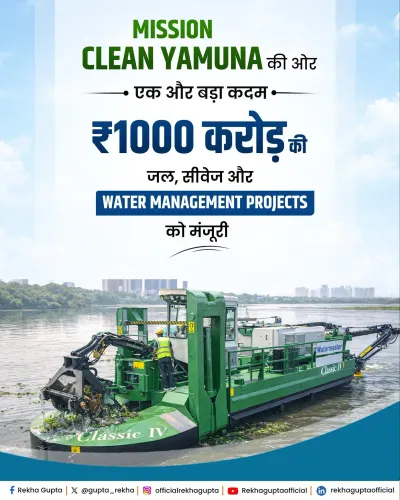
The Delhi government approved water sewage and management projects worth over ₹1,000 crore under the mission.
Shekhawat described the initiative as a resolve to give future generations a 'clean environment and a better future.' Yamuna rejuvenation efforts date to the Yamuna Action Plan Phase I of 1993 and were reinforced by the Namami Gange programme of 2014 .
Jurisdictional overlaps between the Centre, Delhi , and upstream states have historically hampered river restoration progress.
Timely tendering, commissioning, and central-state coordination will determine whether the financial approval translates into ecological improvement.
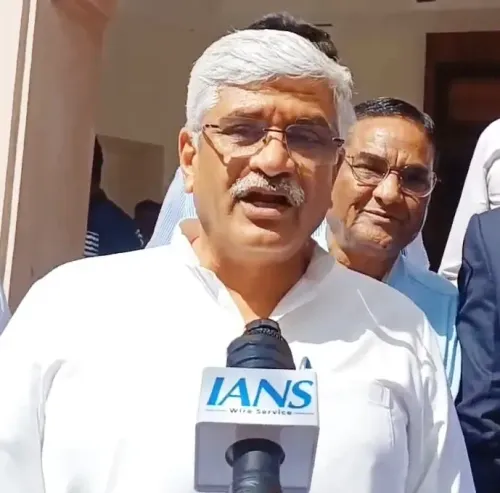
Union Culture and Tourism Minister Gajendra Singh Shekhawat on Saturday, 30 May 2026 welcomed the Delhi government's approval of water sewage and management projects worth over ₹1,000 crore under Mission Clean Yamuna, calling it a significant step toward restoring the river's sanctity and ecological health.
Invoking a Sanskrit salutation to the river — 'Namo Namaste Yamune Sada Tvam, Avashyameva Mangal Karanam Cha' (Salutations to you, O Yamuna, who is ever auspicious) — Shekhawat framed the approval as a convergence of faith, culture, and environmental responsibility. He wrote that the initiative is 'not merely a campaign to clean a river, but a resolve to give future generations a clean environment and a better future.'
Context
The Yamuna, a major tributary of the Ganga flowing through Delhi and much of northern India, has been among the country's most polluted urban rivers for decades. Untreated sewage from Delhi's rapidly expanding population, industrial effluents, and inadequate drainage infrastructure have severely degraded water quality, particularly along the stretch passing through the capital.
The river carries deep religious and cultural significance for millions of Indians, making its deterioration a politically and socially charged issue that successive administrations have pledged to address.
Policy Backdrop
Efforts to clean the Yamuna date back to the Yamuna Action Plan Phase I, launched in 1993, which focused on building sewage treatment plants in Delhi and downstream cities. The Namami Gange programme, approved in 2014, incorporated dedicated components for Yamuna tributary pollution abatement and inter-state coordination.
Despite these successive interventions, the river's rehabilitation has been hampered by jurisdictional overlaps between the Centre, the Delhi government, and upstream states. The current Mission Clean Yamuna approval follows this long lineage of large-scale sewage treatment and interceptor projects at the state level.
Stakeholders and Impact
Delhi's roughly 3.3 crore residents stand as the most immediate stakeholders, both as contributors to the river's pollution load and as potential beneficiaries of improved water quality and public health outcomes. Communities along the river basin in Uttar Pradesh and Haryana would also benefit from reduced upstream pollution flows.
The approval of sewage and water management infrastructure worth over ₹1,000 crore signals a material commitment beyond policy declarations, though the river's restoration will ultimately depend on timely tendering, commissioning, and sustained inter-agency coordination.
What's Next
Attention will now turn to the pace of tendering and on-ground execution of the approved projects. Central-state coordination on Yamuna water quality targets — particularly between the Delhi government, the National Mission for Clean Ganga, and riparian state administrations — will be critical to translating the financial approval into measurable ecological outcomes.
Shekhawat's public endorsement, coming from a senior Union minister with a cultural portfolio, signals that the Centre views Mission Clean Yamuna as aligned with its broader river rejuvenation agenda, potentially smoothing the path for central-state collaboration on the project's rollout.
Point of View
At least rhetorically. By invoking Sanskrit scripture and the river's cultural sanctity, the minister also signals that the BJP intends to remain the dominant voice on river restoration as a civilisational project, not merely an environmental one. The ₹1,000 crore approval, if executed, would be one of the larger single-state sewage infrastructure commitments on the Yamuna in recent years, raising the political stakes for delivery. Analysts will watch whether this rhetorical alignment translates into coordinated action between central agencies and the Delhi government on water quality targets.
NationPress
14 Oct 2026
Frequently Asked Questions
What is Mission Clean Yamuna?
Mission Clean Yamuna is a Delhi government initiative focused on sewage treatment and river water management to improve the ecological health and water quality of the Yamuna river as it flows through the national capital.
How much has Delhi approved for Yamuna clean-up?
The Delhi government approved water sewage and management projects worth over ₹1,000 crore under Mission Clean Yamuna, as noted by Union Minister Gajendra Singh Shekhawat on 30 May 2026.
Why is the Yamuna river so polluted?
The Yamuna's severe pollution is primarily caused by untreated sewage from Delhi's large population, industrial effluents, and inadequate drainage infrastructure, compounded by jurisdictional overlaps between the Centre, Delhi, and upstream states like Haryana and Uttar Pradesh.
What has the central government done to clean the Yamuna?
The Centre launched the Yamuna Action Plan Phase I in 1993 to build sewage treatment plants, and the Namami Gange programme approved in 2014 included dedicated components for Yamuna tributary pollution abatement and inter-state coordination.
What did Gajendra Singh Shekhawat say about the Yamuna?
Shekhawat welcomed the Delhi government's ₹1,000 crore project approval, calling it not merely a river-cleaning campaign but a resolve to give future generations a clean environment and a better future, and opened his post with a Sanskrit salutation to the river.