Delhi L-G T.S. Sandhu pledges Yamuna cleanup, outlines 5 pillars for city's future
Synopsis
Delhi's Lieutenant Governor T.S. Sandhu used a JNU felicitation event to lay out a sweeping urban vision — anchored by a Yamuna restoration pledge and five development pillars — signalling a hands-on administrative agenda that spans ecology, inclusion, culture, and economic diversification.
Key Takeaways
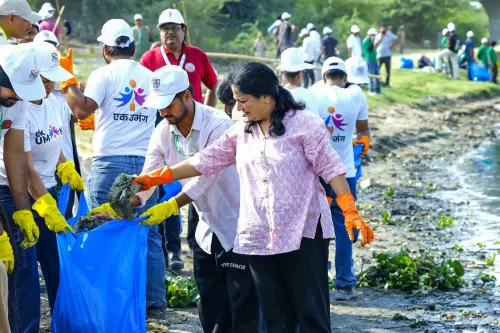
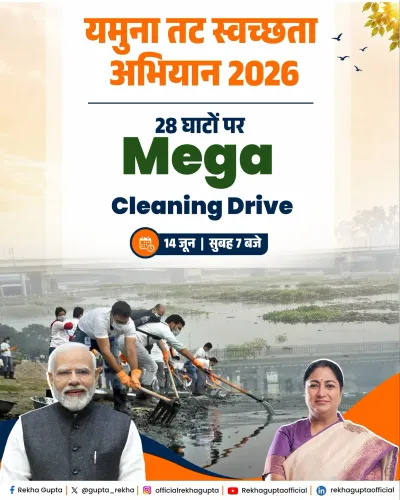
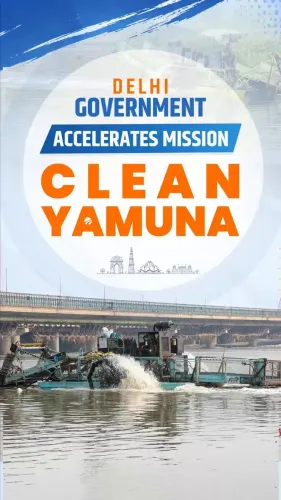
Sandhu pledged to restore the Yamuna River as an ecological and cultural lifeline on 8 May 2025 .
He identified five pillars for Delhi's future: sustainability, inclusion, culture, innovation, and economic growth.
Key environmental priorities include air pollution, waste management, sustainable mobility, and enhanced green cover.
Sandhu called for inclusive growth that benefits women, youth, senior citizens, differently-abled persons, and migrant workers.
He envisions Delhi as a global cultural capital and a hub for startups, tourism, and the creative economy — beyond its role as an administrative centre.
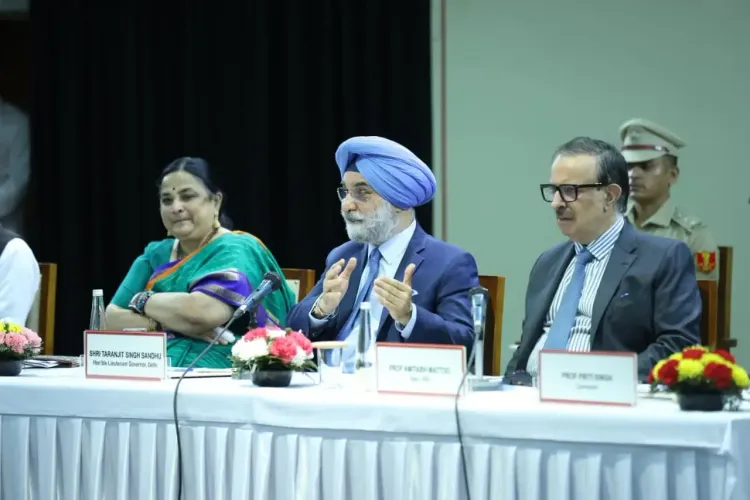
Delhi Lieutenant Governor T.S. Sandhu on Friday, 8 May pledged to clean the Yamuna River and laid out five pillars — sustainability, inclusion, culture, innovation, and economic growth — as the foundation of Delhi's long-term urban development. Sandhu made the remarks at a felicitation programme at Jawaharlal Nehru University's (JNU) School of International Studies (SIS), of which he is an alumnus, calling for governance that is "responsive, accessible, and humane."
Yamuna and Environmental Priorities
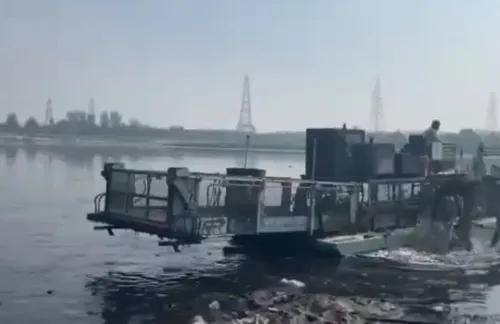
Sandhu placed the Yamuna River's restoration at the centre of Delhi's ecological agenda, alongside air pollution control, rejuvenation of water bodies, effective waste management, sustainable mobility, and enhanced green cover. "The Yamuna must not only be cleaned; it must be restored, as a vibrant ecological and cultural lifeline of this city," he said. He stressed that the government and citizens must move beyond reactive measures and commit to long-term ecological planning.
Sustainable Mobility and Urban Planning
The Lieutenant Governor outlined a vision for stronger public transport, electric mobility, pedestrian-friendly streets, cycling infrastructure, and integrated urban planning as defining features of Delhi's next phase of transformation. These measures, he said, would need to be embedded in a coherent long-term framework rather than addressed in isolation. This comes amid persistent concerns over Delhi's air quality, which consistently ranks among the worst of any major global city.
Inclusive Growth and Social Infrastructure
Sandhu underlined that development must be equitable, with the benefits of growth accessible to all sections of society. "Delhi's future must belong equally to women, senior citizens, youth, differently-abled, migrant workers, entrepreneurs, artists, students, and vulnerable communities," he said. He added that urban development cannot be confined to physical infrastructure alone — social infrastructure, including healthcare, education, safety, accessibility, and dignity, must be equally strengthened.
Culture, Innovation, and Economic Growth
Highlighting Delhi's cultural identity, Sandhu said the city possesses one of the richest cultural heritages in the world, encompassing monuments, literature, food traditions, music, crafts, languages, museums, festivals, and artistic communities. "Investment in museums, public art, creative industries, cultural tourism, heritage restoration, and community spaces can help create a city where culture is not preserved passively, but lived actively," he said. On the economic front, he said Delhi has the potential to emerge as a leading centre for knowledge, startups, tourism, hospitality, the creative economy, and the wider service sector — not merely an administrative capital.
Technology and Governance
Sandhu called for technology and governance to be integrated so that transparent, efficient, and citizen-friendly systems can be built. He reiterated that the objective of governance should be simple: to be responsive, accessible, and humane. The remarks signal a broad administrative agenda for the Lieutenant Governor as Delhi navigates its next phase of urban growth.
Point of View
But the Yamuna pledge stands out — successive governments and administrators have promised river cleanup for decades with little measurable progress. The five-pillar framework is aspirational, but Delhi's urban challenges are structural: overlapping jurisdictions between the L-G, the elected government, and municipal bodies have historically stalled implementation. Whether this vision translates into coordinated action or remains a set of well-intentioned talking points will depend on institutional alignment that has proved elusive in Delhi's complex governance architecture.
NationPress
24 Sept 2026
Frequently Asked Questions
What did Delhi L-G T.S. Sandhu say about the Yamuna River?
L-G T.S. Sandhu pledged that the Yamuna must not only be cleaned but fully restored as a vibrant ecological and cultural lifeline of Delhi. He made the remarks on 8 May 2025 at a JNU felicitation event, placing Yamuna restoration at the heart of Delhi's environmental agenda.
What are the five pillars of Delhi's development outlined by L-G Sandhu?
The five pillars identified by L-G Sandhu are sustainability, inclusion, culture, innovation, and economic growth. He presented these as the essential foundations for Delhi's long-term urban transformation.
Where did L-G T.S. Sandhu make these remarks?
Sandhu made these remarks at a felicitation programme organised at JNU's School of International Studies (SIS) in New Delhi on 8 May 2025. He is an alumnus of the institution.
How does L-G Sandhu envision Delhi's economic future?
Sandhu said Delhi has the potential to become a leading centre for knowledge, startups, tourism, hospitality, the creative economy, and the service sector — moving beyond its identity as purely an administrative capital.
What did L-G Sandhu say about inclusive urban development?
Sandhu stressed that the benefits of growth must be shared equitably and that Delhi's future must belong equally to women, senior citizens, youth, differently-abled persons, migrant workers, entrepreneurs, artists, students, and vulnerable communities.