CM Dhami Stops Convoy to Meet Army Jawans at Garhi Cantt on Diwali
Synopsis
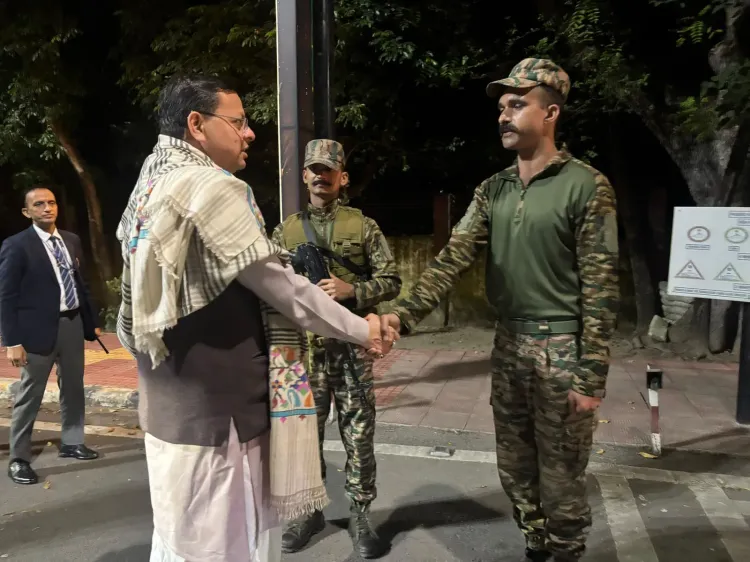
Uttarakhand CM Pushkar Singh Dhami halted his convoy at Garhi Cantonment, Dehradun, on Diwali evening to meet Indian Army soldiers on duty and personally extend festival greetings, calling their sacrifice an inspiration for the nation.
Key Takeaways
CM Pushkar Singh Dhami stopped his official convoy at Garhi Cantonment, Dehradun on Diwali, November 8, 2026 .
He stepped out to personally greet Indian Army soldiers on duty and offer Diwali wishes .
Dhami praised soldiers for serving 'day and night with dedication and indomitable courage' so citizens can celebrate festivals safely.
Garhi Cantonment is one of several key military installations in Uttarakhand , a state with strategic northern borders.
The unscheduled stop added a spontaneous dimension to the established tradition of political leaders acknowledging armed forces during major festivals.
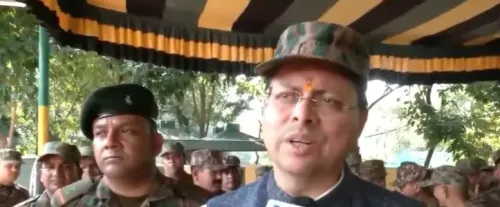
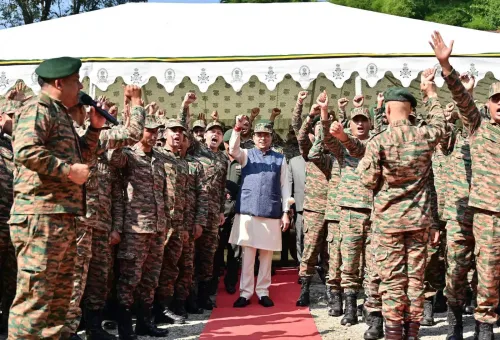
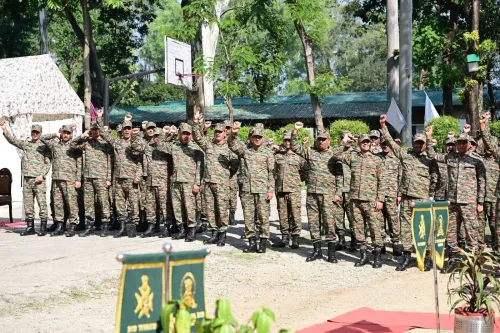
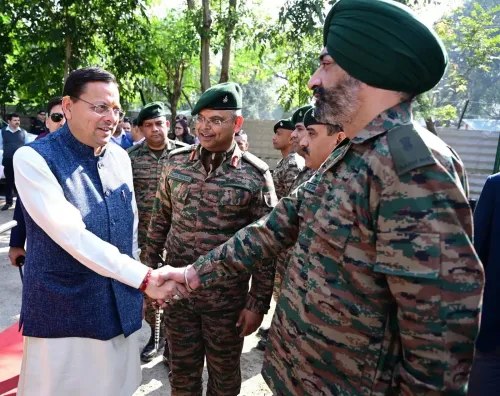
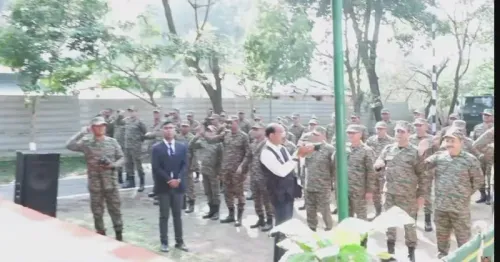
On the evening of Diwali, Uttarakhand Chief Minister Pushkar Singh Dhami did something unscripted — he ordered his convoy to halt outside Garhi Cantonment in Dehradun after spotting Indian Army soldiers on the roadside, stepped out, and personally extended his Diwali greetings to the men in uniform standing guard so the rest of the country could celebrate in peace.
Sharing the moment on X on November 8, 2026, Dhami wrote: 'Shasakiya aavas lautte hue Garhi Cantt mein sena ke jawaano ko dekhkar kafila rukwaya aur unse mulakat kar unhe Deepawali ke pawan parv ki hardik shubhkamnayein di' — 'Returning to the official residence, I spotted Army soldiers at Garhi Cantt, halted the convoy, met them, and offered heartfelt Diwali greetings.'
A Moment of Gratitude at Garhi Cantt
Garhi Cantonment, nestled in Dehradun, is one of Uttarakhand's key military installations — fitting terrain for such an encounter, given the state's long border with Tibet and Nepal. Dhami acknowledged that soldiers serve 'day and night with complete dedication, devotion, and indomitable courage' so that citizens can celebrate festivals in safety. The unplanned roadside meeting gave that sentiment an unusually human texture.
The Chief Minister concluded his post with a salute to 'Maa Bharti ke veer saputon' — the brave sons of Mother India — describing their sacrifice and commitment as 'a source of inspiration for all of us.' The tone was reverent, unhurried, and free of political framing: a soldier's festival, acknowledged on the soldier's terms.
Uttarakhand's Deep Military Fabric
Uttarakhand is home to a dense network of Army cantonments and regimental centres — Dehradun, Lansdowne, Ranikhet, Almora — shaped by the state's strategic geography along the northern frontier. That proximity makes civilian-military bonds here something lived rather than performed, and gestures like Dhami's carry particular resonance in a state where nearly every district has a family with someone in uniform.
Indian political leaders have a long tradition of visiting military establishments during Diwali and other major festivals to acknowledge the armed forces — a ritual acknowledgement that the festival's lights burn brighter because someone else is standing in the dark. Dhami's roadside stop, unscheduled and caught on camera, adds a spontaneous note to that otherwise choreographed tradition.
The soldiers at Garhi Cantt may have been surprised to see the Chief Minister step out of his car. The Chief Minister, by his own account, could not drive past without stopping. That instinct — small, human, and unplanned — is the story.
Point of View
Unannounced nature of the gesture separates it from the more stage-managed cantonment visits that typically mark festivals. For a state like Uttarakhand, where the Army is not an abstract institution but a neighbourhood employer, such optics carry genuine political and social weight. The Chief Minister's framing — soldiers enabling civilian celebrations — subtly positions the state government as a bridge between the defence establishment and the public, a posture Uttarakhand's border geography makes both credible and electorally useful.
NationPress
8 Nov 2026
Frequently Asked Questions
Why did CM Dhami stop his convoy at Garhi Cantonment?
CM Pushkar Singh Dhami spotted Indian Army soldiers at Garhi Cantonment while returning to his official residence on Diwali evening and ordered his convoy to halt so he could personally meet and greet them on the occasion.
Where is Garhi Cantonment located?
Garhi Cantonment is a military cantonment located in Dehradun, Uttarakhand , and houses Indian Army units. It is one of several strategic installations in the state given its proximity to northern borders.
What did CM Dhami say about Indian Army soldiers on Diwali?
Dhami said soldiers serve 'day and night with complete dedication, devotion, and indomitable courage' so that citizens can celebrate festivals in a safe environment, calling their sacrifice and commitment 'a source of inspiration for all of us.'
What is the significance of political leaders visiting army cantonments on Diwali?
Indian political leaders have a long-standing tradition of visiting military establishments or meeting soldiers during major festivals like Diwali as a public acknowledgement of the armed forces' sacrifices in enabling civilian celebrations.
What is Uttarakhand's connection to the Indian Army?
Uttarakhand hosts several major Army cantonments and regimental centres — including in Dehradun, Lansdowne, Ranikhet, and Almora — owing to its strategic location along the northern border with Tibet and Nepal.