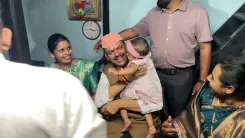
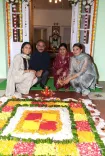
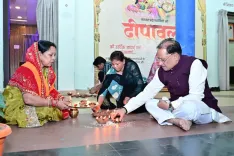
CM Fadnavis Spends Diwali Night at Nagpur Farmer's Home
Synopsis
Chief Minister Devendra Fadnavis spent Diwali night at a farmer's home in Lohara Savanga, Nagpur district, with the CMO calling the gesture 'the true Diwali' — a high-visibility outreach to Vidarbha's agriculture-dependent communities at a moment of seasonal reckoning.
Key Takeaways
CM Devendra Fadnavis stayed overnight at the Balpande family home in Lohara Savanga village, Nagpur district during Diwali 2026.
The Chief Minister's Office framed the visit as a pledge of 'firm support to farmers' dreams even in times of hardship.' Nagpur district lies in Vidarbha , Maharashtra's cotton-and-soybean belt historically associated with agrarian distress.
Fadnavis's earlier tenure ( 2014–2019 ) included the Jalyukt Shivar Abhiyan water conservation scheme targeting rural Maharashtra.
Festival-period rural stays by the CM are part of a broader pattern of administrative outreach to farming communities across Maharashtra.
Concrete policy follow-through — in the winter legislative session or the 2027 state budget — will be the next benchmark for farmer welfare commitments.
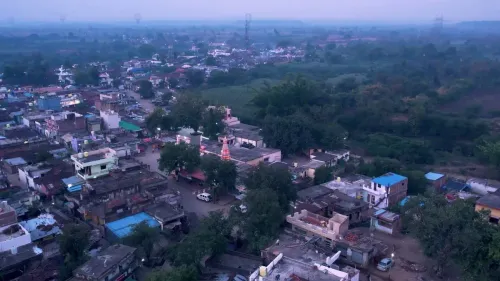
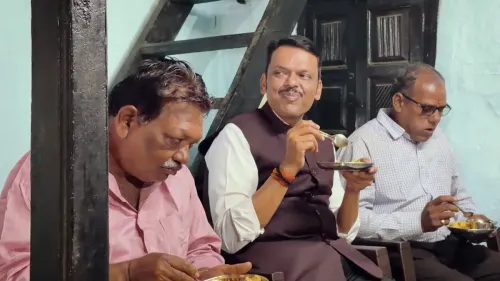
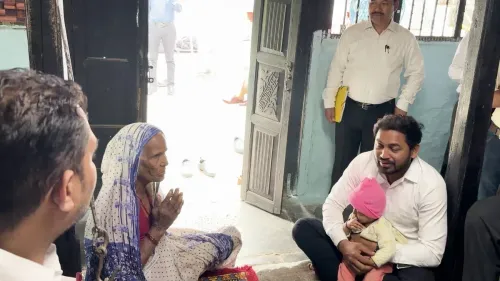
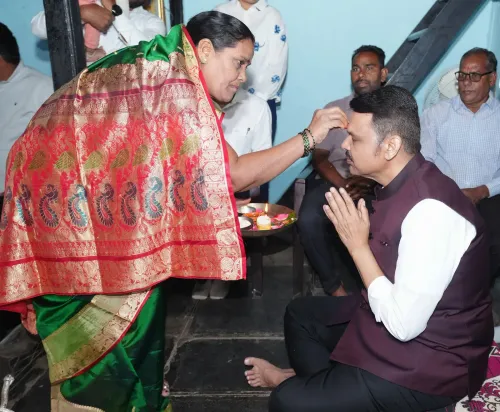
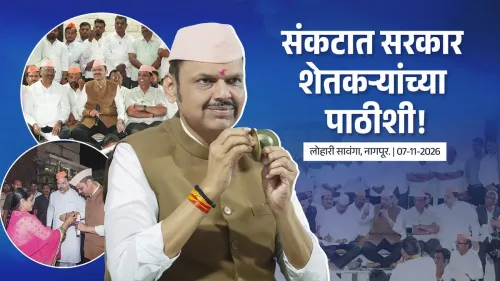
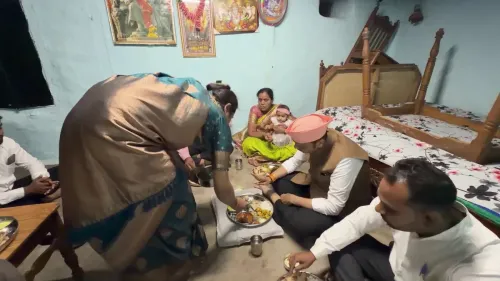
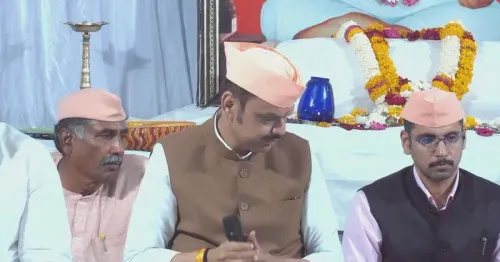
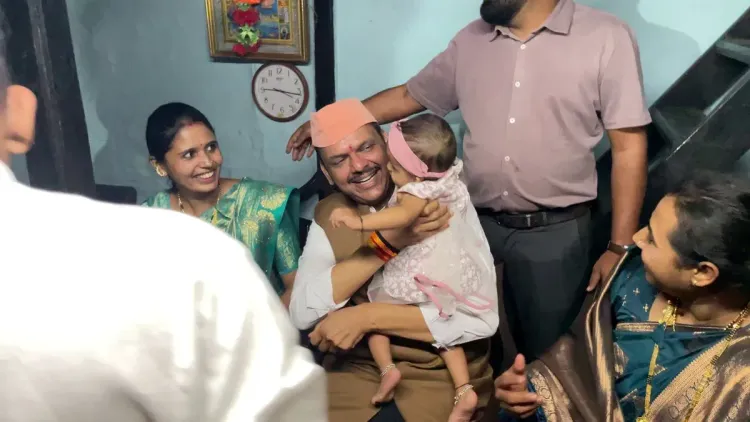
When the Chief Minister of Maharashtra chooses to spend Diwali not in Mantralaya but on a farmer's charpoy in Lohara Savanga village, Nagpur district, the gesture carries a weight that goes well beyond symbolism. Chief Minister Devendra Fadnavis stayed overnight at the home of the Balpande family in this Vidarbha village, in what his office described on Sunday, 8 November 2026 as a reaffirmation of the state's commitment to farmers even in times of crisis.
The Chief Minister's Office posted in Marathi: 'Baḷīrājācyā kaṣṭātūna phulalēlyā svapnānnā saṅkaṭācyā kāḷātahī bhakkama ādhāra dēṇyācā nirdhāra, hīca kharī dīpāvalī!' — roughly, 'The resolve to give firm support to the dreams that have blossomed from the toil of Balirajа [the farmer-king] even in times of hardship — that itself is the true Diwali!' The post also noted the warmth, affection and heartfelt emotions the Balpande family expressed during the visit.
Vidarbha's Agrarian Weight Behind the Visit
Nagpur district sits at the heart of Vidarbha, Maharashtra's eastern region long associated with cotton and soybean cultivation — and, over decades, with farmer distress tied to monsoon variability, debt cycles and volatile market prices. The region has historically attracted political attention precisely because of this vulnerability. Maharashtra governments across administrations have made periodic rural outreach in Vidarbha a fixture of their public calendar, particularly around festivals when agricultural communities take stock of a season's fortunes.
Fadnavis is no stranger to Vidarbha-focused policy. During his earlier tenure as Chief Minister from 2014 to 2019, his government launched the Jalyukt Shivar Abhiyan — a large-scale water conservation drive aimed at addressing drought and scarcity across rural Maharashtra, with a particular focus on the region. That programme became one of the more visible agricultural-welfare efforts of that period.
A Festival Stay as Governance Signal
Diwali homestays by senior political figures are not unprecedented, but they carry a specific charge in this geography. For farmers in Vidarbha, whose harvest outcomes can shift an entire year's economic footing, an overnight visit from the Chief Minister during the festival season is read as a statement of proximity — that the state's highest office is not remote from rural realities. The Balpande household in Lohara Savanga became, for one night, the symbolic centre of that message.
The CMO's framing — invoking Balirajа, a term of deep cultural reverence for the farming community in Maharashtra — was deliberate. It signals an audience and a register: this communication is pitched to rural Maharashtra, in its own idiom, at a moment when the community gathers to celebrate and reflect.
All eyes now turn to the winter legislative session and the 2027 state budget — where any concrete follow-through on farmer welfare, from crop insurance to irrigation outlay, will determine whether the lamp lit in Lohara Savanga becomes policy or remains poetry.
Point of View
Before a budget cycle where farmer welfare allocations will face scrutiny. The CMO's choice of Balirajа — an emotionally loaded honorific for the farming community — signals that the audience for this gesture is rural Maharashtra, not urban media. It also draws a straight line back to Fadnavis's first-term identity as a Vidarbha-sensitive administrator. Whether the optics translate into measurable relief — on crop insurance, irrigation, or debt restructuring — will define how this visit is remembered beyond the news cycle.
NationPress
8 Nov 2026
Frequently Asked Questions
Why did CM Fadnavis stay at a farmer's home on Diwali?
Chief Minister Devendra Fadnavis stayed overnight at the Balpande family's home in Lohara Savanga, Nagpur district, as a symbolic act of solidarity with farmers, with his office describing it as 'the true Diwali' — a pledge of support to farming communities during times of hardship.
Where is Lohara Savanga village located?
Lohara Savanga is a village in Nagpur district, situated in the Vidarbha region of eastern Maharashtra — an area known for cotton and soybean farming and a history of agrarian challenges.
What is the significance of Vidarbha for Maharashtra's farming community?
Vidarbha is Maharashtra's eastern agricultural belt, where cotton and soybean farmers face recurring challenges from monsoon variability, market price fluctuations and debt — making it a focal point for state welfare programmes and political outreach.
What farmer welfare schemes did Fadnavis launch in his earlier term?
During his first tenure as Chief Minister from 2014 to 2019, Devendra Fadnavis launched the Jalyukt Shivar Abhiyan, a water conservation initiative designed to address drought and water scarcity in rural Maharashtra, with a focus on Vidarbha.
What comes next after the CM's Diwali visit to Nagpur farmers?
Policy watchers will monitor the Maharashtra winter legislative session and the 2027 state budget for concrete announcements on crop insurance, irrigation investment or farmer loan relief that follow the symbolism of the Lohara Savanga visit.