CM Fadnavis Spends Diwali with Farmers, Unlocks ₹2.43 Cr Water Project
Synopsis
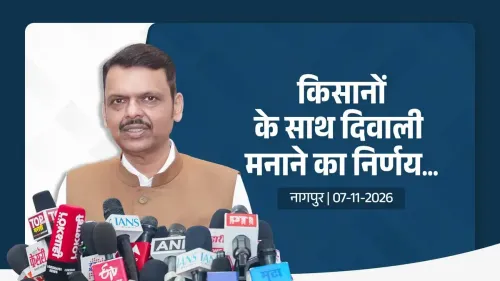
Chief Minister Devendra Fadnavis spent Diwali in Maharashtra's fields, announcing a ₹2.43 crore storage tank and irrigation wells for 10 farmers at Lohari Sawanga, relaxing the borewell ban until 15 December, and reviving Jalyukt Shivar as a top state priority.
Key Takeaways
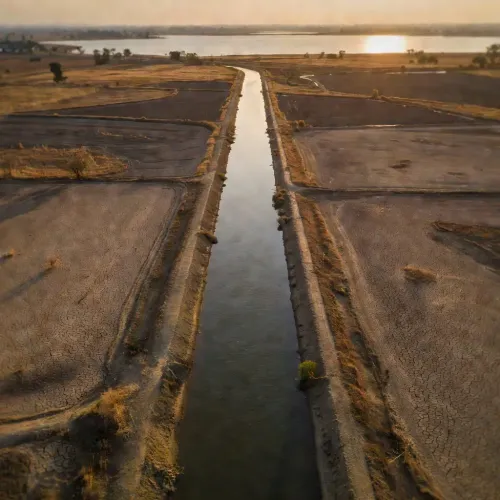
₹243.35 lakh storage tank to be built at Lohari Sawanga , providing long-term water security to the village.
10 farmers at Lohari Sawanga will receive new irrigation wells under the scheme.
Borewell ban on agricultural land relaxed until 15 December 2026 to protect crops and trees during the dry season.
Jalyukt Shivar Yojana and Gaaļmukt Dharan (reservoir desilting) declared the state government's highest priority.
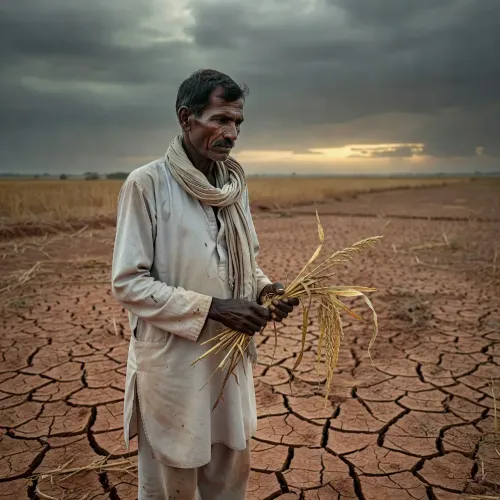
CM Fadnavis inspected cotton and tur dal crops at Sonegaon Rithi and Kohali , affirming government support for damage-hit farmers.
Gram panchayats urged to take the lead in local drought mitigation ; sarpanches shared rural development proposals directly with the CM.
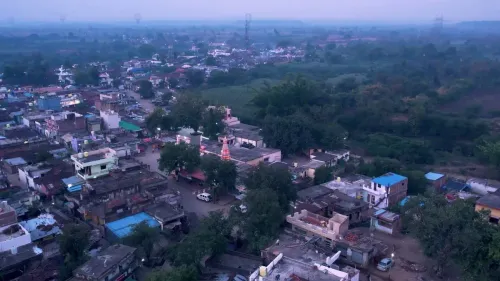
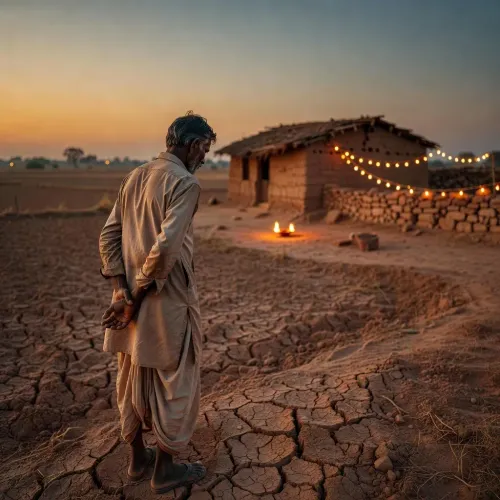
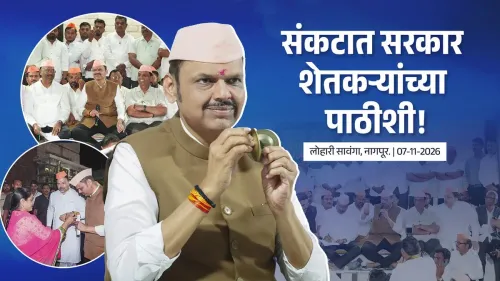
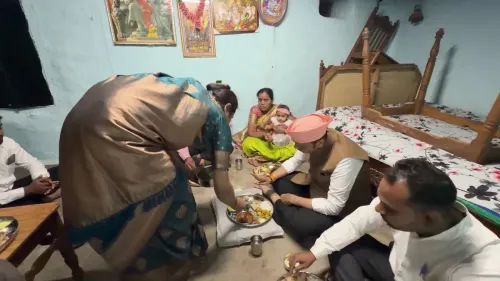
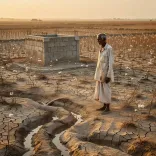
On a sun-scorched field in Lohari Sawanga, Chief Minister Devendra Fadnavis sat down for tarri poha (a spiced flattened-rice breakfast) with a farming family — not in a circuit house, but at the farm itself — as his office released a sweeping summary of his Sunday, 8 November 2026 outreach in Maharashtra's drought-stressed countryside.
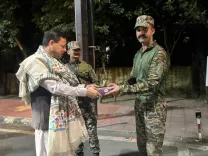
The day's announcements carried real material weight. Ten farmers at Lohari Sawanga are set to receive irrigation wells, while a storage tank worth ₹243.35 lakh (approximately ₹2.43 crore) will be constructed to give the village what the CMO called a 'permanent water relief' — pāṇyāchā śāśvat dilāsā. The Chief Minister's Office confirmed Fadnavis personally inspected standing crops at Sonegaon Rithi and Kohali, listening to farmers detail losses in their cotton and tur dal (pigeon pea) crops.
Borewell Ban Eased Until 15 December
In the most consequential regulatory move of the day, Fadnavis announced a relaxation of the ban on borewells on agricultural land, extended until 15 December 2026 — a measure framed explicitly to keep trees and crops alive through the dry spell. The decision hands farmers a critical window to sink new borewells without facing legal restriction, a temporary but tangible lifeline in regions where groundwater is the last resort.
Jalyukt Shivar and Desiltation Back at the Top
Fadnavis declared the Gaaļmukt Dharan (desilting of reservoirs) and Jalyukt Shivar Yojana as his government's 'highest priority.' Both schemes trace their lineage to his first term (2014–2019): Jalyukt Shivar was launched in 2015 to build check dams, percolation tanks, and desilted water bodies across Maharashtra's drought belt — primarily Vidarbha and Marathwada. Reviving and scaling them signals a deliberate policy continuity rather than a fresh pivot.
The CM also called on gram panchayats to take the lead in fighting drought at the local level. Village heads — sarpanch — in turn presented their own ideas for rural development, turning the outreach into a two-way exchange rather than a unidirectional announcement.
Bhaubeej on the Farm: The Politics of Proximity
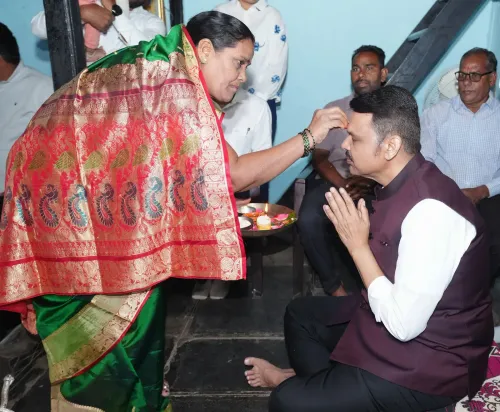
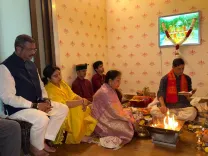
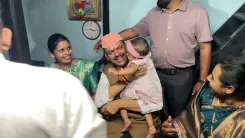
'We have never seen a Chief Minister before,' the CMO quoted local women — lāḍakya bahiṇī (beloved sisters, a phrase tied to the state's women's welfare scheme) — as saying, visibly moved by his arrival. The CM celebrated Bhaubeej, the Diwali day marking the bond between siblings, with a farmer's family. A woman named Arunataai told him warmly: 'Come back next year and bring your sister-in-law too' — a moment the CMO amplified as proof of genuine grassroots connect.
Maharashtra administrations have long used high-visibility rural visits to signal intent on drought relief; what distinguished Sunday's tour was the density of concrete deliverables attached to it — wells, tanks, regulatory relief, and a direct crop-damage acknowledgement — rather than just optics.
With the borewell window closing on 15 December and the storage tank construction timeline yet to be formalised, the pressure is now on district machinery to convert Sunday's promises into ground-level execution before the next dry season bites.
Point of View
Betting that tangible rural delivery — wells, tanks, regulatory relief — will consolidate support in Maharashtra's chronically drought-exposed Vidarbha and Marathwada belts ahead of any electoral cycle. The Bhaubeej optic is deliberate: by celebrating a family festival in a farmer's home rather than a government venue, the CM is performing accessibility at a moment when agrarian distress remains a potent political liability. The gram panchayat mobilisation call is also a governance hedge — devolving drought-response ownership to local bodies creates a distributed accountability chain that the state can point to if delivery falters. The borewell relaxation, though time-limited, is the kind of low-cost, high-visibility relief that plays well in water-stressed constituencies.
NationPress
8 Nov 2026
Frequently Asked Questions
What did CM Devendra Fadnavis announce for farmers on Diwali 2026?
CM Fadnavis announced a ₹243.35 lakh storage tank and irrigation wells for 10 farmers at Lohari Sawanga village, relaxed the borewell ban on agricultural land until 15 December 2026, and declared Jalyukt Shivar Yojana and Gaaļmukt Dharan as the state's top priorities.
What is Jalyukt Shivar Yojana and why is it back in focus?
Jalyukt Shivar Yojana is a Maharashtra state scheme launched in 2015 to construct check dams, percolation tanks, and desilted water bodies to drought-proof villages. CM Fadnavis, who launched it during his first term, has declared it a highest priority again in 2026 as drought stress persists across Vidarbha and Marathwada.
Why has Maharashtra relaxed the borewell ban until 15 December 2026?
CM Fadnavis announced the relaxation specifically to allow farmers to sink borewells on agricultural land to keep trees and standing crops alive during the ongoing dry spell. The relaxation is temporary and expires on 15 December 2026.
Where did CM Fadnavis celebrate Bhaubeej in 2026?
Fadnavis celebrated Bhaubeej at the home of a farmer's family, eating a breakfast of tarri poha with them and personally visiting fields at Lohari Sawanga, Sonegaon Rithi, and Kohali in Maharashtra.
What crop damage did farmers highlight during Fadnavis's field visit?
Farmers at Sonegaon Rithi and Kohali presented their grievances over losses to cotton and tur dal (pigeon pea) crops. The Chief Minister's Office confirmed the government stands behind affected farmers.