CM Dhami halts convoy on Diwali to meet Garhi Cantt soldiers
Synopsis
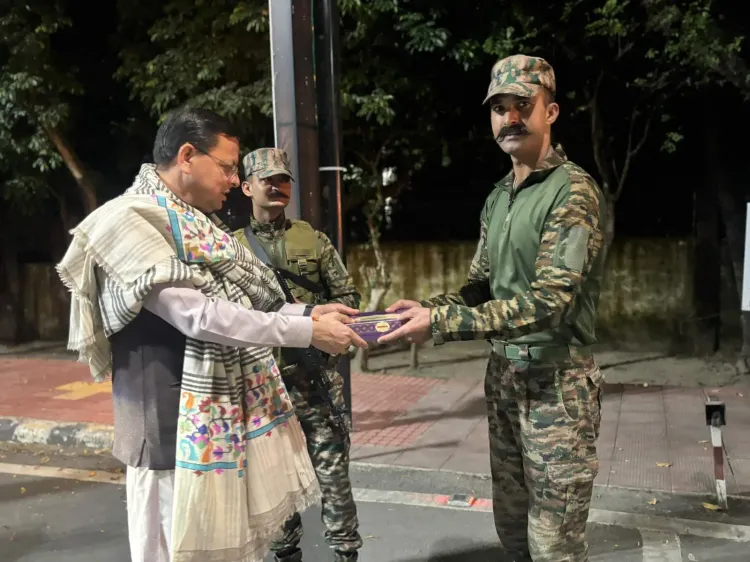
On Diwali 2026, Uttarakhand Chief Minister Pushkar Singh Dhami halted his convoy at Garhi Cantt in Dehradun to personally greet Indian Army jawans, share sweets, and honour their sacrifice — calling gratitude toward soldiers every citizen's duty.
Key Takeaways
CM Pushkar Singh Dhami stopped his official convoy at Garhi Cantt, Dehradun on Diwali 2026 to meet Indian Army soldiers.
He distributed sweets and personally inquired about the welfare of the jawans in an unscheduled interaction.
Dhami said soldiers fulfil their duties 'day and night with complete dedication, devotion, and indomitable courage,' enabling citizens to celebrate safely.
He emphasised that soldiers deployed away from home during festivals represent a sacrifice every citizen should acknowledge as a 'duty.' Uttarakhand , described by Dhami as Veer Bhoomi , has a long tradition of contributing recruits to the armed forces from its Garhwal and Kumaon districts.
The interaction reinforces Uttarakhand's standing civil-military engagement, anchored by its proximity to sensitive northern borders and major cantonments like Garhi Cantt .
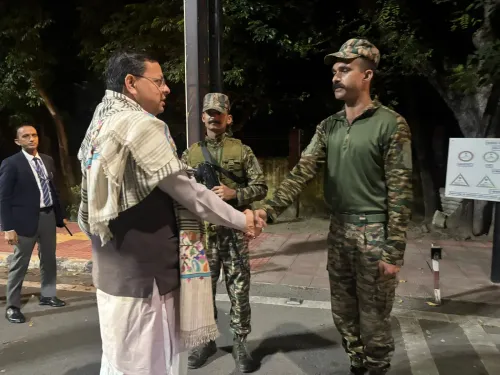
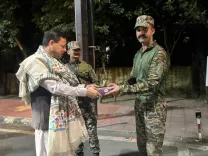
On the evening of Diwali 2026, Chief Minister Pushkar Singh Dhami of Uttarakhand did something small and human that said something large: en route to his official residence, he spotted soldiers from the Garhi Cantt area in Dehradun and ordered his convoy to stop. What followed was an unscheduled, unhurried meeting — sweets shared, well-wishes exchanged, and the quiet acknowledgement that while the rest of the country lit diyas with family, these men stood watch.
A convoy halted, a conversation started
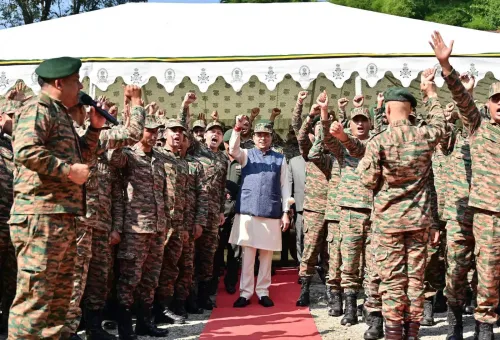
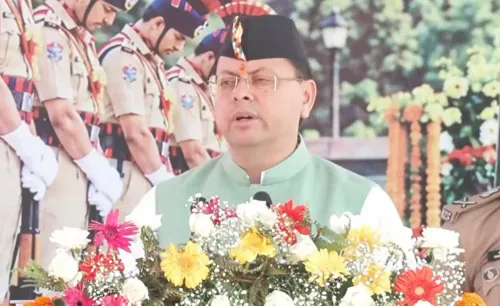
The Chief Minister's Office confirmed that CM Dhami stepped out to personally greet the jawans, inquired about their welfare, and distributed sweets. It was a gesture stripped of ceremony — no stage, no microphone, no prior schedule. Speaking on the occasion, Dhami said: 'hamare veer sainik din-raat poori nishtha, samarpan aur adamya sahas ke saath apne kartavyon ka nirvahan karte hain' — 'our brave soldiers fulfil their duties day and night with complete dedication, devotion, and indomitable courage.'
He added that it is only because of their 'vigilant watch and unshakeable resolve' that citizens across the country can celebrate their festivals in safety. The sentiment was not rhetorical — it landed at a cantonment gate, face to face.
Uttarakhand's Veer Bhoomi identity and what it means in practice
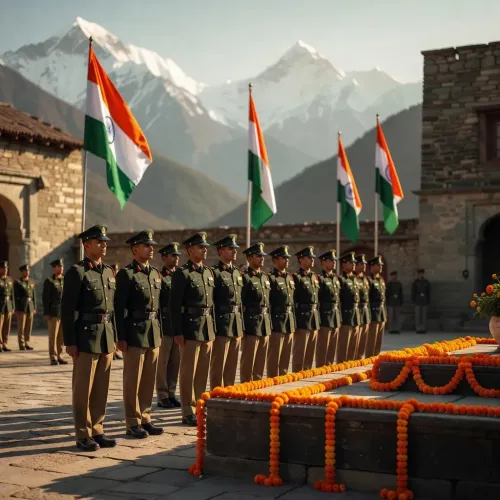
Uttarakhand has carried the designation Veer Bhoomi — 'land of the brave' — since long before statehood in 2000, and the numbers bear it out. The state consistently ranks among India's highest per-capita contributors to the armed forces, drawing recruits from hill districts across Garhwal and Kumaon. Garhi Cantt, nestled in Dehradun, is one of the country's older cantonment zones and anchors a civil-military relationship that runs deep in local culture.
Dhami invoked that identity explicitly: 'Uttarakhand is Veer Bhoomi and its youth have a glorious tradition in the Indian Army. Every citizen of the state is proud of its soldiers and their families.' That framing connects a Diwali roadside stop to a much longer story of a hill state that has historically sent sons — and increasingly daughters — to the frontier.
The human cost behind every festival headline
The Chief Minister's remarks zeroed in on the specific sacrifice of festival postings: 'When the entire country celebrates with its families, many of our brave jawans remain deployed far from home, guarding the nation.' It is a truth that rarely makes headlines precisely because it is so routine — soldiers do not go home for Diwali, and most of their countrymen do not think about it.
Dhami closed by calling gratitude toward soldiers 'every citizen's duty' and praying for their 'happy, healthy, and safe lives.' The state government's standing policy emphasis on ex-servicemen welfare and recruitment support gives that language some institutional weight beyond the occasion.
An unplanned convoy stop on a festival night is a small act. But in a state where nearly every family has a soldier somewhere in the frame, it is exactly the kind of moment that lands — and lasts.
Point of View
Who leads a BJP government in a state with one of India's highest per-capita military enrolments, visible solidarity with serving soldiers carries real electoral and cultural weight. The 'Veer Bhoomi' framing is not mere rhetoric; it connects to a policy lineage of ex-servicemen welfare and recruitment support that spans Uttarakhand's entire post-2000 statehood history. Watch whether this moment translates into concrete announcements — pension reforms, recruitment rallies, or cantonment welfare schemes — in the weeks ahead.
NationPress
8 Nov 2026
Frequently Asked Questions
Why did CM Dhami stop his convoy on Diwali?
CM Pushkar Singh Dhami spotted Indian Army soldiers at the Garhi Cantt area in Dehradun while returning to his official residence on Diwali and ordered his convoy to halt so he could personally greet them, share sweets, and wish them well.
Where is Garhi Cantt located?
Garhi Cantt is a military cantonment area in Dehradun, the capital of Uttarakhand, housing Indian Army units and personnel.
What did CM Dhami say to the soldiers on Diwali?
CM Dhami told the soldiers that their vigilance allows citizens to celebrate festivals safely, called their sacrifice 'a source of pride and honour,' and said that gratitude toward soldiers is every citizen's duty.
Why is Uttarakhand called Veer Bhoomi?
Uttarakhand is called Veer Bhoomi — meaning 'land of the brave' — because the state, particularly its Garhwal and Kumaon regions, has historically contributed a high per-capita number of recruits to the Indian Armed Forces.
What is Uttarakhand's policy on ex-servicemen welfare?
Since statehood in 2000, Uttarakhand has maintained a strong policy emphasis on ex-servicemen welfare and army recruitment support, reflecting the state's deep demographic and cultural ties to the Indian military.