CM Fadnavis waives ₹48,000 cr power dues for farm pump owners
Synopsis
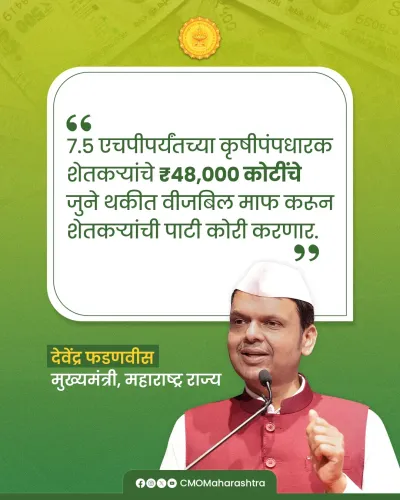
Chief Minister Devendra Fadnavis announced a waiver of ₹48,000 crore in outstanding electricity dues for agricultural pump owners up to 7.5 HP in Maharashtra, alongside a farm loan waiver of up to ₹2 lakh and a pledge of 12-hour free daytime power for all farmers by year-end.
Key Takeaways
₹48,000 crore in outstanding electricity dues for agricultural pump owners of up to 7.5 HP will be waived by the Maharashtra government.
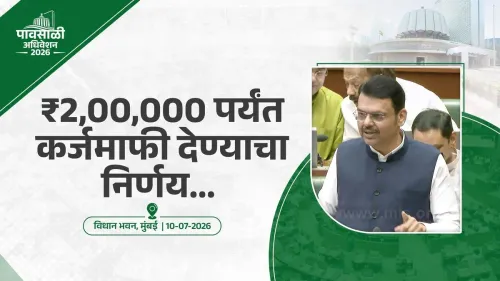
The Punyashlok Ahilyadevi Holkar Farmer Debt Relief Scheme offers loan waivers up to ₹2 lakh and a ₹50,000 incentive grant for timely repayers.
More than 12 lakh farmers previously excluded due to the 2019 waiver clause have now been included after the eligibility criteria were revised.
All Maharashtra farmers will receive 12 hours of free daytime electricity by the end of the year.
Combined central and state agricultural allocation stands at ₹95,000 crore , separate from the loan waiver.
An ambitious river-linking project is underway to bring water to the approximately 52 per cent of Maharashtra that receives insufficient rainfall.
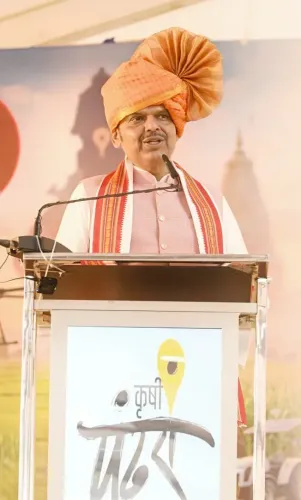
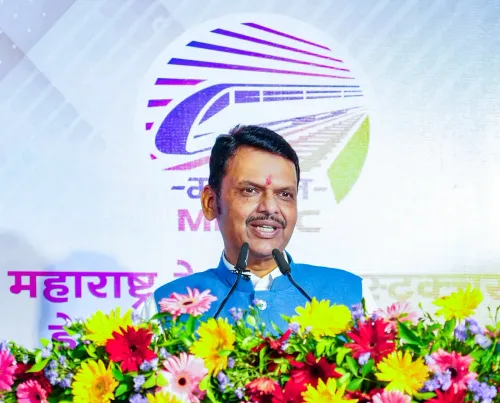
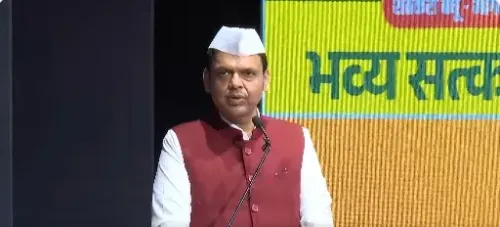
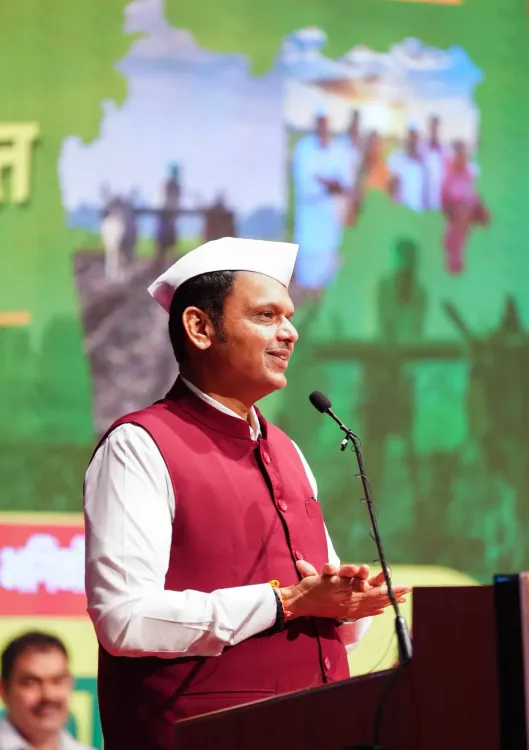
The Chief Minister's Office of Maharashtra announced on Wednesday, 15 July 2026, that Chief Minister Devendra Fadnavis has declared a waiver of ₹48,000 crore in outstanding electricity dues for farmers owning agricultural pumps of up to 7.5 horsepower — a move described as 'wiping the slate clean' for Maharashtra's cultivators. The announcement was made at a felicitation event in Mumbai held in honour of the launch of the 'Punyashlok Ahilyadevi Holkar Shetkari Karjamukti Yojana' (Punyashlok Ahilyadevi Holkar Farmer Debt Relief Scheme).
Context
At the Mumbai event, CM Fadnavis was felicitated for announcing the Punyashlok Ahilyadevi Holkar Farmer Debt Relief Scheme, which provides loan waivers of up to ₹2 lakh per farmer and an incentive grant of ₹50,000 for those who have repaid loans on time. Addressing the gathering, Fadnavis said: 'The BJP-Mahayuti has always prioritised the welfare of farming and farmers. That is why the public gave us unprecedented support in the elections.' He emphasised that the debt waiver decision was taken even in the absence of any electoral pressure, honouring a promise made to farmers.
An earlier eligibility condition that excluded farmers who had availed the 2019 loan waiver was subsequently revised following demands from elected representatives. As a result, more than 12 lakh farmers have now been brought under the scheme's coverage. The requirement to repay current-year loans as a precondition has also been dropped, given the agricultural distress caused by the 'El Nino' weather phenomenon.
Policy Backdrop
The scheme is named after the 18th-century Maratha ruler Ahilyadevi Holkar, celebrated for her administrative reforms and public works. Maharashtra has a recurring history of farm loan waivers — Fadnavis himself acknowledged this, stating: 'If we have to give a loan waiver three times in seven to eight years, we must understand that the problems facing farmers are serious.' He stressed that debt relief is only a temporary measure and that structural solutions, including new agricultural technology, are essential.
In addition to the electricity bill waiver, the Mahayuti government has announced free daytime electricity for 12 hours to all farmers in the state by the end of the year. The combined central and state government allocation for agriculture stands at ₹95,000 crore, which is separate from the loan waiver outlay. Fadnavis cited the 'Magel Tyala Shet Tale' (on-demand farm pond) scheme and the Jalyukt Shivar Abhiyan water conservation programme as initiatives that have already enabled farmers in covered areas to take two to three crops annually and shift towards horticulture.
Stakeholders and Impact
The electricity bill waiver directly benefits agricultural pump owners with pumps rated up to 7.5 HP — a category that encompasses a large share of small and marginal farmers across Maharashtra who depend on electric pumps for irrigation. The scheme expansion to include more than 12 lakh farmers previously excluded due to the 2019 waiver clause significantly broadens its reach.
Fadnavis, invoking his personal connection to farming, said: 'I am a farmer's son and my ancestral farmland is in my village. I have worked in the fields and seen the hardships of farmers closely. I am not someone who makes decisions sitting in a closed room — I am a person who understands agriculture.' Ministers Dattatray Bharane and Dr Ashok Uike, MP Dr Anil Bonde, MLAs Ravindra Chavan and Chitra Wagh, along with farmers from across the state, were present at the event.
What's Next
The government has also announced an ambitious river-linking project to channel water from surplus regions to the approximately 52 per cent of Maharashtra's area that receives insufficient rainfall. Fadnavis stated that once complete, no district in the state will remain permanently drought-affected. Implementation guidelines for the ₹48,000 crore electricity waiver, the 12-hour free power rollout, and the river-linking project will be closely watched as benchmarks for the Mahayuti government's agricultural agenda. The broader test will be whether structural investments can reduce Maharashtra's dependence on periodic debt relief cycles.
Point of View
000 crore electricity dues waiver on top of a ₹2 lakh loan waiver — signals that the Mahayuti government is front-loading its farmer-welfare commitments early in its term, insulating itself from opposition criticism ahead of local body elections. Fadnavis's own acknowledgement that three waivers in seven to eight years reflect a deeper structural problem is a rare admission from a sitting chief minister, and positions him as a reformist even while deploying a classic populist instrument. The expansion of the scheme to include farmers who benefited from the 2019 waiver, after initial exclusion, reveals the political weight that legislators carry in shaping welfare architecture. The long-term credibility of the package will hinge on whether the river-linking project and micro-irrigation push can materially reduce the distress that makes recurring waivers politically unavoidable.
NationPress
14 Oct 2026
Frequently Asked Questions
What is the Punyashlok Ahilyadevi Holkar Farmer Debt Relief Scheme in Maharashtra?
The Punyashlok Ahilyadevi Holkar Farmer Debt Relief Scheme is a Maharashtra government programme that provides loan waivers of up to ₹2 lakh per farmer and an incentive grant of ₹50,000 for farmers who have repaid loans on time. It is named after the 18th-century Maratha ruler Ahilyadevi Holkar.
How much electricity bill waiver has CM Fadnavis announced for farmers?
CM Devendra Fadnavis announced a waiver of ₹48,000 crore in outstanding electricity dues for farmers owning agricultural pumps of up to 7.5 horsepower, effectively clearing their accumulated arrears.
Will farmers who got the 2019 Maharashtra loan waiver benefit from the new scheme?
Yes. An initial condition excluding farmers who had availed the 2019 loan waiver was revised following demands from elected representatives, bringing more than 12 lakh such farmers under the new scheme's coverage.
What is the free electricity plan for Maharashtra farmers?
The Mahayuti government has announced that all farmers in Maharashtra will receive free daytime electricity for 12 hours by the end of the year, in addition to the waiver of existing electricity arrears.
What is the total agricultural funding announced by the Maharashtra and central governments?
The combined central and state government allocation for agriculture stands at ₹95,000 crore, which is separate from and in addition to the farm loan waiver outlay announced under the scheme.