Maharashtra waives ₹48,000 crore electricity arrears for farmers: CM Fadnavis
Synopsis
Maharashtra CM Devendra Fadnavis has written off ₹48,000 crore in farmer electricity arrears in one stroke — clearing a decades-old debt trap that was blocking rural households from getting new power connections. Paired with a ₹40,000 crore loan waiver and a ₹6 lakh crore water infrastructure blueprint, this is arguably the most sweeping agricultural relief package any Maharashtra government has announced in a single sitting.
Key Takeaways
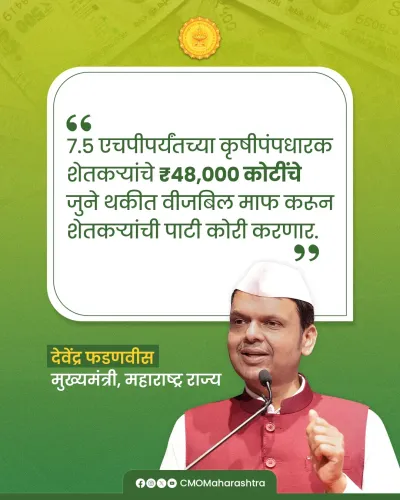
Maharashtra CM Devendra Fadnavis announced a ₹48,000 crore waiver on farmer electricity arrears on 15 July 2025 .
The waiver clears historical dues that were preventing farmers from obtaining new power connections .
The state already provides free electricity for pump sets up to 7.5 HP , backed by an annual ₹25,000 crore power subsidy.
76% of Maharashtra farmers currently receive free daytime power; the government targets 100% coverage by year-end.
A separate ₹40,000 crore loan waiver was also cited as part of the same policy package.
Long-term water infrastructure projects worth ₹6 lakh crore — including 24 new dams and the Wainganga-Nalganga river link — aim to address drought in 52% of the state.
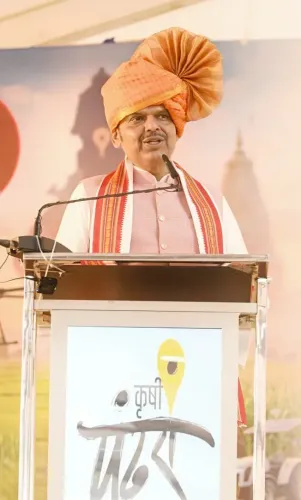
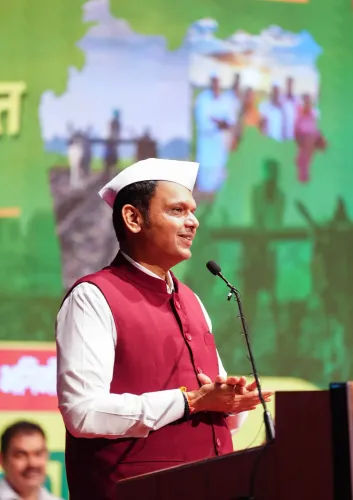
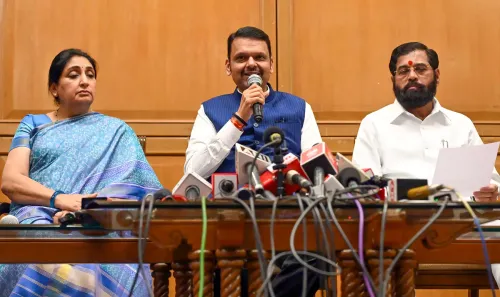
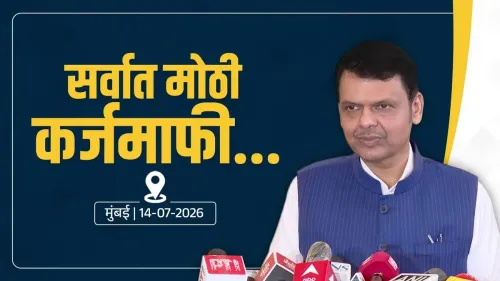
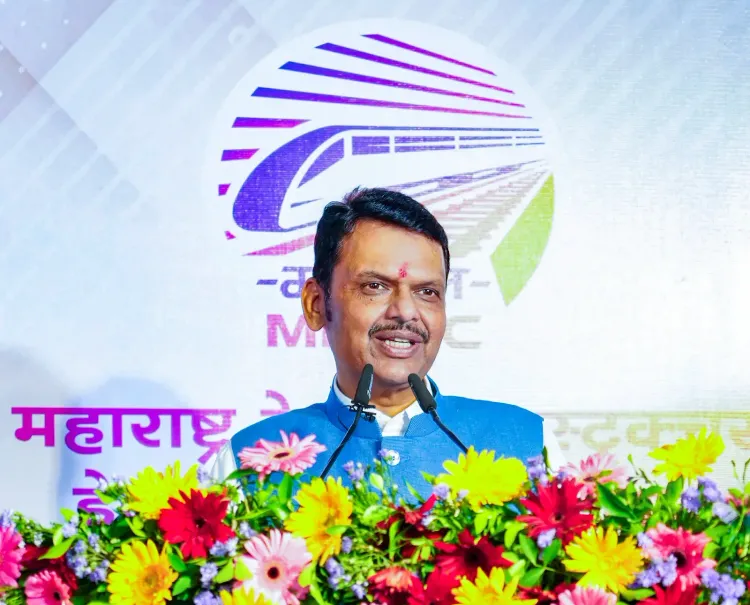
Maharashtra Chief Minister Devendra Fadnavis on Wednesday, 15 July announced a ₹48,000 crore waiver on outstanding electricity bill arrears owed by the state's farmers, calling it a decisive step to give the agricultural community a clean financial slate. The announcement was made at a farmers' gratitude ceremony organised by the Bharatiya Janata Party (BJP) Kisan Morcha in Mumbai.
What the Waiver Covers
The waiver wipes out all historical electricity dues accumulated by farmers across Maharashtra. While the state already provides free electricity for pump sets up to 7.5 horsepower (HP), older unpaid bills remained registered against farmers' names, blocking them from obtaining new power connections. The write-off resolves that structural barrier entirely.
Fadnavis quoted directly: 'Our government has decided to write off ₹48,000 crore in old electricity bills. The farmer's slate must be wiped clean so they can write a new history of progress.'
Solar Power and the Road to 100% Daytime Coverage
The state currently backs agricultural power through an annual ₹25,000 crore subsidy, underpinning the Solar Pump and Solar Agricultural Feeder schemes that already deliver daytime electricity to 76% of Maharashtra's farmers. Fadnavis committed to scaling this to 100% of farmers receiving free daytime agricultural power by the end of 2025.
The Chief Minister framed the pivot to solar and sustainable energy as a long-term structural fix rather than a stopgap, contrasting it with repeated loan waivers that, in his view, signal persistent agricultural stress rather than resolve it.
Broader Agricultural Strategy
Fadnavis also referenced the earlier ₹40,000 crore loan waiver, describing both decisions as calculated policy moves rather than pre-election gestures. He argued that the BJP-Mahayuti alliance received an unprecedented mandate in the assembly elections on the strength of these commitments, and that implementation follows through on those promises.
On structural reforms, the government is promoting group farming to reduce input costs and improve market access, incentivising natural farming, and supporting indigenous cattle conservation to improve soil health. Previous conditions attached to loan waivers have reportedly been relaxed to widen eligibility.
Fadnavis credited initiatives launched since 2014 — including Jalyukt Shivar (water conservation) and Magel Tyala Shettale (farm ponds on demand) — with helping millions of farmers shift from single-crop to multi-crop agriculture, harvesting up to three crops a year.
Water Infrastructure: ₹6 Lakh Crore Blueprint
Addressing the fact that 52% of Maharashtra is drought-prone, Fadnavis unveiled a large-scale river-linking and water grid plan. The Wainganga-Nalganga project will divert surplus rainwater into the Godavari and Tapi basins. The blueprint includes constructing 24 new dams and raising the height of 16 existing reservoirs.
Additionally, 200 TMC of floodwater from Western Maharashtra will be redirected to the arid Marathwada region via diversion bunds, and nearly 275 TMC of water from the Ulhas basin will be channelled to North Maharashtra and Marathwada. The total long-term water and agricultural infrastructure outlay is pegged at ₹6 lakh crore.
'Once these works are completed, the next generation of Maharashtra will never have to witness a drought,' Fadnavis said, concluding the address.
What Comes Next
With the electricity arrear waiver now announced, implementation details — including the timeline for crediting the write-off and the mechanism for clearing blocked power connections — are expected to be formalised by state energy officials. The push to extend daytime solar power to the remaining 24% of farmers is the immediate operational benchmark to watch.
Point of View
000 crore electricity write-off is fiscally significant, but the more telling detail is why the dues existed at all: farmers were not receiving active bills, yet the arrears stayed on record and blocked new connections — a bureaucratic trap of the state's own making. Fadnavis is right that repeated waivers signal structural distress rather than resolve it, yet the remedy announced here is itself another waiver. The solar expansion and river-linking blueprint are the genuinely durable interventions, but both depend on execution timelines that Maharashtra has historically struggled to meet. The ₹6 lakh crore water infrastructure figure deserves scrutiny: without a phased funding roadmap and independent progress audits, it risks becoming another aspirational headline.
NationPress
14 Oct 2026
Frequently Asked Questions
What is the ₹48,000 crore electricity waiver announced by Maharashtra CM Fadnavis?
It is a complete write-off of all outstanding electricity bill arrears owed by farmers in Maharashtra, announced by Chief Minister Devendra Fadnavis on 15 July 2025. The waiver clears historical dues that had been blocking farmers from securing new power connections, even though they were not receiving active bills for their 7.5 HP pump sets.
Who benefits from the Maharashtra electricity arrear waiver?
All farmers in Maharashtra who had accumulated unpaid electricity dues — primarily those using motor pump sets for irrigation — stand to benefit. The waiver removes the outstanding balance from their records, restoring their eligibility for new power connections.
How does this relate to the earlier ₹40,000 crore loan waiver?
CM Fadnavis described both the ₹40,000 crore loan waiver and the ₹48,000 crore electricity arrear write-off as part of the same policy package, framing them as calculated welfare decisions rather than electoral moves. Together, they represent a combined relief of approximately ₹88,000 crore for Maharashtra's farming community.
What is Maharashtra's plan to provide 100% daytime electricity to farmers?
The state is scaling up its Solar Pump and Solar Agricultural Feeder schemes, currently covering 76% of farmers, with a target of reaching 100% free daytime agricultural power by the end of 2025. The programme is supported by an annual ₹25,000 crore power subsidy.
What is the Wainganga-Nalganga project mentioned by CM Fadnavis?
The Wainganga-Nalganga project is a river-linking initiative designed to divert surplus rainwater into the Godavari and Tapi river basins, helping address water scarcity in drought-prone regions like Marathwada. It is part of a broader ₹6 lakh crore water and agricultural infrastructure blueprint that also includes 24 new dams and raising the height of 16 existing reservoirs.