Maharashtra tables ₹97,706 cr supplementary demands; ₹20,552 cr for farm loan waiver
Synopsis
Maharashtra has tabled a near-₹1 lakh crore supplementary budget even as its public debt races toward ₹11 lakh crore. The ₹20,552 crore farm loan waiver — part of a ₹36,585 crore programme — is the headline item, but the real story is how a state already running a ₹1.50 lakh crore fiscal deficit plans to fund it all without crowding out capital spending.
Key Takeaways
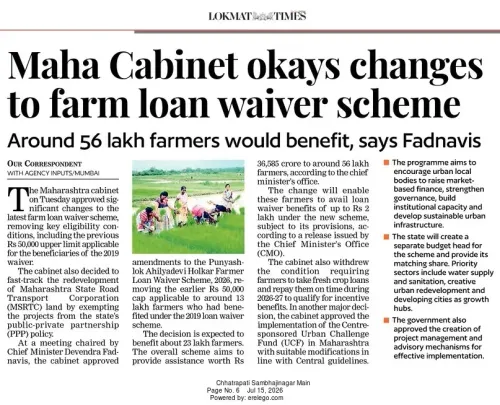
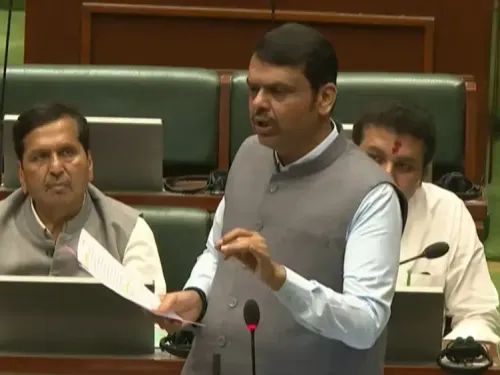
Maharashtra CM Devendra Fadnavis tabled supplementary demands of ₹97,706.40 crore on 22 June for the remainder of FY 2026-27 . ₹20,552 crore is allocated for the farm loan waiver, part of a ₹36,585 crore scheme expected to benefit 56 lakh farmers .
Infrastructure gets ₹3,372 crore for MMRDA metro projects and ₹4,550 crore for the Thane-Borivali tunnel and Orange Gate corridor.
The power sector receives a combined ₹8,000 crore for loan repayment and interest payments by the Maharashtra State Electricity Distribution Company.
Maharashtra's fiscal deficit is projected at ₹1.50 lakh crore and public debt is set to touch ₹11 lakh crore by end of FY2026-27.
The Centre's interest-free capital investment scheme contributes ₹9,934 crore to the supplementary allocation.
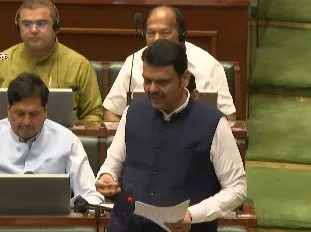
Maharashtra Chief Minister Devendra Fadnavis on Monday, 22 June tabled supplementary demands worth ₹97,706.40 crore for the remainder of financial year 2026-27, even as the state grapples with a projected fiscal deficit of ₹1.50 lakh crore and public debt expected to breach ₹11 lakh crore by year-end. The demands represent the second supplementary budget exercise of the year, following an earlier round of ₹11,552 crore during the Budget Session.
Farm Loan Waiver: The Centrepiece
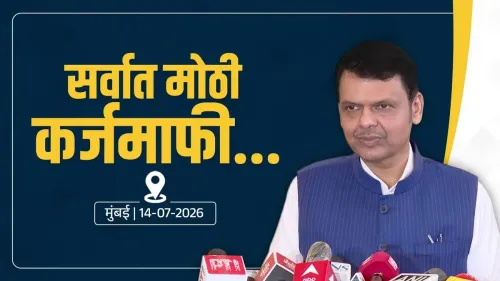
The single largest allocation — ₹20,552 crore — is earmarked for the state's farm loan waiver programme, which is estimated to cost ₹36,585 crore in total and is expected to benefit nearly 56 lakh farmers across Maharashtra. Fadnavis, who also holds the Finance and Planning portfolios, defended the move, stating that the waiver was announced solely to provide relief to distressed farmers and was not linked to any electoral considerations. Critics, however, have questioned the fiscal prudence of a large-scale waiver at a time when the state's revenue deficit stands at ₹40,000 crore.
Infrastructure and Urban Projects
Infrastructure spending features prominently in the supplementary demands. The government has proposed a loan of ₹3,372 crore to the Mumbai Metropolitan Region Development Authority (MMRDA) for metro projects, along with ₹4,550 crore for the Thane-Borivali twin tunnel project and the Orange Gate underground road corridor. An additional ₹350 crore has been provisioned as the state's equity contribution to Mumbai Metro, and ₹1,000 crore has been allocated as share capital to the Maharashtra State Infrastructure Development Corporation.
Power Sector and Local Bodies
The power sector draws a combined outlay of ₹8,000 crore — ₹3,000 crore for interest payments on loans taken by the Maharashtra State Electricity Distribution Company and ₹5,000 crore for repayment of those loans. A further ₹4,000 crore has been set aside to clear electricity bills of state government offices through the composite billing system. Urban local bodies are to receive ₹800 crore under the Urban Infrastructure Development Fund (UIDF), disbursed as loans received from the National Housing Bank.
Other Key Allocations
Under the Centre's Special Assistance Scheme for Capital Investment, Maharashtra has secured ₹9,934 crore in interest-free loans for development works across sectors. The government has also earmarked ₹1,750 crore to cover deficits under the Minimum Support Price (MSP) Scheme, ₹1,734 crore for honoraria and operational expenses of Anganwadi workers, and ₹181 crore for civil, furniture, and electrical works at the Air India building. Smaller but notable provisions include ₹100 crore for new administrative buildings under the expansion of Vidhan Bhavan, Nagpur, ₹28 crore for digitalisation of the Maharashtra Legislature Secretariat, and ₹21 crore for eco-friendly vehicles to promote self-reliance among persons with disabilities.
Fiscal Pressure in Context
Maharashtra had presented a full budget of ₹7.60 lakh crore for 2026-27, making this supplementary round — at nearly ₹1 lakh crore — a significant add-on. The state's fiscal trajectory has drawn attention from economists and opposition lawmakers alike, with public debt on course to hit ₹11 lakh crore this fiscal. The farm loan waiver, in particular, is expected to be a recurring pressure point as the government balances welfare commitments against debt servicing obligations. How the state manages revenue mobilisation in the second half of the year will be closely watched.
Point of View
At ₹36,585 crore in total, is the kind of commitment that looks politically indispensable but fiscally corrosive when revenue buoyancy is uncertain. Fadnavis's dual role as Chief Minister and Finance Minister means there is no institutional check within the cabinet on expenditure enthusiasm. The infrastructure allocations — metro loans, tunnel projects — are productive in principle, but layering them atop a ballooning debt stock without a credible medium-term fiscal consolidation path is a gamble Maharashtra has taken before, and the outcomes have rarely matched the ambition.
NationPress
21 Sept 2026
Frequently Asked Questions
What are Maharashtra's supplementary demands of ₹97,706 crore for?
The ₹97,706.40 crore supplementary demands, tabled on 22 June 2026, cover additional expenditure for the remainder of financial year 2026-27, including a ₹20,552 crore farm loan waiver, infrastructure projects, power sector liabilities, and urban development funds. This is the second supplementary demand exercise of the year, after ₹11,552 crore was sought earlier.
How many farmers will benefit from Maharashtra's farm loan waiver?
Nearly 56 lakh farmers across Maharashtra are expected to benefit from the loan waiver scheme, which has a total estimated cost of ₹36,585 crore. The current supplementary demand allocates ₹20,552 crore towards this programme.
What is Maharashtra's fiscal deficit for 2026-27?
Maharashtra has projected a fiscal deficit of ₹1.50 lakh crore and a revenue deficit of ₹40,000 crore for financial year 2026-27. The state's public debt is expected to reach ₹11 lakh crore by the end of the current fiscal year.
What infrastructure projects are funded in the supplementary demands?
The supplementary demands include ₹3,372 crore as a loan to MMRDA for metro projects, ₹4,550 crore for the Thane-Borivali twin tunnel and Orange Gate underground road corridor, and ₹350 crore as equity in Mumbai Metro. An additional ₹1,000 crore has been allocated as share capital to the Maharashtra State Infrastructure Development Corporation.
Why did CM Devendra Fadnavis defend the farm loan waiver?
Fadnavis stated that the farm loan waiver was announced purely to provide relief to distressed farmers and was not linked to any electoral considerations. He holds the Finance and Planning portfolios in addition to being Chief Minister, and presented the supplementary demands in the state legislature on 22 June.