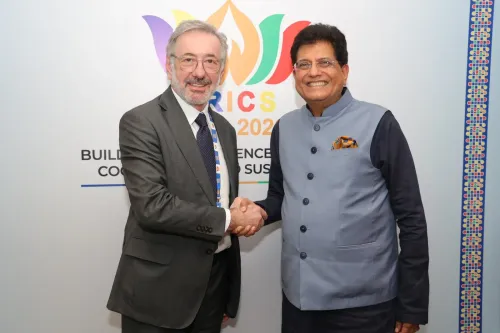
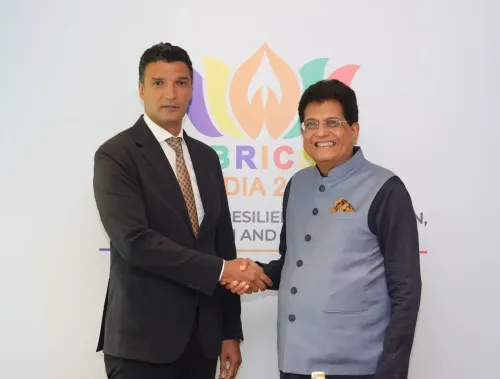
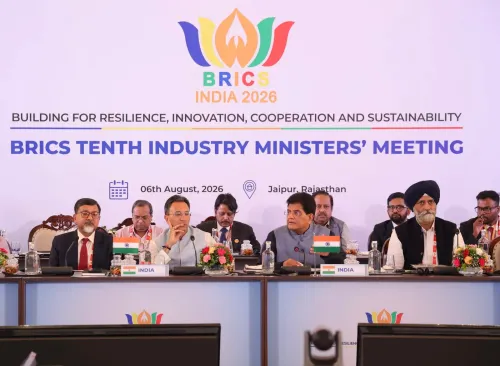
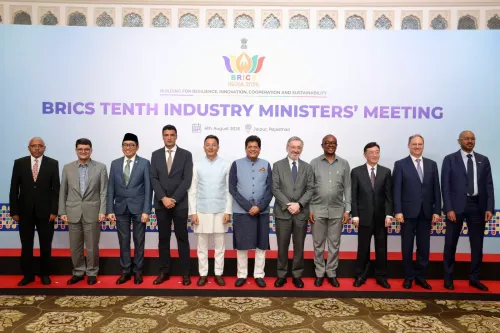
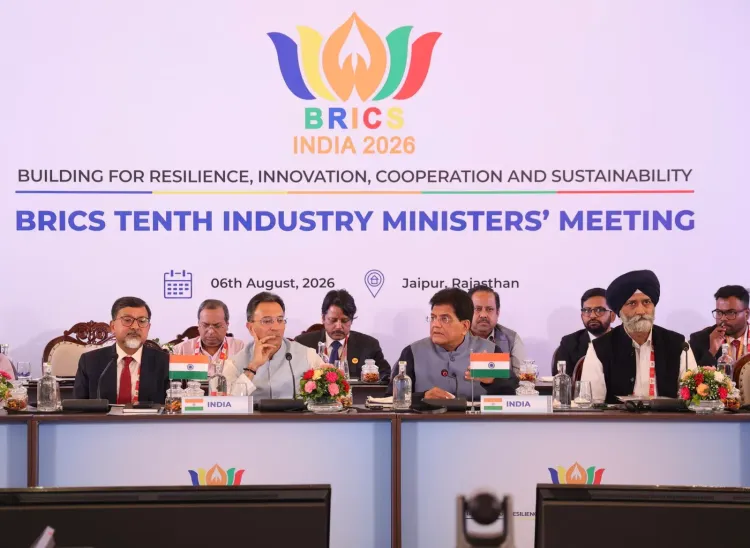
Goyal chairs BRICS Industry Ministers' Meet in Jaipur
Synopsis
Union Commerce Minister Piyush Goyal addressed the BRICS Industry Ministers' Meeting in Jaipur on 6 August 2026, securing a Joint Declaration under PartNIR covering industrial innovation, clean energy, logistics, and resilient manufacturing as India holds the BRICS 2026 Chairship.
Key Takeaways
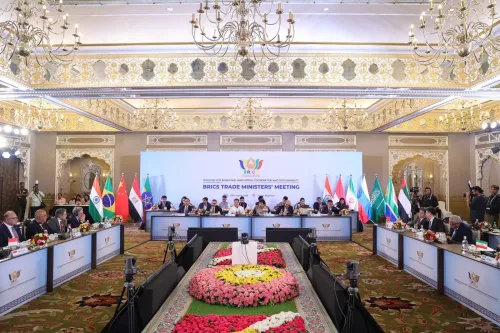
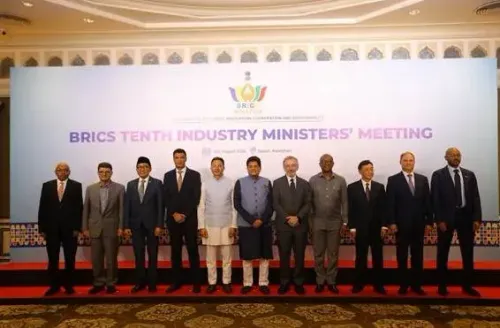
The BRICS Industry Ministers' Meeting was held in Jaipur on 6 August 2026 under India's BRICS 2026 Chairship .
A Joint Declaration was adopted, reaffirming commitment to the BRICS Partnership on New Industrial Revolution (PartNIR) , launched at the 2017 Xiamen Summit .
The declaration covers four pillars: industrial innovation, clean energy, logistics, and resilient manufacturing.
Minister Goyal highlighted India's priorities of MSME support, startup innovation, clean energy cooperation, and technology-enabled logistics ecosystems.
India aims to use the expanded BRICS format to convert ministerial dialogue into concrete project outcomes.
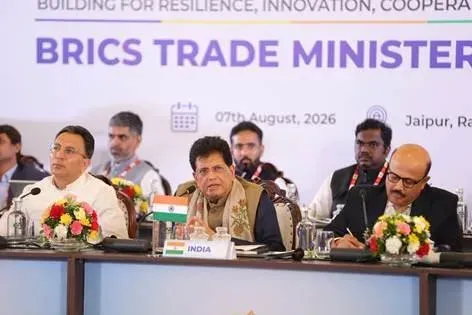
A joint declaration, a packed agenda on clean energy and logistics, and a clear signal from New Delhi — Union Commerce and Industry Minister Piyush Goyal used the BRICS Industry Ministers' Meeting in Jaipur on 6 August 2026 to lay out India's industrial ambitions for the expanded grouping under its BRICS 2026 Chairship.
What the Jaipur declaration commits to
The meeting's headline outcome was the adoption of a Joint Declaration by participating industry ministers, reaffirming collective commitment to the BRICS Partnership on New Industrial Revolution (PartNIR) — the cooperation framework first launched at the 2017 Xiamen Summit to advance industrial and technological coordination among member economies. The declaration covers four specific pillars: industrial innovation, clean energy, logistics, and resilient manufacturing.
Goyal framed the moment in terms of structural opportunity: BRICS nations, he argued, are uniquely positioned to strengthen manufacturing competitiveness, deepen technological collaboration, and build value chains that can withstand global shocks. That last phrase carries particular weight in a world still recalibrating supply chains after years of disruption.
India's four priorities inside the BRICS tent
Beyond the joint text, Goyal put four India-specific priorities on the table: support for MSMEs, startup innovation, clean energy cooperation, and technology-enabled logistics ecosystems. None of these are new themes for New Delhi — India has consistently used its multilateral platforms to push MSME access and digital infrastructure — but their placement inside a BRICS ministerial declaration gives them a new, multilateral dimension.
The expanded BRICS format, which now includes a wider set of Global South economies, amplifies the audience for these priorities. A logistics or clean-energy framework that gains traction across the grouping has far greater reach than a bilateral agreement.
India's 2026 chairship: dialogue into deliverables
Goyal closed his remarks by invoking Prime Minister Narendra Modi's vision for the expanded BRICS family, describing India's goal as 'translating dialogue into meaningful outcomes for shared growth and prosperity.' That framing is deliberate: India has used every rotating presidency it has held — in G20, SCO, and now BRICS — to move from communiqués to concrete project pipelines.
The real test will come in the follow-up. Joint declarations under PartNIR have a mixed record of translating into funded, operational projects. Whether the Jaipur commitments on clean energy and logistics produce tangible cooperation agreements at the next BRICS summit-level meeting will determine how this ministerial is ultimately remembered.
Jaipur has set the agenda. The scoreboard starts now.
Point of View
Suggesting a deliberate continuity of messaging across multilateral platforms. The adoption of the Joint Declaration under PartNIR is a procedural win, but the expanded BRICS grouping also means more divergent interests to manage when it comes to implementation. How India steers the PartNIR workstreams toward funded, operational projects — rather than recurring declarations — will be the defining test of its 2026 chairship.
NationPress
21 Sept 2026
Frequently Asked Questions
What is the BRICS Industry Ministers' Meeting 2026?
It is a ministerial-level gathering of BRICS member economies focused on industrial cooperation, held in Jaipur in August 2026 during India's BRICS 2026 Chairship. Union Commerce Minister Piyush Goyal represented India and chaired the discussions.
What is PartNIR in BRICS?
PartNIR stands for the BRICS Partnership on New Industrial Revolution. It was launched at the 2017 Xiamen Summit to promote industrial cooperation, innovation, and digital industrialisation among BRICS member economies.
What was agreed at the Jaipur BRICS Industry Ministers' Meeting?
The ministers adopted a Joint Declaration reaffirming commitment to PartNIR and pledging cooperation across industrial innovation, clean energy, logistics, and resilient manufacturing.
What are India's priorities under BRICS 2026 Chairship?
India has highlighted four priorities: strengthening MSMEs, fostering startup innovation, expanding clean energy cooperation, and building technology-enabled logistics ecosystems within the BRICS framework.
Why is Jaipur hosting BRICS meetings in 2026?
India holds the BRICS 2026 Chairship and is hosting various ministerial and working-group meetings across the country. Jaipur was selected as the venue for the Industry Ministers' Meeting as part of this rotating chairship programme.