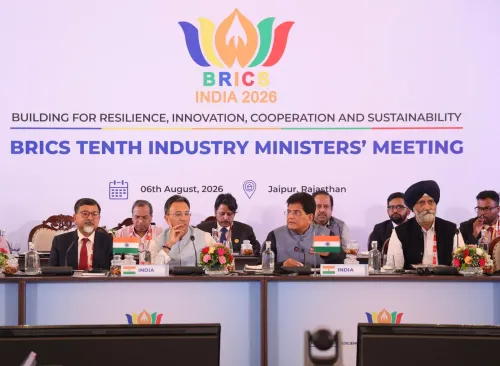
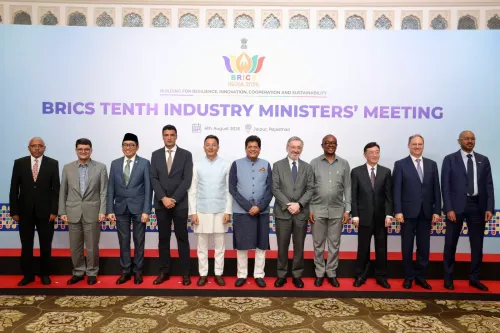
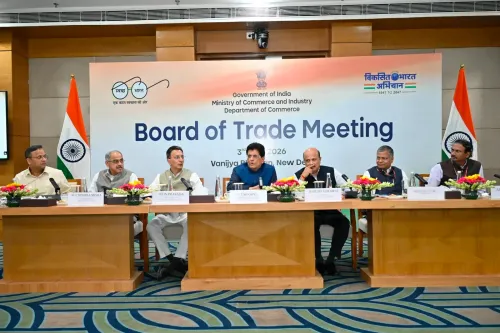
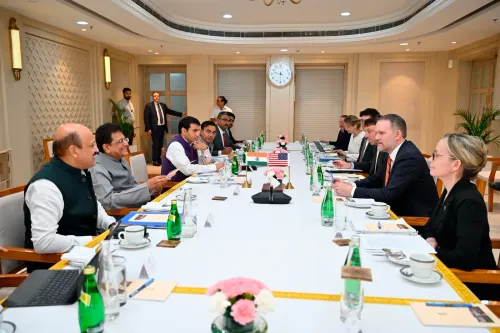
Goyal chairs BRICS Trade Ministers' Meet in Jaipur
Synopsis
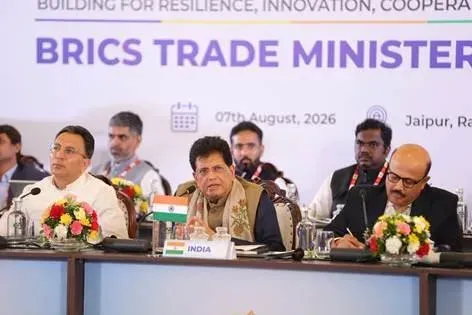
Union Commerce Minister Piyush Goyal chaired the 16th BRICS Trade Ministers' Meeting in Jaipur on 7 August 2026, reaffirming India's push for balanced trade, services expansion, and protection for farmers and MSMEs under its 2026 BRICS chairship.
Key Takeaways
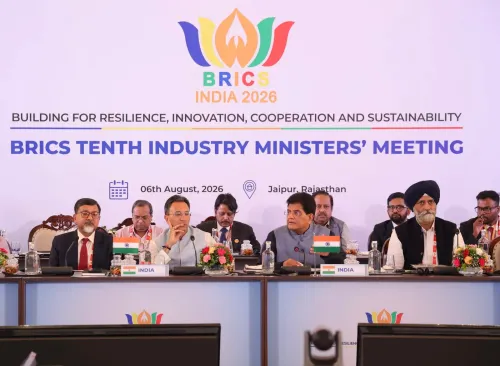
India holds the BRICS chairship in 2026 , its second turn after 2021, with the Jaipur meeting among the first major ministerial gatherings under this presidency.
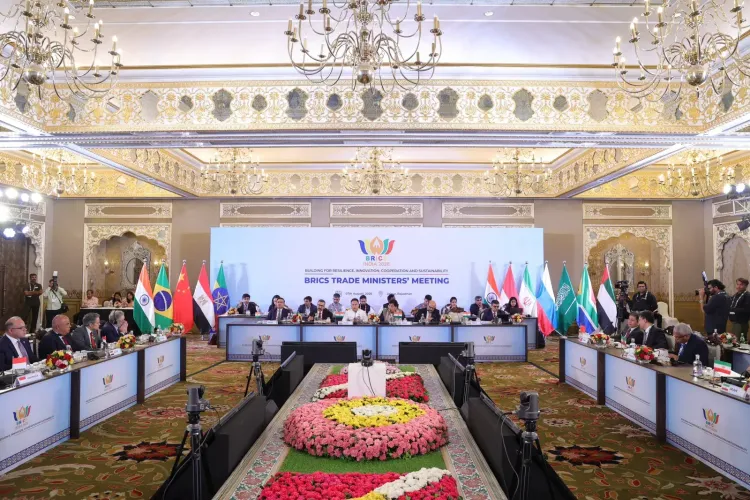
Union Minister Piyush Goyal represented India at the 16th BRICS Trade Ministers' Meeting held in Jaipur, Rajasthan on 7 August 2026 .
India reaffirmed its commitment to a fair, rules-based multilateral trading system that centres the interests of farmers, MSMEs, and small businesses .
Expanding market access in the services sector — a key Indian export strength — was flagged as a priority negotiating objective.
Outcomes from the Jaipur ministerial are expected to shape India's agenda for the full BRICS Summit later in 2026.
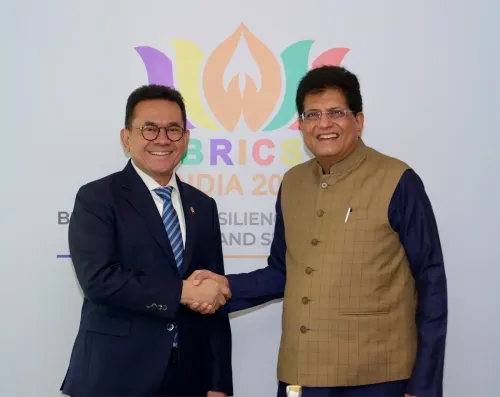
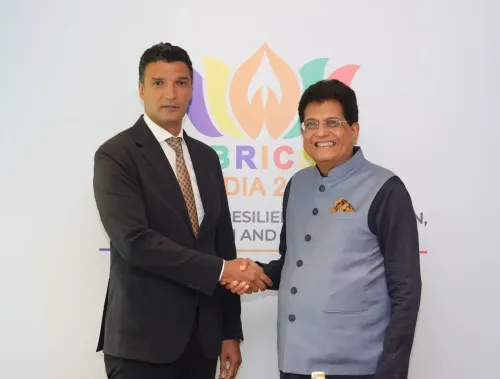
Jaipur hosted a moment of multilateral weight on Friday, 7 August 2026, as Union Commerce and Industry Minister Piyush Goyal convened the 16th BRICS Trade Ministers' Meeting — a platform that puts India squarely at the centre of a global conversation about who writes the rules of trade, and for whom.
India's 2026 BRICS chairship takes shape in Jaipur
India holds the BRICS chairship in 2026, its second turn at the helm after 2021, and the Jaipur meeting is among the first major ministerial-level gatherings under that presidency. Goyal used the platform to reaffirm what New Delhi has consistently argued in multilateral forums: that trade liberalisation must be balanced, that the services sector holds untapped opportunity for Indian workers, and that the system must not leave behind farmers, MSMEs, and small businesses.
'Reaffirmed India's commitment to balanced trade and expanding avenues in the services sector for our people, while keeping the interests of our farmers, MSMEs and small businesses at the core of a fair and rules-based multilateral trading system,' Goyal wrote, framing the meeting as 'a proud day for India's BRICS Chairship.'
Why the services push matters — and who it protects
India's insistence on services is strategic. As one of the world's largest exporters of IT, business-process, and professional services, India has long sought greater market access for its skilled workforce inside trade agreements that have historically privileged goods. Pairing that with a firm defence of agricultural and small-enterprise interests reflects the twin pressures any Indian trade minister navigates — opening doors abroad without exposing vulnerable domestic producers to a flood of imports.
BRICS, now an expanded grouping following its 2024 enlargement, represents a significant share of global trade and GDP. A united position from its trade ministers on 'rules-based' commerce carries weight at the WTO and in broader G20 deliberations, particularly as the multilateral trading system faces stress from unilateral tariffs and geopolitical fragmentation.
What the Jaipur meeting signals for the BRICS Summit ahead
Trade ministers' meetings under a chairship typically set the agenda for the full leaders' summit later in the year. The Jaipur gathering's emphasis on balance, services, and protection for small producers is likely to feed directly into India's summit-level priorities. New Delhi's track record — using the 2021 chairship to push economic cooperation and reform — suggests a similarly structured approach this time, with the added complexity of a larger, more diverse BRICS membership to build consensus within.
The outcome documents and follow-up decisions from Jaipur will be the real test of whether India can translate ministerial alignment into concrete commitments when leaders meet.
Point of View
More complex BRICS as it is about any single policy outcome. Whether India can convert ministerial rhetoric into summit-level commitments will determine the real legacy of its 2026 chairship.
NationPress
22 Sept 2026
Frequently Asked Questions
What is India's role in BRICS in 2026?
India holds the BRICS chairship in 2026, its second such presidency after 2021, giving it the authority to set the agenda for ministerial meetings and the leaders' summit.
What happened at the BRICS Trade Ministers' Meeting in Jaipur?
The 16th BRICS Trade Ministers' Meeting was held in Jaipur on 7 August 2026, where Union Minister Piyush Goyal reaffirmed India's commitment to balanced trade, services sector expansion, and protection for farmers and MSMEs.
Why is India pushing for services in BRICS trade talks?
India is one of the world's largest exporters of IT and professional services, and has consistently sought greater market access for its skilled workforce in multilateral trade negotiations.
How does the Jaipur BRICS meeting affect Indian farmers and small businesses?
India's stated position at the Jaipur meeting places the interests of farmers, MSMEs, and small businesses at the core of its trade agenda, seeking rules that protect them from unfair import competition within a multilateral framework.
What comes after the BRICS Trade Ministers' Meeting in Jaipur?
The outcomes from the Jaipur ministerial are expected to feed into preparations for the full BRICS Summit later in 2026, where leaders will take up the trade and economic agenda.