BRICS Trade Ministers meet in Jaipur: Joint Declaration, 2030 strategy finalised
Synopsis
India's BRICS Chairship 2026 delivered its most consequential ministerial outcome yet in Jaipur — a finalised 2030 economic partnership strategy, a novel invoice discounting mechanism for MSMEs, and rare multilateral backing for developing-country positions on food security and WTO reform. All eyes now turn to the New Delhi Summit in September.
Key Takeaways
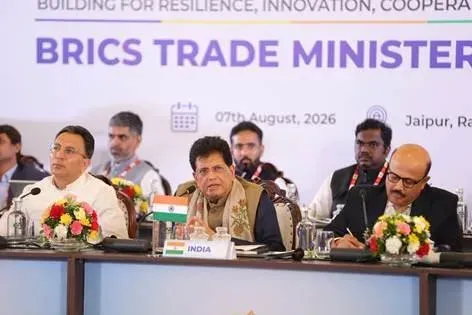
India concluded the 16th BRICS Trade Ministers' Meeting in Jaipur on 7 August 2026 under its BRICS Chairship 2026 .
Member nations adopted the Joint Declaration and four key annexes, reaffirming commitment to a rules-based global trading system with the WTO at its core.
The Strategy for BRICS Economic Partnership 2030 was finalised, covering trade, investment, digital economy, and sustainable development.
The Jaipur Consensus proposes a BRICS Invoice Discounting Mechanism to bridge the global trade finance gap for MSMEs.
India secured BRICS support for developing-country priorities: food security , public stockholding , and Special and Differential Treatment in WTO negotiations.
The 2030 strategy will be presented for endorsement at the New Delhi BRICS Summit in September 2026 .
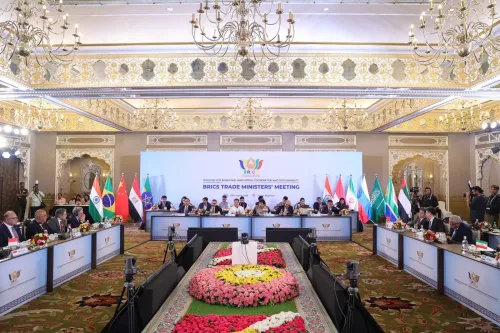
India on 7 August 2026 successfully concluded the 16th BRICS Trade Ministers' Meeting in Jaipur, with member nations adopting the Joint Declaration, four key annexes, and finalising the Strategy for BRICS Economic Partnership 2030 — a roadmap to be placed before BRICS Leaders at the New Delhi Summit in September 2026. The meeting, held under India's BRICS Chairship 2026, marked one of the most substantive ministerial outcomes in the bloc's recent history.
Key Developments at Sawai Man Mahal
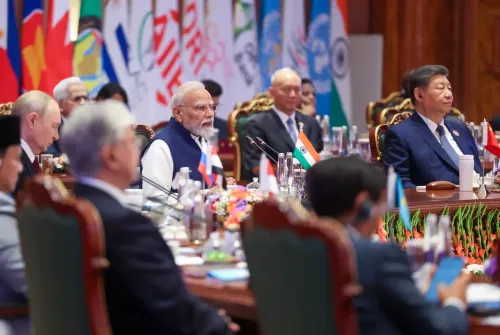
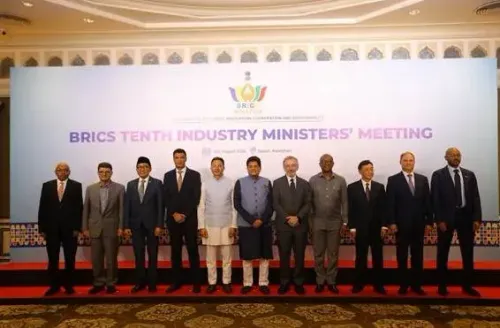
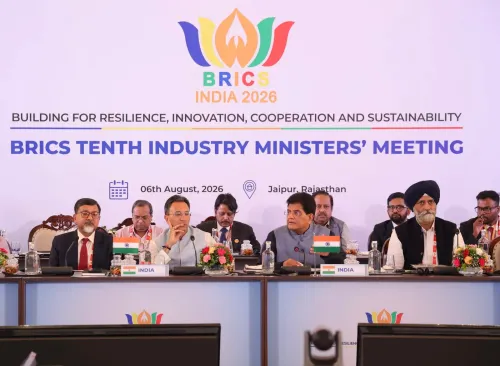
The ministerial session was held at Sawai Man Mahal and chaired by Union Commerce and Industry Minister Piyush Goyal, with Minister of State for Commerce and Industry Jitin Prasada and Commerce Secretary Rajesh Agrawal also present. Trade ministers and senior representatives from all BRICS member countries attended.
Convened under the theme 'Building for Resilience, Innovation, Cooperation and Sustainability', the meeting centred on strengthening multilateral trade, building resilient global value chains, advancing MSME development, and expanding cross-border trade in goods and services.
What the Joint Declaration Commits To
The Joint Declaration reaffirmed the bloc's commitment to a development-oriented, rules-based global trading system with the World Trade Organization (WTO) at its core. It called for restoring a fully functional WTO dispute settlement mechanism — a long-standing demand from developing economies that has gained urgency amid rising trade tensions.
A significant win for India was securing strong BRICS support for the interests of developing countries, particularly on food security, public stockholding, and Special and Differential Treatment within the multilateral trading system — issues where India has historically faced resistance from advanced economies at WTO negotiations.
The Jaipur Consensus and MSME Finance
Ministers adopted the Jaipur Consensus, which proposes studying a BRICS Invoice Discounting Mechanism to address the global trade finance gap — estimated by the Asian Development Bank at over $2 trillion annually. The meeting also approved Guiding Principles for Credit Assessment Frameworks for Export-Oriented MSMEs, shifting evaluation criteria from collateral-based to cash-flow-based lending — a structural change that could unlock credit for millions of small exporters across member nations.
The ministers further approved the BRICS Principles to Facilitate Digitally Delivered Services Across Borders, paving the way for deeper cross-border digital trade among the bloc's economies.
Strategy for BRICS Economic Partnership 2030
The landmark outcome of the Jaipur meeting was the finalisation of the Strategy for BRICS Economic Partnership 2030, covering trade, investment, the digital economy, industry, innovation, financial cooperation, and sustainable development. The strategy will be submitted for endorsement by BRICS Leaders at the New Delhi Summit scheduled for September 2026.
The meeting also adopted a work plan on resilient and diversified Global Value Chains (GVCs), promoting collaboration among Special Economic Zones, digitisation of trade documents, and deeper industrial cooperation among member states.
India's Position and What Comes Next
Addressing the gathering, Piyush Goyal said BRICS represents a growing share of the global economy and that cooperation among member nations is essential to counter rising protectionism and economic fragmentation. He underscored India's push to diversify global value chains, promote digitally delivered services, and improve trade finance access for MSMEs.
Jitin Prasada highlighted Prime Minister Narendra Modi's vision of 'Humanity First', emphasising that BRICS cooperation should tangibly benefit small businesses, women entrepreneurs, and youth across developing economies.
With the Jaipur ministerial concluded, attention now shifts to the New Delhi BRICS Summit in September 2026, where leaders will be expected to formally endorse the 2030 economic partnership strategy and set the political direction for the bloc's next phase.
Point of View
Positions that advanced economies have long resisted. That consensus, if it holds at the New Delhi Summit, gives India meaningful multilateral cover heading into the next WTO ministerial. The Jaipur Consensus on invoice discounting is promising but untested; the shift from collateral to cash-flow lending for MSMEs has failed in earlier multilateral frameworks without robust credit-bureau infrastructure. Whether BRICS can operationalise these commitments, or whether the 2030 strategy joins a shelf of aspirational bloc documents, will depend entirely on the political will visible in September.
NationPress
22 Sept 2026
Frequently Asked Questions
What was decided at the 16th BRICS Trade Ministers' Meeting in Jaipur?
The meeting, held on 7 August 2026, adopted the Joint Declaration, four key annexes, and finalised the Strategy for BRICS Economic Partnership 2030. It also produced the Jaipur Consensus, which proposes a BRICS Invoice Discounting Mechanism to address the global trade finance gap for MSMEs.
What is the Strategy for BRICS Economic Partnership 2030?
It is a comprehensive roadmap covering trade, investment, the digital economy, industry, innovation, financial cooperation, and sustainable development across BRICS member nations. The strategy was finalised in Jaipur and will be submitted for endorsement by BRICS Leaders at the New Delhi Summit in September 2026.
What is the Jaipur Consensus?
The Jaipur Consensus is a BRICS ministerial agreement that proposes studying a BRICS Invoice Discounting Mechanism to bridge the global trade finance gap. It also includes Guiding Principles for Credit Assessment Frameworks for export-oriented MSMEs, shifting from collateral-based to cash-flow-based lending criteria.
Why does India's BRICS Chairship 2026 matter for WTO negotiations?
India secured strong BRICS support for developing-country priorities — food security, public stockholding, and Special and Differential Treatment — within the WTO framework. This multilateral backing strengthens India's negotiating position ahead of future WTO ministerial conferences.
When is the BRICS Leaders' Summit and what will it decide?
The BRICS Leaders' Summit is scheduled for September 2026 in New Delhi. Leaders are expected to formally endorse the Strategy for BRICS Economic Partnership 2030 finalised at the Jaipur ministerial meeting.