BRICS Summit 2026: Jaishankar hails Modi's diplomacy as 32 delegations converge in New Delhi
Synopsis
India pulled off a diplomatic feat few expected: at a deeply polarised BRICS summit, 32 delegations converged in New Delhi, agreed on a first-day declaration, and explicitly condemned the Pahalgam attack. EAM Jaishankar's verdict — 'Many said it would not happen. It did' — captures how significantly India has used the BRICS chair to project both convening power and a counter-terrorism agenda.
Key Takeaways
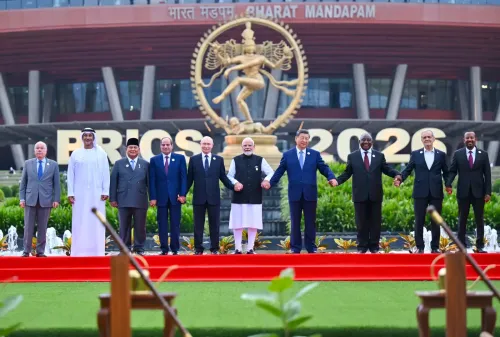
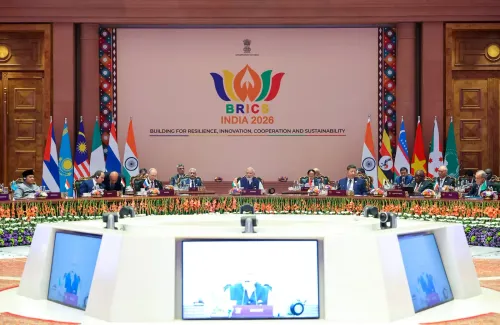
The BRICS India Summit 2026 at Bharat Mandapam, New Delhi drew 32 delegations , including 11 member states , 10 partner countries , 4 regional and 7 international organisations .
The 'New Delhi Declaration' was adopted on the first day of the summit despite sharply divergent geopolitical positions among members.
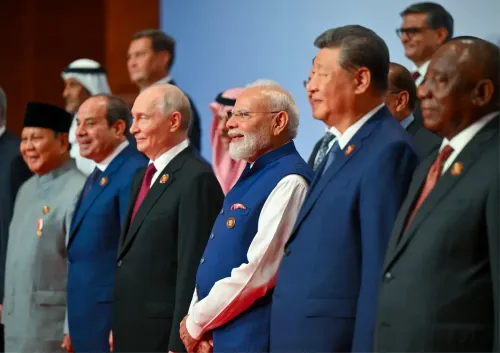
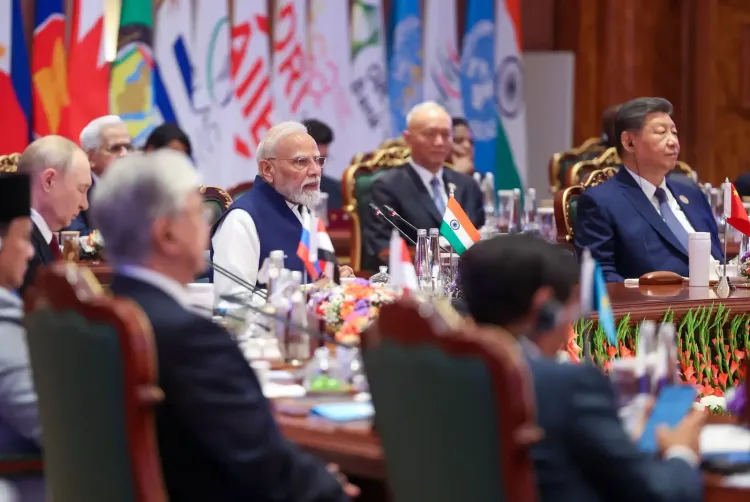
Leaders present included Vladimir Putin , Xi Jinping , Prabowo Subianto , Cyril Ramaphosa , Abdel Fattah el-Sisi , and the UN Secretary-General .
BRICS explicitly recognised the Pahalgam attack of 22 April 2025 as unacceptable and condemned cross-border terrorism with zero tolerance.
EAM Jaishankar identified 'reform and resilience' as the unifying themes that enabled consensus on the West Asia conflict statement.
Strengthening the voice of the Global South was highlighted as the summit's key substantive outcome.
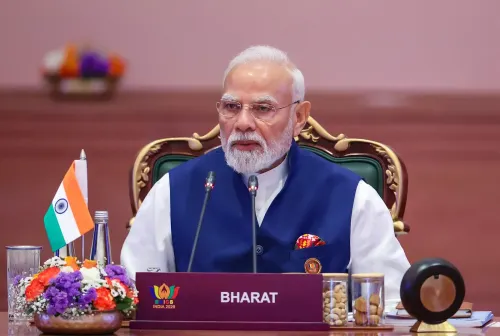
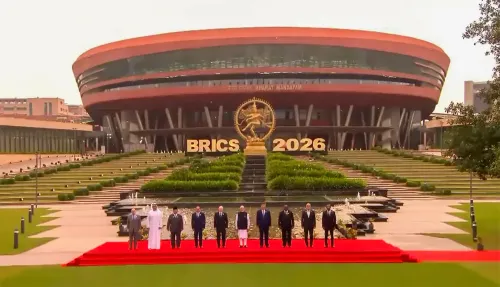
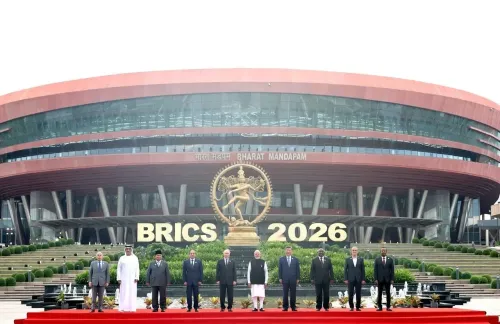
External Affairs Minister S. Jaishankar on Monday, 14 September 2026 declared the BRICS India Summit 2026 a landmark diplomatic success, saying Prime Minister Narendra Modi's message of dialogue, diplomacy and development had resonated across the world — with the turnout of global leaders at New Delhi's Bharat Mandapam serving as the clearest proof. The two-day summit, which concluded on Sunday, drew 32 delegations representing 11 member states, 10 partner countries, four regional organisations, and seven international organisations.
An Unprecedented Gathering at Bharat Mandapam
Jaishankar underscored India's 'strong convening power' under Prime Minister Modi, noting that most participating nations were represented at the level of Heads of State or Government. Among those present were Russian President Vladimir Putin, Chinese President Xi Jinping, Indonesian President Prabowo Subianto, South African President Cyril Ramaphosa, Egyptian President Abdel Fattah el-Sisi, Ethiopian Prime Minister Abiy Ahmed, and the Crown Prince of the UAE, along with the UN Secretary-General and heads of the WTO, WHO, and other international organisations.
'There was also a strong sense of personal rapport between these leaders and Prime Minister Modi,' Jaishankar said, pointing to the visuals from the summit as evidence of the warmth of engagement.
Consensus in a Polarised World
The EAM acknowledged the formidable diplomatic challenge — the summit unfolded against the backdrop of two major global conflicts and deep divergences in geopolitical positions. Yet India managed to secure consensus, including a joint statement on the West Asia and Middle East conflict that called for peace, security, stability, and long-term understanding, while also backing the smooth flow of global trade, supply chains, and energy, and the protection of civilians and civilian infrastructure.
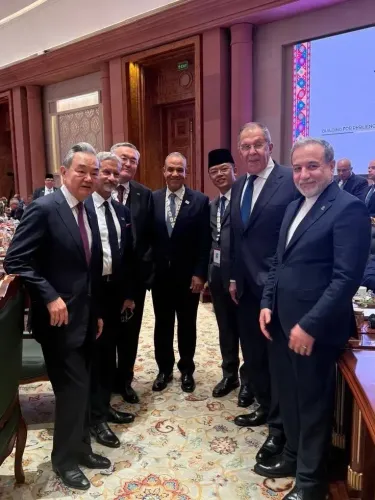
'Leaders who perhaps would not have met under other circumstances were able to meet during the summit,' Jaishankar noted, adding that the 'open and comfortable conversations' at the summit contributed significantly to the global discourse on pressing issues. In a notable diplomatic achievement, the 'New Delhi Declaration' was adopted on the very first day of the summit — a feat described as remarkable given the divergent positions of participating nations.
Terrorism and the Pahalgam Attack
One of the more pointed outcomes was on counter-terrorism. BRICS nations collectively condemned terrorism in all its forms, including cross-border terrorism, and explicitly recognised the Pahalgam attack of 22 April 2025 as unacceptable. The consensus statement called for zero tolerance for terrorism and rejected what the bloc described as double standards in countering it — language seen by analysts as a significant diplomatic signal, particularly given the participation of both India and Pakistan-adjacent nations at the forum.
The Substantive Agenda: Global South and Reform
Beyond geopolitics, Jaishankar highlighted a focused substantive agenda centred on the economy, development, and technology for the Global South. He identified 'reform and resilience' as the two key unifying themes that enabled consensus across a diverse group of nations. Strengthening the voice of the Global South, he said, was 'a very strong message' to emerge from the summit — one consistent with India's posture at the G20 in 2023 and its ongoing multilateral strategy.
What Comes Next
The New Delhi Declaration is expected to shape BRICS cooperation frameworks in trade, technology, and development financing over the coming year. Jaishankar's pointed closing remark — 'Many people said it would not happen. It did happen. It happened in New Delhi, and it happened under the leadership of Prime Minister Narendra Modi' — signals that India intends to leverage the summit's success in forthcoming bilateral and multilateral engagements. How the commitments made in the Declaration translate into concrete action will be the next test of India's BRICS chairmanship legacy.
Point of View
But the harder question is what it obligates signatories to do. The terrorism language on Pahalgam is the sharpest geopolitical signal India has extracted from a multilateral forum in years, yet enforcement mechanisms are absent. India's G20 presidency in 2023 showed New Delhi can convene; BRICS 2026 shows it can also set agenda terms. Whether the New Delhi Declaration translates into durable Global South coalitions or remains a diplomatic photo op will define the chairmanship's legacy.
NationPress
14 Sept 2026
Frequently Asked Questions
What was the outcome of the BRICS India Summit 2026?
The BRICS India Summit 2026, held at Bharat Mandapam in New Delhi on 13-14 September 2026, concluded with the adoption of the 'New Delhi Declaration' on its first day, agreed upon by 32 delegations despite significant geopolitical differences. Key outcomes included a joint statement on the West Asia conflict, a strong counter-terrorism consensus naming the Pahalgam attack, and a focus on the Global South's development and reform agenda.
Who attended the BRICS Summit 2026 in New Delhi?
The summit saw participation from 32 delegations, including Russian President Vladimir Putin, Chinese President Xi Jinping, Indonesian President Prabowo Subianto, South African President Cyril Ramaphosa, Egyptian President Abdel Fattah el-Sisi, Ethiopian Prime Minister Abiy Ahmed, the Crown Prince of the UAE, and heads of the UN, WTO, and WHO, among others.
What did the BRICS summit say about terrorism and the Pahalgam attack?
BRICS nations unanimously condemned terrorism in all its forms and manifestations, including cross-border terrorism, and explicitly recognised the Pahalgam attack of 22 April 2025 as unacceptable. The consensus statement also called for zero tolerance for terrorism and rejected double standards in countering it.
What is the New Delhi Declaration adopted at BRICS 2026?
The New Delhi Declaration is a consensus document adopted by BRICS and partner nations on the first day of the India-hosted summit, covering the West Asia conflict, terrorism, Global South development, trade, supply chain stability, and energy security. Its first-day adoption was notable given the divergent geopolitical positions of participating nations.
Why is the BRICS India Summit 2026 considered a diplomatic success?
EAM Jaishankar described it as a success because India secured consensus among nations with sharply divergent interests, facilitated high-level bilateral meetings that may not have occurred otherwise, and achieved explicit multilateral recognition of cross-border terrorism — all under India's chairmanship. The participation of leaders representing all major global blocs at the Head of State level was cited as a key indicator of India's convening power.