Jaishankar meets Wang Yi, Lavrov, 4 others at BRICS India 2026 Summit
Synopsis
On the final day of the 18th BRICS Summit in New Delhi, EAM Jaishankar worked the room — meeting Saudi Arabia's Prince Faisal bilaterally and appearing alongside Wang Yi, Lavrov, and four others in a photograph that captured the breadth of India's diplomatic outreach. PM Modi's parting call to move 'beyond documentation' signals India wants the New Delhi Declaration to mean more than previous BRICS communiqués.
Key Takeaways
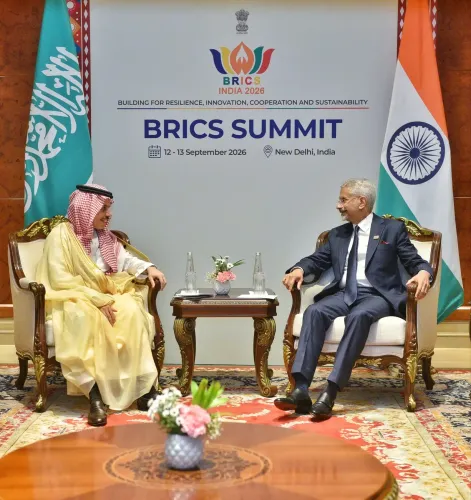
Jaishankar held bilateral talks with Saudi Arabia's FM Prince Faisal bin Farhan Al Saud on the sidelines of the 18th BRICS Summit, New Delhi , on 13 September 2026 .
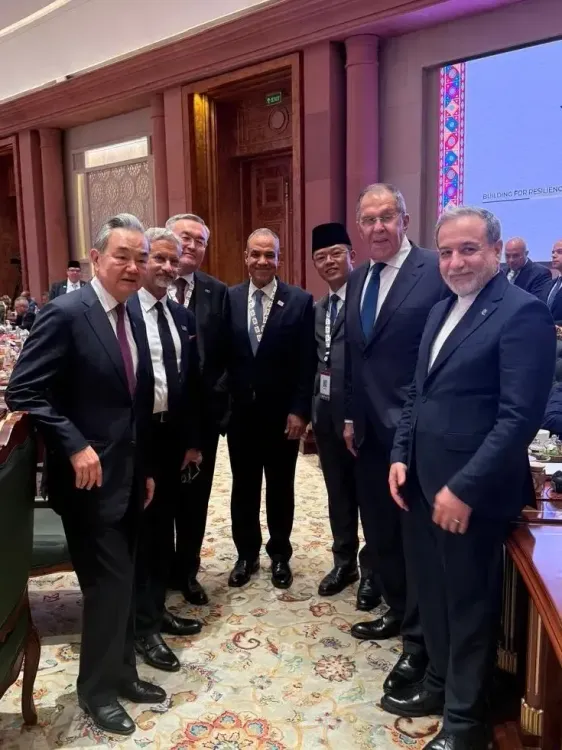
Jaishankar shared a group photograph with Wang Yi (China), Sergei Lavrov (Russia), Seyed Abbas Araghchi (Iran), Badr Abdelatty (Egypt), Mukhtar Tileuberdi (Kazakhstan), and Sugiono (Indonesia) .
PM Narendra Modi adopted the New Delhi Declaration and described BRICS as an 'ecosystem of solutions' in his closing remarks.
Modi called for converting summit outcomes into 'time-bound actions and last-mile impact.' China will host the next BRICS summit; India held the 2026 Chairship .
BRICS now has 11 member states and 10 partner countries , with the summit held at Bharat Mandapam, New Delhi .
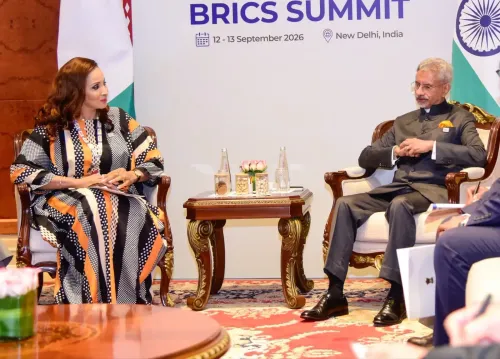
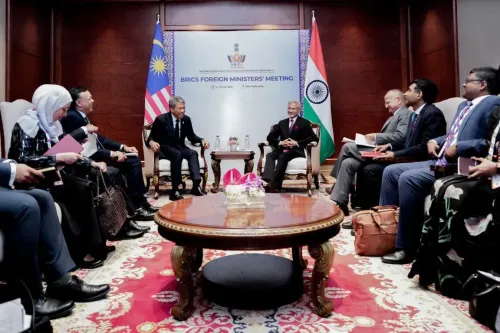
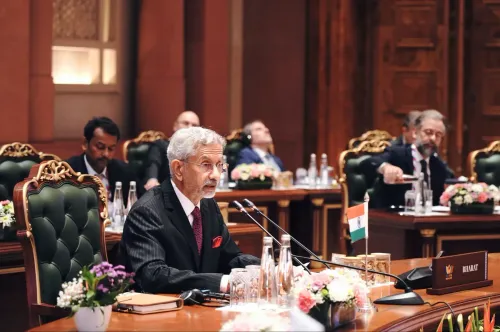
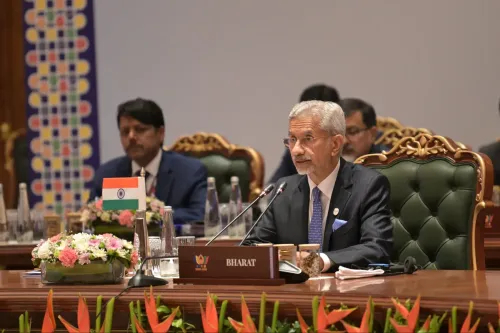
External Affairs Minister S. Jaishankar held a series of diplomatic engagements with foreign ministers from across the globe on the sidelines of the 18th BRICS Summit in New Delhi on Sunday, 13 September 2026, as India wrapped up its tenure as BRICS Chair with a push for concrete, time-bound outcomes.
Bilateral Meetings on the Sidelines
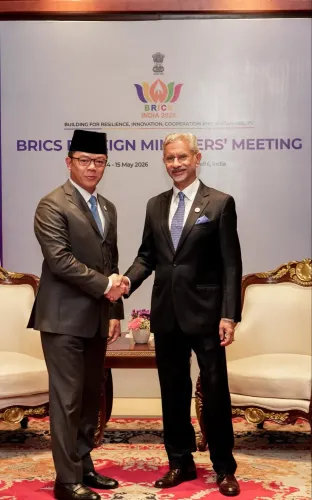
In a notable bilateral session, Jaishankar met Saudi Arabia's Foreign Minister Prince Faisal bin Farhan Al Saud to discuss bilateral cooperation as well as regional and global developments. 'Pleased to meet FM Saudi Arabia, Prince Faisal bin Farhan Al Saud on the sidelines of BRICS India 2026. Exchanged perspectives on regional and global developments, as well as on advancing our bilateral cooperation,' Jaishankar posted on X.
The meeting with Riyadh is significant given India's deepening energy and investment ties with Saudi Arabia and ongoing conversations around the India-Middle East-Europe Economic Corridor (IMEC) — a connectivity initiative that both nations have stakes in.
Group Engagements: From Beijing to Moscow
Jaishankar also shared a group photograph with visiting counterparts, capturing what he described as both formal and informal interactions. The photograph featured Chinese Foreign Minister Wang Yi, Iranian Foreign Minister Seyed Abbas Araghchi, Egyptian Foreign Minister Badr Abdelatty, Kazakhstani Foreign Minister Mukhtar Tileuberdi, Indonesian Foreign Minister Sugiono, and Russian Foreign Minister Sergei Lavrov.
'Met many colleagues formally during BRICS India 2026. And as you can see, some more informally,' Jaishankar wrote on X. The photograph, shared publicly, offered a rare candid glimpse into the diplomacy underpinning one of the world's largest multilateral groupings. The Jaishankar–Wang Yi interaction is particularly watched, coming amid ongoing India-China border normalisation efforts following the 2020 Galwan crisis and subsequent disengagement at forward positions.
PM Modi's Closing Remarks and the New Delhi Declaration
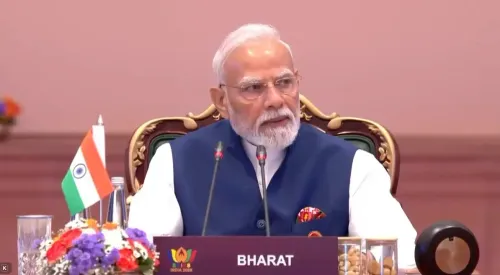
Earlier in the day, Prime Minister Narendra Modi delivered his concluding remarks at the summit session on 'Resilience, Innovation, Cooperation and Sustainability' at Bharat Mandapam. Modi described BRICS as 'not merely a grouping of nations, but an ecosystem of solutions' and called on member states to translate declarations into 'time-bound actions and last-mile impact.'
'We must translate all outcomes into time-bound actions and last-mile impact. We will work together to ensure that our framework moves beyond mere documentation and creates an impact in real life,' Modi stated. He also extended best wishes to China, the next host of BRICS, and commended all delegations for making the New Delhi Summit a success.
The New Delhi Declaration, adopted at the summit, is intended to provide a framework for future cooperation across the grouping's expanding membership.
India's BRICS Chairship and the Expanded Grouping
India hosted the two-day 18th BRICS Summit at Bharat Mandapam, New Delhi, bringing together leaders of BRICS member states, partner countries, and outreach invitees. The current BRICS membership comprises Brazil, China, Egypt, Ethiopia, India, Indonesia, Iran, Russia, Saudi Arabia, South Africa, and the United Arab Emirates. BRICS partner countries include Belarus, Cuba, Bolivia, Kazakhstan, Malaysia, Nigeria, Thailand, Uganda, Uzbekistan, and Vietnam.
With BRICS now entering what Modi called its 'third decade', the summit's focus on converting diplomatic commitments into measurable results reflects a broader push to enhance the bloc's credibility amid a fragmented global order. The baton now passes to Beijing for the next edition.
Point of View
Transactional normalisation with Beijing rather than a warm reset, and India's BRICS Chairship has been carefully structured to keep that distinction intact. Modi's insistence on 'time-bound actions' is a direct response to the critique that BRICS has grown better at declarations than delivery — but the grouping's structural diversity (from Russia under sanctions to US-allied Saudi Arabia) makes binding commitments nearly impossible. The New Delhi Declaration's credibility will ultimately be tested not in communiqué language but in whether India can point to specific bilateral or multilateral follow-throughs within twelve months. With China taking the Chair next, New Delhi's ability to set that accountability frame diminishes considerably.
NationPress
13 Sept 2026
Frequently Asked Questions
Who did EAM Jaishankar meet at the BRICS India 2026 Summit?
Jaishankar met Saudi Arabia's FM Prince Faisal bin Farhan Al Saud in a formal bilateral and appeared alongside Chinese FM Wang Yi, Russian FM Sergei Lavrov, Iranian FM Seyed Abbas Araghchi, Egyptian FM Badr Abdelatty, Kazakhstani FM Mukhtar Tileuberdi, and Indonesian FM Sugiono at the 18th BRICS Summit in New Delhi on 13 September 2026.
What is the New Delhi Declaration adopted at BRICS 2026?
The New Delhi Declaration is the joint outcome document adopted at the 18th BRICS Summit, intended to provide a framework for the grouping's future cooperation across political, economic, and developmental areas. PM Modi called on member states to translate its commitments into time-bound, real-world outcomes.
Which countries are current BRICS members and partner nations?
The 11 BRICS members are Brazil, China, Egypt, Ethiopia, India, Indonesia, Iran, Russia, Saudi Arabia, South Africa, and the United Arab Emirates. The 10 partner countries are Belarus, Cuba, Bolivia, Kazakhstan, Malaysia, Nigeria, Thailand, Uganda, Uzbekistan, and Vietnam.
Where was the 18th BRICS Summit held?
The 18th BRICS Summit was held at Bharat Mandapam in New Delhi on 13 September 2026, hosted by India in its capacity as BRICS Chair for 2026. It brought together member states, partner countries, and outreach invitees.
Who will host the next BRICS Summit after India?
China will host the next BRICS Summit, as confirmed by PM Modi in his closing remarks at the New Delhi Summit. Modi extended best wishes to Beijing as the incoming BRICS Chair.