CM Yogi hails Cabinet nod for PM VGSY worth ₹7,395 cr
Synopsis
The Union Cabinet, chaired by PM Narendra Modi, approved the Pradhan Mantri Viksit Gram Swaraj Yojana with a ₹7,395.55 crore outlay to empower self-reliant panchayats. UP CM Yogi Adityanath hailed it as epoch-making for rural development under the Viksit Bharat vision.
Key Takeaways
The Union Cabinet approved Pradhan Mantri Viksit Gram Swaraj Yojana (PM VGSY) on 28 October 2026 under PM Narendra Modi's chairmanship.
The scheme carries a total outlay of ₹7,395.55 crore , targeting financial and administrative self-reliance of Gram Panchayats.
PM VGSY is designed to connect village-level development outcomes with the Viksit Bharat vision for a developed India by 2047.
UP CM Yogi Adityanath described the scheme as 'epoch-making' and called it a new direction for rural prosperity.
PM VGSY builds on the lineage of the Rashtriya Gram Swaraj Abhiyan (2018) , which first focused on strengthening Panchayati Raj institutions.
Implementation details — including state-wise allocations and guidelines — are awaited from the Ministry of Panchayati Raj .
A ₹7,395.55 crore bet on India's villages cleared the Cabinet table on Wednesday, 28 October 2026 — and Uttar Pradesh Chief Minister Yogi Adityanath was among the first voices to mark the moment, welcoming the Union Cabinet's approval of the Pradhan Mantri Viksit Gram Swaraj Yojana (PM VGSY) as a 'epoch-making' step toward self-reliant panchayats.
Posting on X, CM Yogi congratulated Prime Minister Narendra Modi — under whose chairmanship the Cabinet cleared the scheme — and described PM VGSY as a bridge between village-level aspirations and the Viksit Bharat vision of a developed India by 2047. 'ग्राम स्वराज को सशक्त करते हुए गांवों को विकास और समृद्धि के नए केंद्र बनाने की इस युगांतरकारी योजना' ('this epoch-making scheme to empower Gram Swaraj and make villages new centres of development and prosperity'), he wrote, calling the approval 'commendable'.
What PM VGSY actually promises for panchayats
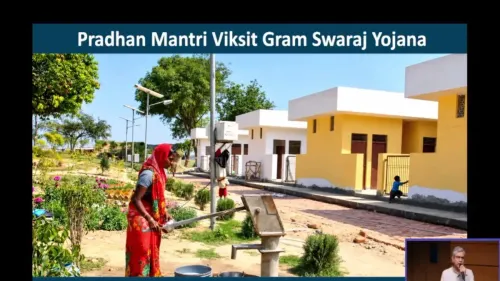
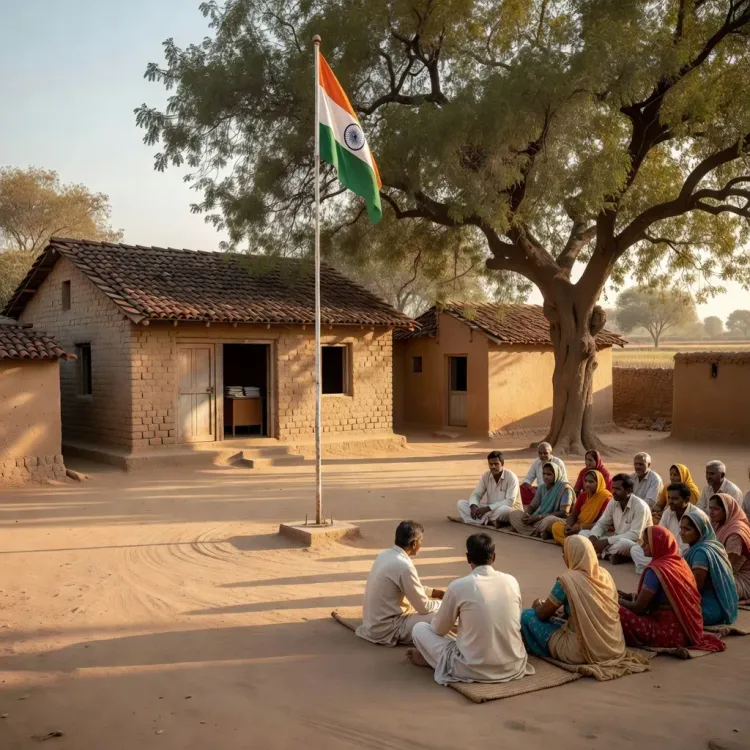
At its core, PM VGSY is designed to push Gram Panchayats — the bedrock of India's rural governance architecture — toward greater financial and administrative self-reliance. The scheme's outlay of ₹7,395.55 crore signals a serious central commitment to decentralised development, channelling resources down to the village tier rather than through intermediary layers.
The scheme explicitly aims to link local governance outcomes to the Viksit Bharat framework — the Modi government's headline national development agenda. In effect, every empowered panchayat becomes a building block in a larger national architecture: rural prosperity feeding directly into the 2047 development target. That is not just rhetoric; it is an accountability frame for how scheme outcomes will eventually be measured.
A lineage that goes back to 2018
PM VGSY does not arrive in a vacuum. It follows the Rashtriya Gram Swaraj Abhiyan, launched in 2018, which laid early groundwork for strengthening Panchayati Raj institutions and nudging villages toward decentralised planning. The new scheme deepens that trajectory — and the sharply higher outlay signals an escalation of ambition, not a routine extension.
For states like Uttar Pradesh — home to one of the country's largest rural populations and its most numerous panchayat network — the scheme's implementation details will matter enormously. All eyes will now turn to the Ministry of Panchayati Raj for scheme guidelines, state-wise fund allocations, and the coordination mechanism that will determine whether village-level targets actually translate into on-ground change.
Schemes are approved at the Cabinet table. They are won — or lost — in the last mile. The next chapter of PM VGSY will be written in the villages themselves.
Point of View
395.55 crore outlay is notably larger than earlier Gram Swaraj programmes, suggesting that decentralisation is being elevated from a peripheral plank to a headline priority. How faithfully the scheme's self-reliance mandate is operationalised — rather than duplicating existing fund flows — will be the real test of its ambition.
NationPress
28 Oct 2026
Frequently Asked Questions
What is PM Viksit Gram Swaraj Yojana (PM VGSY)?
PM VGSY is a new central scheme approved by the Union Cabinet on 28 October 2026 with an outlay of ₹7,395.55 crore. It aims to promote self-reliant Gram Panchayats and link rural development to the Viksit Bharat vision of a developed India by 2047.
How much funding has been allocated to PM VGSY?
The scheme has been allocated a total outlay of ₹7,395.55 crore by the Union Cabinet.
Who approved PM VGSY and when?
The Union Cabinet, chaired by Prime Minister Narendra Modi, approved PM VGSY on 28 October 2026.
Why did CM Yogi Adityanath welcome the PM VGSY scheme?
Uttar Pradesh Chief Minister Yogi Adityanath welcomed the scheme as an 'epoch-making' initiative that will empower panchayats, make villages new centres of development and prosperity, and connect grassroots governance to the Viksit Bharat national vision.
What is the difference between PM VGSY and Rashtriya Gram Swaraj Abhiyan?
The Rashtriya Gram Swaraj Abhiyan, launched in 2018, was the earlier programme to strengthen Panchayati Raj institutions and decentralised planning. PM VGSY is a new, larger-outlay scheme that deepens that agenda and explicitly aligns panchayat empowerment with the Viksit Bharat 2047 goal.