CM Mohan Yadav: BJP-NDA wins MLC seats, Congress fails ballot test
Synopsis
MP CM Dr. Mohan Yadav congratulated BJP-NDA on MLC victories in four states on 28 October 2026, using the ballot-paper-based results to challenge Congress's long-running EVM integrity argument, saying public trust — not election process — decides winners.
Key Takeaways
BJP and NDA candidates won MLC seats across Uttar Pradesh, Bihar, Karnataka, and Maharashtra , according to CM Dr.
Mohan Yadav's post on 28 October 2026 .
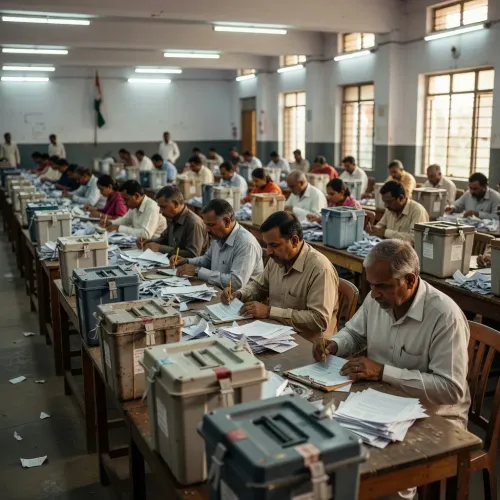
The elections were conducted via ballot paper , not EVMs — a detail Dr.
Yadav used to directly challenge Congress's recurring criticism of electronic voting machines.
Yadav argued that electoral victory is rooted in public trust and governance , not the mechanics of the voting process.
Congress has questioned EVM integrity repeatedly since the 2019 Lok Sabha elections and multiple subsequent state poll defeats.
BJP's dominance in UP and Bihar assemblies since 2022 and 2020 respectively has structurally underpinned its MLC wins in those states.
The post reflects BJP's strategy of using state CMs as national-messaging amplifiers ahead of assembly cycles expected in 2027–28 .
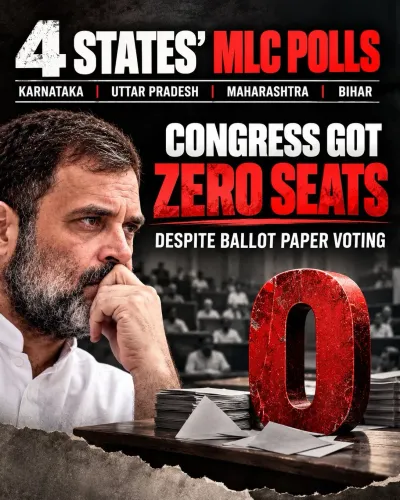
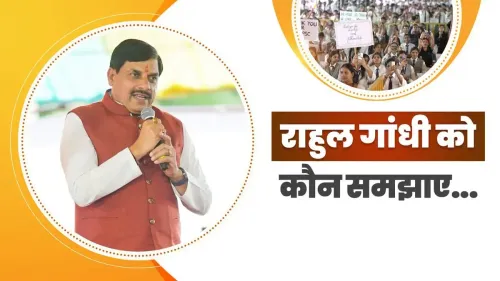
Ballot papers — not electronic voting machines — decided these legislative council races, and Madhya Pradesh Chief Minister Dr. Mohan Yadav wants Congress to sit with that result. On Wednesday, 28 October 2026, the BJP leader took to X to congratulate winning NDA and BJP candidates across MLC elections in Uttar Pradesh, Bihar, Karnataka, and Maharashtra — and to land a pointed political argument in the same breath.
In Hindi, Dr. Yadav wrote: 'EVM पर सवाल उठाने वाली कांग्रेस को बैलेट पेपर से हुए इन चुनाव परिणामों से सबक लेना चाहिए' — 'Congress, which raises questions about EVMs, should learn a lesson from these ballot-paper election results.' His conclusion was blunt: 'The foundation of electoral victory is not the election process, but public trust and the work done for the people.'
Four states, one argument
Legislative council elections in India are typically indirect — contested through an electoral college of sitting MLAs and local body representatives — and crucially, they use ballot papers rather than electronic voting machines. That procedural detail is at the centre of Dr. Yadav's message. BJP and its NDA allies have dominated assembly elections across Uttar Pradesh (2022) and Bihar (2020), converting those lower-house majorities into consistent MLC wins in the years that follow.
By sweeping — or performing strongly in — MLC seats across four states simultaneously, the NDA can credibly frame the outcome as a broad-based endorsement rather than a regional blip. Dr. Yadav's post amplifies that framing nationally, positioning the results as validation of governance rather than procedural advantage.
Congress and the EVM argument, now on trial
Since 2019, Indian National Congress has periodically questioned the integrity of electronic voting machines after high-profile losses — a line it has returned to after several subsequent state poll defeats as well. BJP has consistently countered that the criticism is a post-facto excuse. The MLC results give that counter-argument a sharper edge: if the objection is the machine, what explains the paper-ballot losses?
Dr. Yadav frames it as a question of fundamentals — 'जनविश्वास और जनता के लिए किए गए कार्य' (public trust and work done for the people) — rather than the mechanics of counting. It is a line calibrated to resonate well beyond Madhya Pradesh, signalling the BJP ecosystem's broader pre-campaign messaging ahead of assembly cycles expected in key states by 2027–28.
State CMs as national messengers
A Madhya Pradesh chief minister weighing in on elections in Uttar Pradesh, Bihar, Karnataka, and Maharashtra is not incidental. Chief ministers in the BJP fold increasingly function as national-amplification nodes — their posts on X extending a unified party line to state-specific audiences while reinforcing the central message in Delhi. Dr. Yadav assumed office in December 2023 and has steadily built a profile as an active voice in inter-state political conversations.
The kicker here is structural: Congress faces the challenge of explaining away defeats on a platform — the humble ballot paper — it has itself held up as more trustworthy than the EVM. The party's next move in upcoming state assembly sessions will be closely watched.
Point of View
He neutralises the one procedural argument Congress has relied on most consistently since 2019. The timing — across four large states simultaneously — suggests coordinated BJP messaging rather than a spontaneous reaction. With assembly elections in key states approaching in 2027–28, this kind of inter-state amplification from state CMs is likely to intensify, testing whether Congress can pivot from process grievances to a more substantive electoral counter-narrative.
NationPress
28 Oct 2026
Frequently Asked Questions
Which states had MLC elections that BJP and NDA won in October 2026?
According to CM Dr. Mohan Yadav's post on 28 October 2026, BJP and NDA candidates won MLC seats in Uttar Pradesh, Bihar, Karnataka, and Maharashtra.
Why did CM Mohan Yadav mention ballot papers in his congratulations post?
MLC elections in India use ballot papers rather than EVMs. Dr. Yadav highlighted this to challenge Congress's repeated claims questioning EVM integrity, arguing that NDA won even on the paper-based system Congress prefers.
What is the Congress party's stance on EVMs?
Congress has raised questions about the integrity of electronic voting machines after several major electoral defeats, beginning prominently after the 2019 Lok Sabha elections and continuing through subsequent state polls.
Who is Dr. Mohan Yadav and why is he commenting on elections outside Madhya Pradesh?
Dr. Mohan Yadav is the Chief Minister of Madhya Pradesh, having assumed office in December 2023. BJP state chief ministers frequently amplify the party's national political messaging on social media, making commentary on elections in other states a common practice within the party ecosystem.
How are MLC elections different from regular assembly elections in India?
Legislative council (MLC) elections are indirect — candidates are chosen by an electoral college of sitting MLAs and representatives of local bodies — and they use ballot papers rather than electronic voting machines, unlike direct assembly or parliamentary elections.