CM Mohan Yadav Hits Out at Rahul Gandhi Over Poll Legitimacy
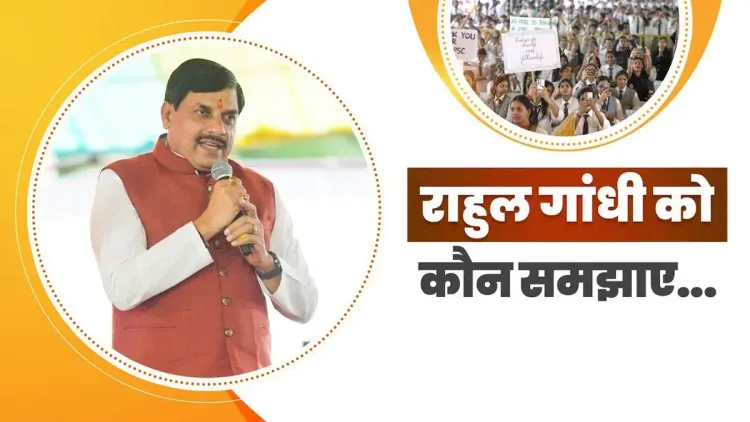
Synopsis
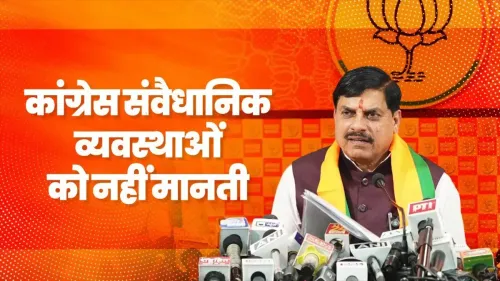
MP Chief Minister Dr. Mohan Yadav accused Rahul Gandhi of accepting elections only when Congress wins and rejecting them on losses, posting a sharp one-liner under #SaveDemocracyRemoveAnarchy on October 27, 2026.
Key Takeaways
Mohan Yadav , Chief Minister of Madhya Pradesh , posted a sharp attack on Rahul Gandhi on October 27, 2026 .
He accused Gandhi of treating the electoral process as legitimate only when Congress wins and flawed only when it loses.
The post was hashtagged #SaveDemocracyRemoveAnarchy , signalling an organised BJP counter-narrative.
Congress has raised EVM and procedural concerns after key defeats since 2019 , a pattern BJP leaders routinely highlight.
The Election Commission of India 's independence remains central to the BJP's defence of electoral outcomes.
No specific trigger event for the post has been confirmed; Congress has not yet publicly responded.
A familiar fault line in Indian democracy crackled back to life on Tuesday, October 27, 2026, when Madhya Pradesh Chief Minister Dr. Mohan Yadav took a pointed swipe at Congress leader Rahul Gandhi, accusing him of applying a double standard to the very electoral process that put him in parliament.
In his post, Dr. Yadav wrote in Hindi: 'Ab Rahul Gandhi ko kaun samjhae... jahan jeete wahan chunav prakriya sahi, aur jahan hare wahan galat.' — 'Now who will make Rahul Gandhi understand... wherever he wins, the election process is right, and wherever he loses, it is wrong.' The post carried the hashtag #SaveDemocracyRemoveAnarchy, a phrase that doubles as both a campaign slogan and a counter-punch.
The 'Selective Legitimacy' Charge
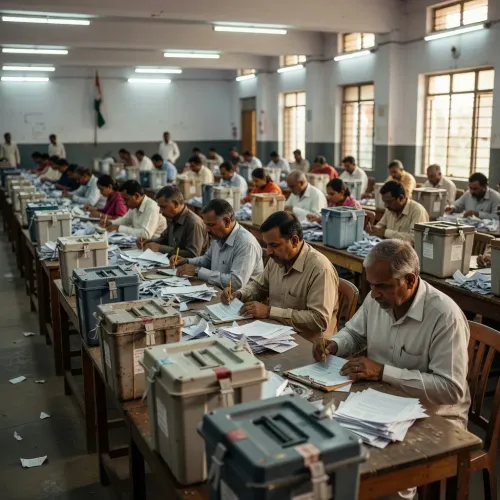
The allegation is not new, but it lands with surgical precision in the current political climate. Since 2019, the Indian National Congress has periodically raised concerns over Electronic Voting Machines and procedural fairness — most audibly after defeats, and most quietly after wins. BJP leaders have consistently used this pattern to argue that the opposition's faith in the Election Commission of India is transactional rather than principled.
Dr. Yadav's one-liner strips the argument down to its sharpest edge: if the system is credible enough to validate a Congress victory, it cannot simultaneously be corrupt enough to manufacture a Congress defeat. It is a rhetorical trap, and it is deliberately concise.
A Pattern Stretching Across Election Cycles
Across multiple election cycles since 2014, defeated parties — not only Congress — have questioned outcomes in specific seats or states while accepting the broader mandate. The BJP, now in power both at the Centre and in Madhya Pradesh, has made defending the Election Commission's independence a standard plank of its counter-narrative against the opposition. That counter-narrative has only grown sharper as electoral competition has intensified.
Rahul Gandhi has been among the most prominent voices raising questions about institutional fairness, which makes him the natural target for this line of attack. Whether Congress responds — and how — will determine whether this remains a passing jab or the opening of a wider exchange.
In a democracy that runs on the credibility of its counting machines, the question of who trusts the process — and when — is never really small.
Point of View
Keeping this argument alive is strategically useful: it pre-emptively delegitimises any future Congress challenge to poll outcomes. The hashtag #SaveDemocracyRemoveAnarchy suggests coordinated messaging, not a spontaneous aside. Watch whether Congress responds substantively or lets the jab pass — silence will likely be read as a concession.
NationPress
27 Oct 2026
Frequently Asked Questions
What did Mohan Yadav say about Rahul Gandhi and elections?
On October 27, 2026, Madhya Pradesh CM Dr. Mohan Yadav said Rahul Gandhi treats election results as valid only where Congress wins and as flawed wherever it loses, posting this critique under the hashtag #SaveDemocracyRemoveAnarchy.
What is the BJP's argument against Congress on EVMs?
BJP leaders argue that Congress has selectively questioned Electronic Voting Machines and election procedures after defeats since 2019, while accepting the same system's results when it wins — a position they say undermines the Election Commission's credibility.
What does #SaveDemocracyRemoveAnarchy mean in Indian politics?
#SaveDemocracyRemoveAnarchy is a BJP-associated hashtag used to counter opposition claims of institutional bias, framing the BJP as the defender of democratic norms against what it characterises as opposition-driven disruption.
Has Rahul Gandhi responded to Mohan Yadav's post?
As of October 27, 2026, no public response from Rahul Gandhi or the Congress party to this specific post has been confirmed.
Why does BJP keep raising the EVM issue against Congress?
BJP uses the EVM-credibility debate to pre-emptively neutralise any future Congress challenge to election outcomes and to reinforce the narrative that the Election Commission of India operates independently, regardless of which party wins.