CM Mohan Yadav slams Rahul Gandhi's language, cites EC
Synopsis
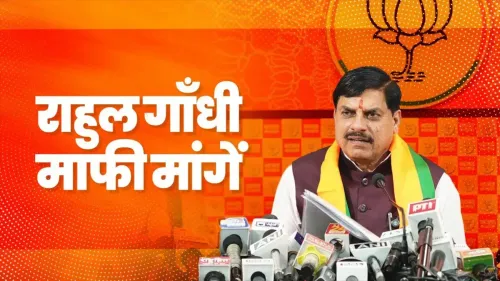
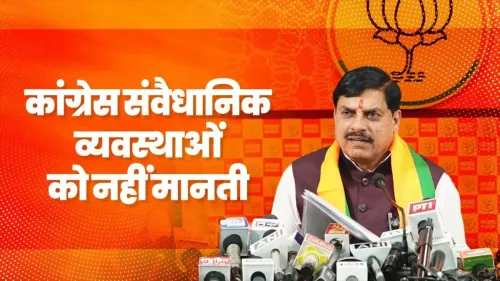
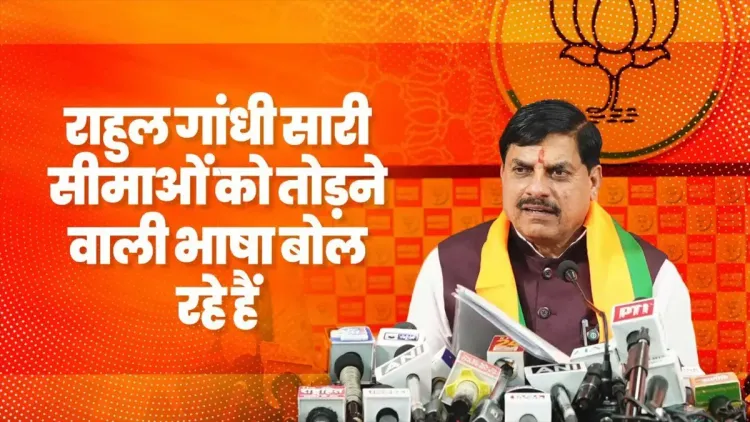
MP Chief Minister Dr. Mohan Yadav accused Rahul Gandhi of using language that 'breaks all limits', invoking the Election Commission of India via the hashtag #RahulexposedbyEC in a post on September 27, 2026.
Key Takeaways
Mohan Yadav , Chief Minister of Madhya Pradesh, attacked Rahul Gandhi on September 27, 2026 over his public remarks.
Yadav described Gandhi's language as one that 'breaks every boundary,' posting in Hindi on X.
The hashtag #RahulexposedbyEC frames the accusation as a matter for the Election Commission of India , not just partisan politics.
Invoking the EC signals a deliberate strategy to seek institutional scrutiny of opposition remarks during the election period.
The Congress party had not issued a formal response to the specific charge at the time of publication.
Madhya Pradesh Chief Minister Dr. Mohan Yadav turned up the heat on Sunday, September 27, 2026, accusing Congress leader Rahul Gandhi of using language that, in his words, 'breaks all limits' — and pointing squarely at the Election Commission of India as the arbiter of that breach.
Posting on X under the hashtag #RahulexposedbyEC, Dr. Yadav wrote in Hindi: 'Rahul Gandhi dwara jis prakar ki bhasha boli gayi, wah saari seemaon ko todne wali bhasha hai' — 'The kind of language used by Rahul Gandhi is one that breaks every boundary.' The reference to the Election Commission embedded in the hashtag signals that the BJP is framing this not merely as a political grievance but as a regulatory matter, one the constitutional poll body is expected to weigh in on.
BJP's EC-framing strategy
Invoking the Election Commission of India in the hashtag is a deliberate move. The commission holds the power to issue advisories, censure candidates, and in extreme cases restrict campaign appearances — tools that have been deployed in past election cycles including 2019 and 2024. By anchoring the attack on EC scrutiny rather than just party rhetoric, Dr. Yadav positions the BJP's criticism as institutional, not merely partisan.
This kind of manoeuvre — forcing a rival's remarks into the Election Commission's frame — has become a recurring feature of Indian campaign politics. Every sharp phrase becomes a potential violation; every viral clip, potential evidence. The goal is to keep the opponent on the defensive and the regulator's gaze trained on them.
Rahul Gandhi and the language debate
Rahul Gandhi, a senior Indian National Congress leader and former party president, has frequently been at the centre of BJP counter-campaigns over his public remarks. The Congress has consistently pushed back on such characterisations, framing them as attempts to silence opposition voices ahead of elections. A formal response from Gandhi or the Congress to this specific charge had not been issued at the time of publication.
What happens next will depend on whether the Election Commission takes cognisance of the remarks in question — and whether Congress escalates with counter-complaints of its own, a pattern that has reliably followed such exchanges in recent election seasons.
Point of View
A framing the BJP has used effectively in previous cycles. The hashtag #RahulexposedbyEC suggests coordinated amplification, not just an individual rebuke. For Congress, the challenge is familiar: any response risks drawing more attention to the original remarks, while silence can be read as concession. The broader pattern here — rival parties racing to file EC complaints against each other — reflects how India's electoral watchdog has become a weapon of first resort in modern campaign warfare.
NationPress
27 Sept 2026
Frequently Asked Questions
What did CM Mohan Yadav say about Rahul Gandhi on September 27 2026?
Dr. Mohan Yadav posted on X accusing Rahul Gandhi of using language that 'breaks all limits,' invoking the hashtag #RahulexposedbyEC to signal Election Commission scrutiny.
What is the hashtag RahulexposedbyEC about?
#RahulexposedbyEC refers to BJP's framing that Rahul Gandhi's remarks warrant scrutiny by the Election Commission of India, which has powers to censure candidates for intemperate language during elections.
Can the Election Commission take action over a politician's language?
Yes. The Election Commission of India can issue advisories, censures, and in serious cases restrict campaign appearances of candidates found to have used language that violates the Model Code of Conduct.
Has Rahul Gandhi faced Election Commission scrutiny before?
Indian political leaders across parties have faced EC notices over speeches in past elections including 2019 and 2024; the commission has issued advisories to leaders from multiple parties for violations of the Model Code of Conduct.
Who is Dr. Mohan Yadav?
Dr. Mohan Yadav is the Chief Minister of Madhya Pradesh and a senior BJP leader, appointed to the post in December 2023.