Pradhan Joins 'Save Democracy' Padyatra in Angul, Targets Congress
Synopsis
Union Education Minister Dharmendra Pradhan joined the 'Save Democracy - Remove Anarchy' padyatra in Angul, Odisha on 11 November 2026, accusing Congress and Rahul Gandhi of spreading propaganda against democracy and the Election Commission after repeated electoral defeats.
Key Takeaways
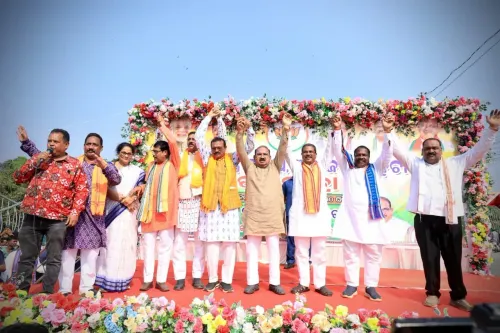
Union Education Minister Dharmendra Pradhan participated in the 'Lokatantra Bachao - Arajkata Hatao' ('Save Democracy - Remove Anarchy') padyatra in Angul, Odisha on 11 November 2026 .
Pradhan declared that the march showed Indian citizens have 'completely rejected Congress's anarchy and appeasement politics.' He accused Rahul Gandhi and the Congress party of running propaganda against democracy, the Election Commission, and the Constitution after repeated election losses.
BJP framed Congress's institutional criticism as frustration born of repeated electoral defeats, a pattern consistent with the party's post-2014 and post-2019 messaging.
Angul's selection as the venue signals BJP's continuing push to build grassroots organisational depth across Odisha's interior districts.
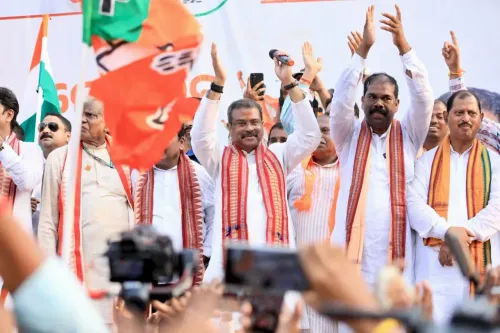
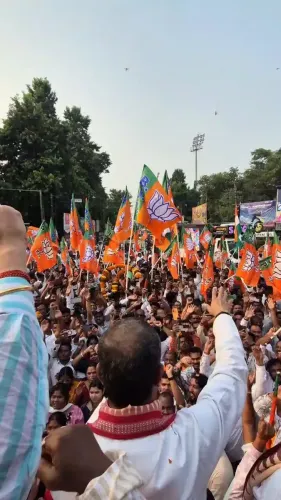
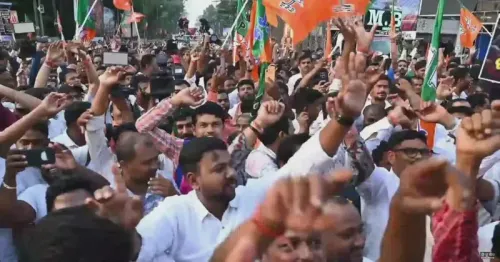
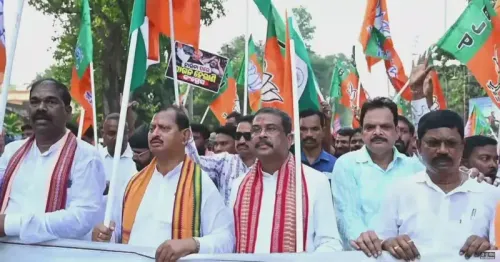
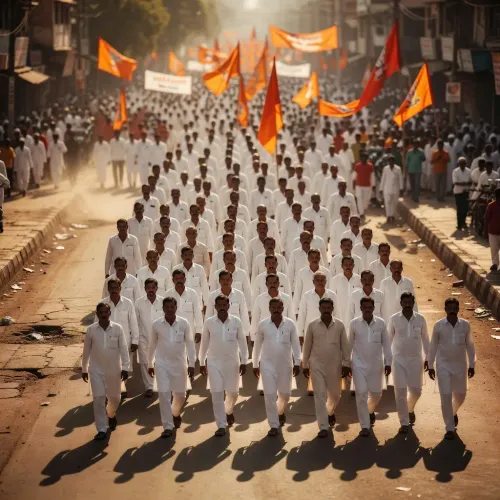
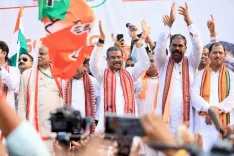
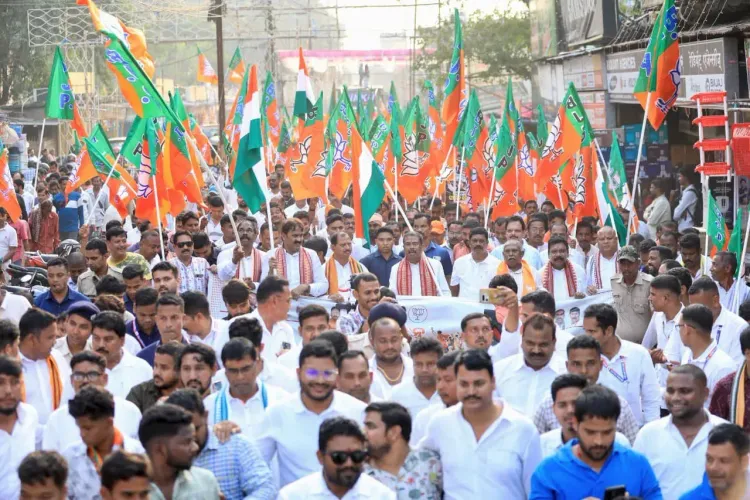
A padyatra wound through the streets of Angul, Odisha, on Wednesday, 11 November 2026 — and Union Education Minister Dharmendra Pradhan was at the front of it, turning a district-level march into a sharp national political statement against the Congress party.
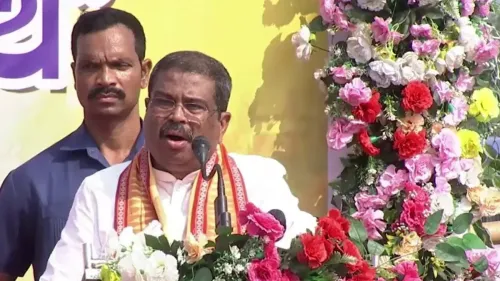
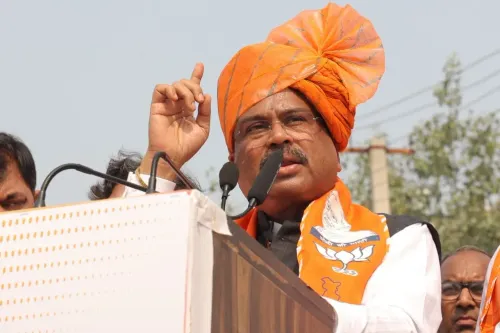
The rally, titled 'Lokatantra Bachao - Arajkata Hatao' ('Save Democracy - Remove Anarchy'), drew Pradhan's direct participation and his pointed message: that the gathering itself was proof of a popular verdict against Congress's politics. 'Today's padyatra makes it clear that the people of this country have completely rejected Congress's anarchy and appeasement politics,' Pradhan wrote on X, in a post published in Odia.
Frustration or Principle? Pradhan's Charge Against Rahul Gandhi
The sharpest line in Pradhan's post was aimed squarely at Rahul Gandhi. After losing elections repeatedly, Pradhan argued, Gandhi and the Congress party have resorted to running 'propaganda against democracy, the Election Commission, and the Constitution' — and he called it nothing more than a reflection of their desperation. The framing is a well-worn BJP counter-move: each time Congress raises institutional grievances post-defeat, the ruling party repositions those grievances not as legitimate critique but as the bitterness of a party that cannot win at the ballot box.
The charge of 'appeasement politics' — a recurring term in BJP's political vocabulary when targeting Congress — signals that the Angul event was not purely local. It was designed to resonate at a national register, linking Odisha ground activity to the broader BJP-Congress conflict over electoral legitimacy and institutional credibility.
Angul as a Political Battleground
Angul, an industrially significant district in Odisha best known for its coal and energy sector, is not typically front-page political territory. Its selection as the venue for a 'Save Democracy' march underlines the BJP's sustained effort to deepen its organisational presence across Odisha's interior, particularly after consolidating ground in the state through assembly and national electoral cycles.
Pradhan, himself an Odisha-origin leader who has held senior cabinet portfolios from Petroleum to Education, regularly uses the state as a stage for high-visibility political messaging. His presence at a district padyatra — not a state capital rally — signals grassroots mobilisation rather than a set-piece press conference.
A Narrative Both Parties Have Weaponised
The 'anti-institution' accusation and the 'appeasement' charge are, by now, structurally embedded in how BJP responds to any Congress critique of the Election Commission or constitutional processes. The pattern dates back to 2014 and intensified after 2019: Congress raises process concerns after losses; BJP frames those concerns as sore-loser destabilisation. The Angul padyatra is the latest local iteration of that national loop.
What is worth watching is whether Congress responds to the specific 'Save Democracy - Remove Anarchy' branding with a counter-narrative in Odisha, or whether the charge lands without a reply — a silence that, in politics, is often read as concession.
A street march in Angul has just drawn a line in the sand. Whether anyone crosses it will define the next chapter of this ongoing democratic argument.
Point of View
Reinforcing the party's post-consolidation push in the state. The 'Save Democracy - Remove Anarchy' branding is an offensive political posture — it preempts any Congress counter-narrative by occupying the democratic legitimacy vocabulary first. The direct targeting of Rahul Gandhi by name in an Odia-language post suggests the message is calibrated both for local consumption and national amplification. The broader pattern reveals how BJP continues to convert Congress's institutional grievances into electoral liabilities for the opposition, sustaining a cycle that has dominated national political discourse since 2014.
NationPress
11 Nov 2026
Frequently Asked Questions
What is the 'Save Democracy - Remove Anarchy' padyatra in Angul?
It is a political march organised in Angul, Odisha under the slogan 'Lokatantra Bachao - Arajkata Hatao' , which translates to 'Save Democracy - Remove Anarchy,' in which senior BJP leaders including Union Minister Dharmendra Pradhan participated on 11 November 2026 .
What did Dharmendra Pradhan say about Congress at the Angul padyatra?
Pradhan stated that the padyatra proved Indians have fully rejected Congress's anarchy and appeasement politics, and accused Rahul Gandhi and the Congress party of spreading propaganda against democracy, the Election Commission, and the Constitution out of frustration over repeated election losses.
Why is Dharmendra Pradhan significant in Odisha politics?
Dharmendra Pradhan is a senior BJP leader originally from Odisha who has held major central cabinet portfolios including Petroleum and Education, making him one of the most prominent Odia faces of the BJP's national leadership.
What is BJP's broader argument against Congress on democratic institutions?
BJP has consistently argued since 2014 that Congress's criticism of the Election Commission and constitutional processes after electoral defeats reflects the opposition's frustration rather than genuine institutional concern, a framing Pradhan repeated at the Angul march.
What is 'appeasement politics' as used by BJP against Congress?
'Appeasement politics' is a recurring BJP charge against Congress, alleging that the opposition pursues vote-bank strategies based on religious or community-based concessions rather than policy-based governance — a term Pradhan invoked again at the Angul padyatra.