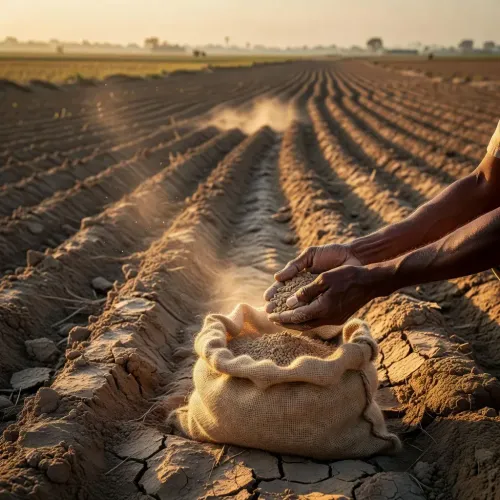
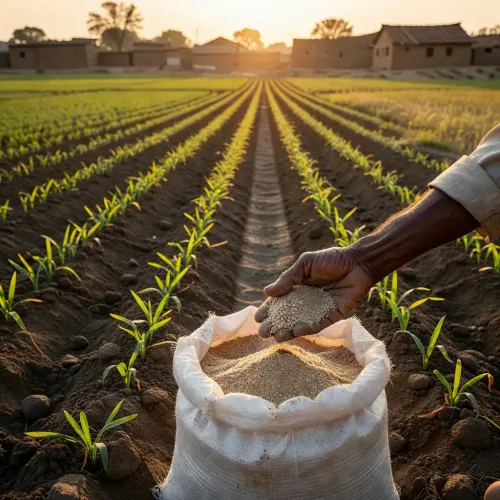
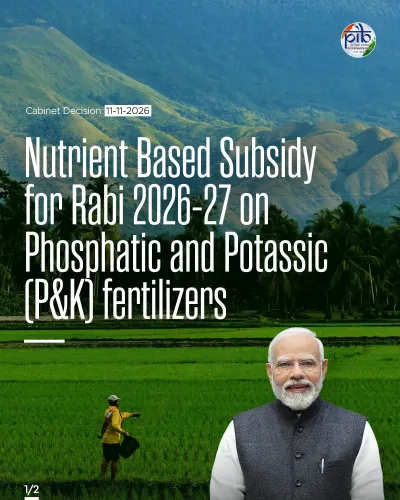
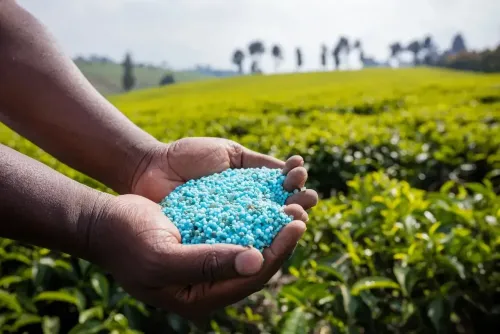
Cabinet Clears NBS Subsidy Rates for Rabi 2026-27 P&K Fertilizers
Synopsis
The Union Cabinet has approved Nutrient Based Subsidy rates on phosphate and potash fertilizers for Rabi 2026-27, Union Minister Dharmendra Pradhan announced on November 11, 2026, with the decision aimed at ensuring affordable fertilizer availability and reducing cultivation costs for Indian farmers.
Key Takeaways
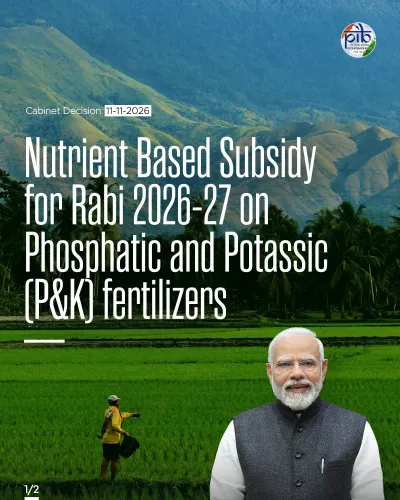
The Union Cabinet approved Nutrient Based Subsidy (NBS) rates on phosphate and potash (P&K) fertilizers for Rabi 2026-27 , announced on November 11, 2026 .
The NBS scheme was introduced in April 2010 , tying subsidies to nutrient content per kilogram rather than to the retail price of specific fertilizer products.
P&K fertilizers — including key products like DAP and MOP — are critical inputs for Rabi crops such as wheat, mustard, and pulses.
Global phosphate and potash prices are highly volatile, making periodic domestic subsidy adjustments essential to shield farmers from international market swings.
Exact per-nutrient subsidy rates approved for Rabi 2026-27 were not detailed in the minister's post; official figures are expected from the Department of Fertilizers.
The announcement is part of a broader post-Cabinet communication push under #CabinetDecisions , with multiple ministers amplifying approvals simultaneously.
Every sowing season, the price a farmer pays for a bag of fertilizer is quietly decided in a Cabinet meeting in New Delhi — and that decision just came through for Rabi 2026-27. Union Education Minister Dharmendra Pradhan announced on Wednesday, November 11, 2026 that the Union Cabinet, under Prime Minister Narendra Modi, has approved Nutrient Based Subsidy (NBS) rates on phosphate and potash (P&K) fertilizers for the upcoming Rabi season, a move aimed at keeping cultivation costs manageable for India's farming households.
What the Cabinet approved — and why it matters to the farm gate
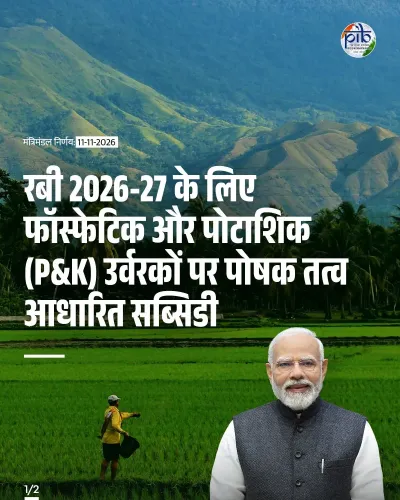
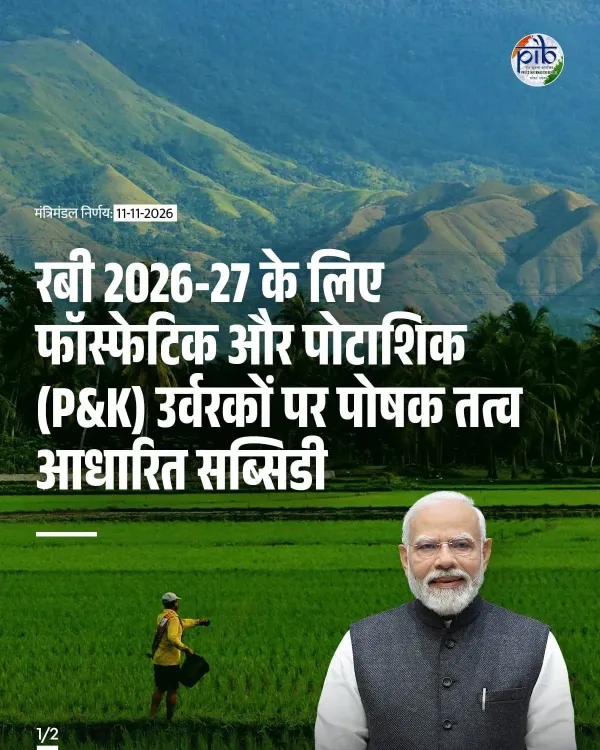
Posting in Hindi on X, Pradhan stated: 'केंद्रीय मंत्रिमंडल ने रबी 2026-27 के लिए फॉस्फेट और पोटाश (P&K) उर्वरकों पर पोषक तत्व आधारित सब्सिडी (NBS) दरों को मंजूरी दी है' — 'The Union Cabinet has approved Nutrient Based Subsidy rates on phosphate and potash fertilizers for Rabi 2026-27.' The decision, he said, would ensure the availability of fertilizers at affordable and fair prices while helping reduce the cost of farming.
The NBS scheme, introduced in April 2010, delinks subsidies from the retail price of a fertilizer product and instead ties them to the actual nutrient content — nitrogen, phosphorus, potassium, and sulphur — per kilogram. This mechanism gives manufacturers pricing flexibility while keeping a floor on how cheaply farmers can access key inputs. For the Rabi crop cycle, which covers winter staples like wheat, mustard, and pulses across much of northern and central India, timely subsidy approval is critical: farmers need to plan input purchases before sowing windows open.
A seasonal ritual with high-stakes consequences
The periodic Cabinet approval of NBS rates is not a one-off event — it is a structured, recurring pillar of India's agricultural input policy. Global phosphate and potash prices are notoriously volatile, driven by supply chains that run through Morocco, Russia, Belarus, and Canada. When those prices spike — as they did sharply in 2021-22 — domestic subsidy adjustments either absorb the shock for farmers or pass it on. Each NBS rate revision is therefore a live calculation between the government's fiscal capacity and the farmer's break-even point.
India's fertilizer subsidy bill has historically ranked among the largest items in the central government's expenditure on agriculture, running into tens of thousands of crores of rupees annually. P&K fertilizers represent a significant share of that outlay, covering products like diammonium phosphate (DAP) and muriate of potash (MOP) that are indispensable for soil nutrition in key crop cycles.
Modi government's framing of farmer welfare
Pradhan explicitly anchored the Cabinet decision within the Modi government's broader agricultural commitment, stating that the government is 'continuously taking important decisions keeping farmers' interests as the highest priority.' The hashtag #CabinetDecisions signals the announcement is part of a coordinated post-Cabinet communication push, with multiple ministers amplifying approvals from the same meeting.
Exact NBS rates approved for Rabi 2026-27 — the per-kilogram subsidy for phosphorus, potassium, and other nutrients — have not been detailed in the minister's post. Those figures, once officially released by the Department of Fertilizers, will determine the precise benefit farmers receive per bag and the total subsidy outlay for the season.
India feeds over a billion people partly on the back of policy decisions taken in that Cabinet room. The Rabi season's fertilizer economics are now set — the harvest will tell the rest of the story.
Point of View
The Modi government signals continuity in input-cost support, a politically sensitive metric in agrarian states ahead of any electoral cycle. The NBS mechanism itself represents a decade-old policy consensus that has survived multiple administrations, suggesting durable institutional logic even as the specific rates and fiscal outlay remain points of periodic contestation. What sharpens the stakes in 2026 is the ongoing uncertainty in global phosphate and potash supply chains, making each seasonal Cabinet approval a consequential, not merely routine, fiscal commitment.
NationPress
11 Nov 2026
Frequently Asked Questions
What is the Nutrient Based Subsidy (NBS) scheme for fertilizers in India?
The NBS scheme, introduced in April 2010, provides subsidies on phosphatic and potassic fertilizers based on their nutrient content per kilogram rather than fixing a subsidised retail price, giving manufacturers pricing flexibility while keeping fertilizers affordable for farmers.
Which fertilizers are covered under the NBS scheme?
The NBS scheme covers phosphate and potash (P&K) fertilizers, including products like diammonium phosphate (DAP) and muriate of potash (MOP), which are key soil nutrients used extensively in Rabi and Kharif crop cycles.
Why does the Cabinet approve NBS rates every season?
Global prices for phosphate and potash raw materials are highly volatile, so the government revises subsidy rates seasonally — for Rabi (winter) and Kharif (summer) crops — to balance fiscal costs with ensuring affordable fertilizer supply to farmers.
What is the Rabi crop season in India?
The Rabi season refers to India's winter crop cycle, typically sown between October and December and harvested in March-April, covering major crops like wheat, mustard, chickpea, and barley, primarily in northern and central India.
How does the fertilizer subsidy help Indian farmers?
By subsidising the cost of key nutrients, the government reduces the per-bag price farmers pay for fertilizers, lowering overall cultivation costs and helping sustain farm incomes and domestic food grain production.