Cabinet Clears 8.449 km Aqua Line Extension to Greater Noida
Synopsis
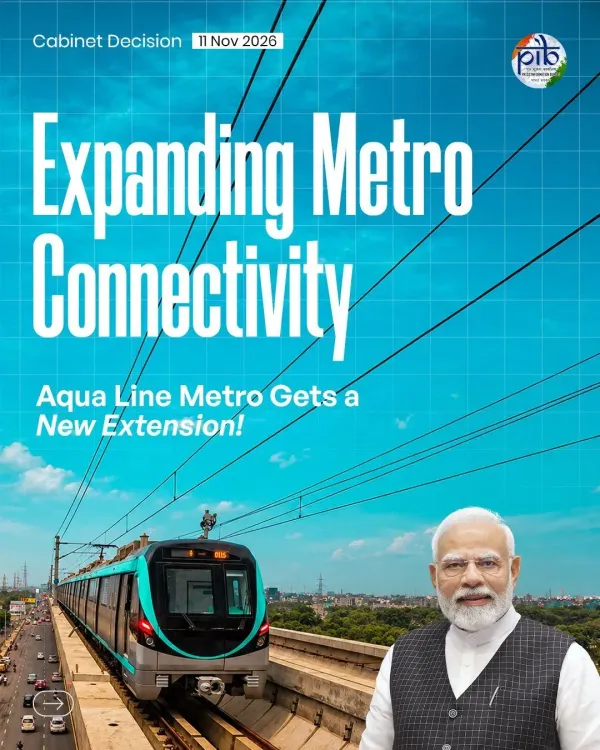
The Union Cabinet, chaired by PM Modi, has approved an 8.449 km elevated extension of the Noida Metro Aqua Line from Noida Sector-51 to Greater Noida Sector-04, adding five stations and a key interchange at Sector-61 to ease NCR commutes.
Key Takeaways
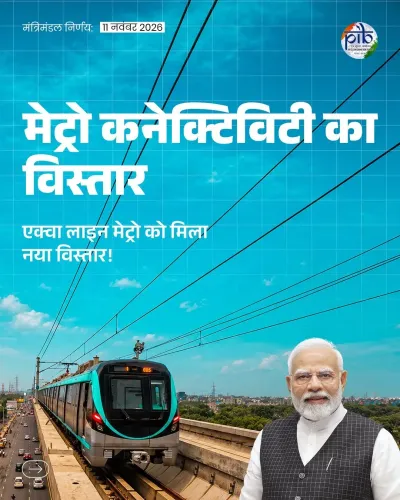
The Union Cabinet approved the 8.449 km Aqua Line extension on 11 November 2026 .
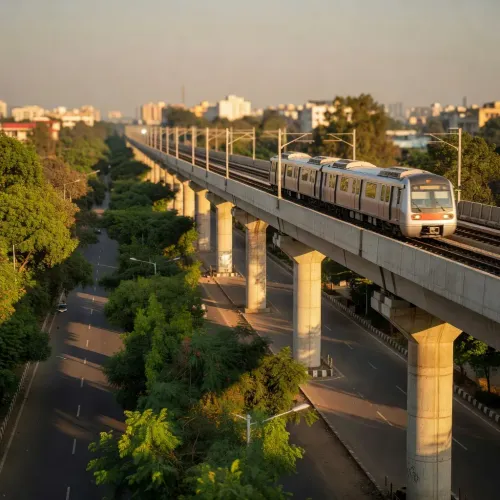
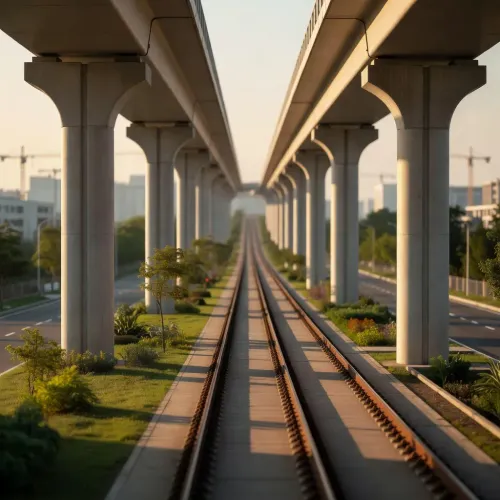
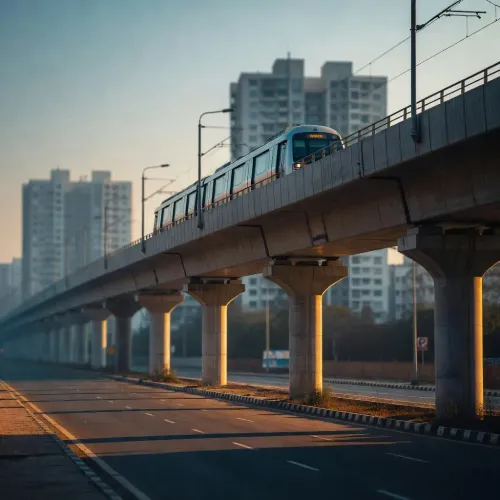
The extension runs from Noida Sector-51 to Greater Noida Sector-04 with five new elevated stations .
A metro interchange at Noida Sector-61 will connect the extension to the existing network.
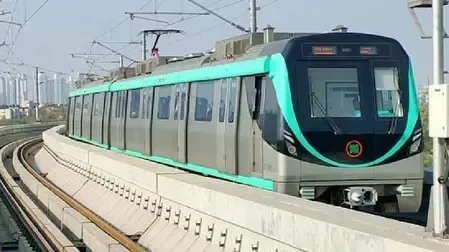
The Aqua Line has been operational since 2019 , linking Noida and Greater Noida.
The project aims to serve residential areas, offices, educational institutions, and healthcare facilities along the corridor.
Key next steps include construction timeline finalisation, land acquisition, and central funding release.
Five new elevated stations and 8.449 kilometres of fresh track — the Union Cabinet just handed the Noida–Greater Noida corridor its most significant expansion since the Aqua Line opened in 2019. Union Education Minister Dharmendra Pradhan announced on Wednesday, 11 November 2026 that the Cabinet, chaired by Prime Minister Narendra Modi, has approved extending the Aqua Line from Noida Sector-51 to Greater Noida Sector-04.
What the five new stations will unlock
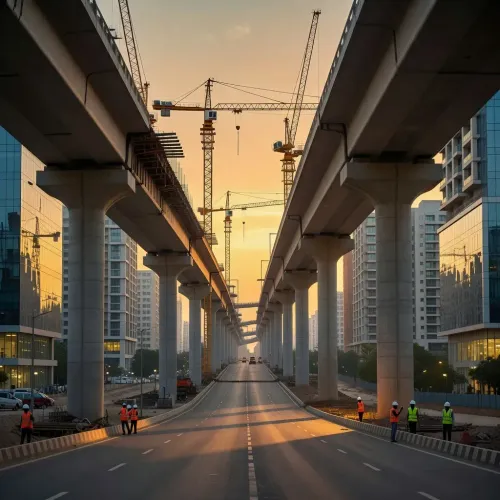
The approved alignment adds five elevated stations to the existing Aqua Line network, with a critical interchange at Noida Sector-61 that will stitch the extension into the broader metro grid. That interchange is the linchpin: commuters travelling deeper into Greater Noida will no longer need to exit the network to switch lines. The corridor is designed to serve a dense mix of residential clusters, office zones, educational institutions, and healthcare facilities that have grown rapidly along this stretch of the National Capital Region.
Aqua Line's journey from 2019 to now
The Aqua Line launched in 2019 as a dedicated connector between Noida and Greater Noida, filling a transit gap in one of India's fastest-growing satellite belts. That original corridor integrated two urban centres that had expanded faster than road infrastructure could keep pace with. The cabinet-approved extension continues the incremental logic of that project — push the network outward, absorb new residential and institutional density, and reduce private vehicle load on arterial roads.
NCR metro expansion: a pattern with momentum
The Aqua Line extension fits squarely into a decade-long central government strategy of funding elevated metro corridors across the National Capital Region to absorb satellite-city growth. Each approval follows a similar arc: Cabinet clearance, funding release, land acquisition, and a construction timeline that the NCR's dense urban fabric invariably tests. For this project, those milestones — particularly land acquisition and the release of central funds — are the variables to watch now that the green light is official.
Greater Noida's residential and institutional zones have expanded well ahead of their public transit coverage. When trains eventually roll into Greater Noida Sector-04, the last-mile gap that tens of thousands of daily commuters currently bridge on two-wheelers and shared autos will narrow sharply — and that is the whole point.
Point of View
Where satellite cities have outgrown road capacity. The Sector-61 interchange is a strategic node — it transforms a stub extension into a true network connection, raising the project's ridership potential significantly. For the BJP, delivering visible urban infrastructure in a Uttar Pradesh growth corridor ahead of future electoral cycles carries clear political logic, even as the harder work of land acquisition and funding disbursement now begins. The broader pattern — incremental metro approvals knitting the NCR together — suggests this will not be the last such extension.
NationPress
11 Nov 2026
Frequently Asked Questions
What is the Noida Metro Aqua Line extension approved by the Cabinet?
The Union Cabinet approved an 8.449 km extension of the Aqua Line from Noida Sector-51 to Greater Noida Sector-04, adding five elevated stations and an interchange at Noida Sector-61.
When was the Noida Metro Aqua Line originally launched?
The Aqua Line was inaugurated in 2019 as a dedicated metro corridor connecting Noida and Greater Noida within the National Capital Region.
Which stations are included in the new Aqua Line extension?
The extension will have five new elevated stations between Noida Sector-51 and Greater Noida Sector-04, with a key interchange at Noida Sector-61; exact individual station names have not been officially detailed yet.
What is the significance of the Sector-61 interchange in the Aqua Line extension?
The interchange at Noida Sector-61 will connect the new extension to the existing metro network, allowing commuters to switch lines without exiting the system and significantly expanding reach.
What are the next steps after the Cabinet approval of the Aqua Line extension?
Following Cabinet approval, the key milestones are finalising the construction timeline, completing land acquisition, and releasing central funding for the 8.449 km corridor.