Sonowal: Cabinet Clears Aqua Line Metro Extension to Greater Noida
Synopsis
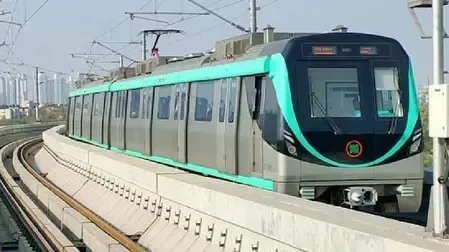
The Union Cabinet chaired by PM Modi has approved an 8.449-km, 5-station extension of the Aqua Line Metro from Noida Sector-51 to Greater Noida Sector-04. Once operational, the combined active metro network for the two cities will reach 71.878 km.
Key Takeaways
The Union Cabinet approved the Aqua Line Metro extension on November 11, 2026 .
The new corridor spans 8.449 km and includes 5 new stations , running from Noida Sector-51 to Greater Noida Sector-04 .
Upon operationalisation, the combined active metro network of Noida and Greater Noida will reach 71.878 km .
The Aqua Line originally opened in 2019 , covering 29.6 km between the two cities.
Funding breakdown between the Centre and Uttar Pradesh government is yet to be publicly detailed.
A 8.449-km metro extension connecting Noida Sector-51 to Greater Noida Sector-04 cleared the Union Cabinet on Wednesday, November 11, 2026 — pushing the twin cities closer to a seamless urban rail spine. Union Minister of Ports, Shipping and Waterways Sarbananda Sonowal announced the Cabinet decision on X, noting the approval comes under a Cabinet chaired by Prime Minister Narendra Modi.
Five new stations, one bigger network
The approved corridor adds five stations to the existing Aqua Line, which has run from Noida Sector-51 to Greater Noida Depot since its inauguration in 2019. That original stretch covered 29.6 km. Once the new segment is operationalised, Noida and Greater Noida together will command a combined active metro rail network of 71.878 km — a figure Sonowal cited directly in his post.
That combined number matters. It places the Noida–Greater Noida corridor among the more substantial metro networks in India's tier-1 satellite belt, alongside the Delhi Metro's outer-ring extensions serving the same National Capital Region. The jump from the original Aqua Line length to 71.878 km of combined active network reflects years of phased additions across both cities, not just this single extension.
Aqua Line's journey from 2019 to 2026
The Aqua Line was the first metro in the country to run entirely within Uttar Pradesh when it opened in 2019, connecting the two planned cities that sit at the eastern edge of the NCR. India's approach to NCR urban mobility since the 2010s has relied on exactly this model: phased corridor extensions approved at the Cabinet level, funded through a mix of central and state contributions, then handed off for construction and eventual operation.
The new Sector-04 terminus in Greater Noida extends the line deeper into a zone that has seen significant residential and institutional development. Commuters who currently rely on road transport for the last few kilometres into Greater Noida's newer sectors stand to benefit most directly once construction is complete.
What comes next for the corridor
Cabinet approval is the green light — not the finish line. The specific funding split between the Centre and the Uttar Pradesh government, the detailed project report, land acquisition status for the five station sites, and the construction timeline have not yet been publicly detailed. These are the variables that will determine whether this extension opens well within the decade or slides into the familiar zone of metro-project delays.
What is now settled: the political will at the highest level exists, and the network arithmetic — 71.878 km of active metro in one of India's fastest-growing urban corridors — is about to get a formal foundation to build from.
Point of View
Maximising visible beneficiary count. The 71.878-km combined network figure, cited precisely in the ministerial post, signals that the government is tracking cumulative optics as much as individual project milestones. The real test will be in the construction timeline and funding structure, both of which remain to be announced.
NationPress
11 Nov 2026
Frequently Asked Questions
What is the Aqua Line Metro extension approved in November 2026?
The Union Cabinet approved an 8.449-km extension of the Aqua Line Metro from Noida Sector-51 to Greater Noida Sector-04, adding 5 new stations to the existing corridor.
How long will the combined Noida–Greater Noida metro network be after the extension?
Once operational, the combined active metro rail network of Noida and Greater Noida will be 71.878 km.
When did the Aqua Line Metro originally open?
The original Aqua Line, covering 29.6 km between Noida Sector-51 and Greater Noida, was inaugurated in 2019.
Which Cabinet approved the Aqua Line Metro extension to Greater Noida Sector-04?
The Union Cabinet chaired by Prime Minister Narendra Modi approved the extension on November 11, 2026.
How many stations will the new Aqua Line extension have?
The newly approved 8.449-km extension will include 5 stations between Noida Sector-51 and Greater Noida Sector-04.