ECI fact-check debunks vote discrepancy claims in 2024 elections across 10 constituencies
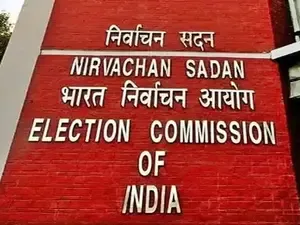
Synopsis
The Election Commission has pushed back — with granular, constituency-level data — against a wave of social media posts claiming hundreds of thousands of votes went uncounted in the 2024 elections. In every case examined, the alleged 'discrepancy' traces back to a basic misreading: the total number of registered electors being mistaken for votes polled. One post even confused the number of polling stations with the number of voters.
Key Takeaways
The Election Commission of India released constituency-specific fact-checks on 11 November 2026 against viral claims of vote mismatches in the 2024 Lok Sabha and Assembly elections .
Claims targeted 10 constituencies across Maharashtra , Haryana , and Jammu and Kashmir , and were labelled 'misleading' by the Commission.
In most cases, the alleged 'gap' was simply the number of registered electors who did not vote , not uncounted ballots.
A claim about Kaithal (Haryana) confused 215 polling stations with the number of voters — official turnout was 1,68,851 votes at 75.57 per cent .
The ECI reiterated that Form 17C is the statutory record of votes cast, matched in the presence of candidates' agents on counting day.
All official data — Statistical Reports and Index Cards — remains publicly available on the ECI website .
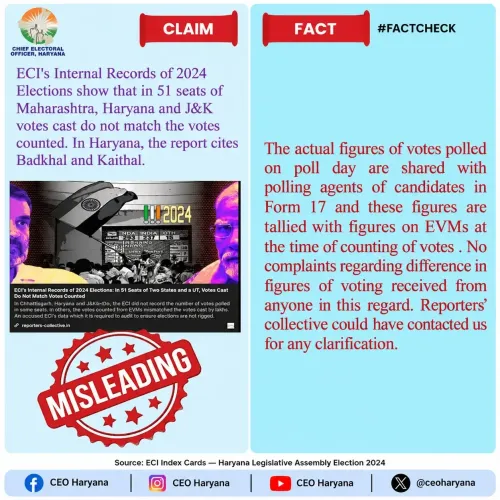
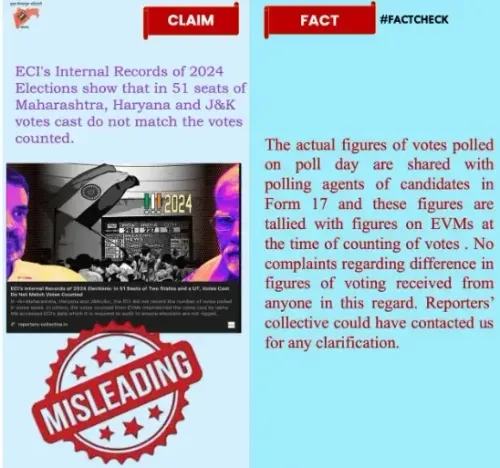
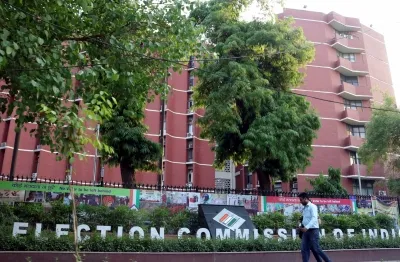
The Election Commission of India (ECI) on Wednesday, 11 November 2026 released a detailed, constituency-specific fact-check series rejecting viral social media claims of large-scale mismatches between votes polled and votes counted in the 2024 Lok Sabha and state Assembly elections. The Commission labelled the circulating claims as 'misleading' and published official figures from its Index Cards and Statistical Reports to establish the factual record.
What the Social Media Claims Alleged
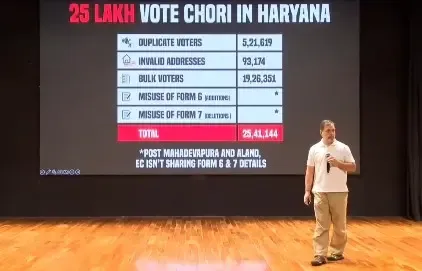
The claims, which circulated widely online, primarily targeted seats in Maharashtra, Haryana, and Jammu and Kashmir. In a recurring pattern, posts either treated the total number of registered electors as the number of votes polled, or misread other administrative figures — artificially manufacturing a 'gap' that the Commission says does not exist in the official records.
Constituency-by-Constituency Breakdown
One of the most widely shared posts alleged that 18.11 lakh votes were polled but only 10.33 lakh were counted in Mumbai North Parliamentary constituency (Maharashtra), implying 7.78 lakh votes went uncounted. Official records show the constituency had 18,12,115 total registered electors, of whom 10,36,496 actually voted — 10,33,268 on EVMs and 3,228 via postal ballot. After deducting 765 test votes and votes not retrieved from Control Units per ECI guidelines, 10,35,731 votes were counted. Voter turnout stood at 57.20 per cent. The difference of roughly 7.75 lakh represents registered electors who did not turn up to vote.
In Srinagar Parliamentary constituency (Jammu and Kashmir), a claim alleged that 6,66,046 votes were polled but 6,72,942 were counted — suggesting an excess of 6,896 votes. The ECI clarified that the total electors stood at 17,48,803, with 6,76,408 votes polled (6,72,942 EVM + 3,466 postal). After subtracting 1,009 test votes and unrecovered CU votes, the total counted was 6,75,399. Turnout was 38.68 per cent. The Commission confirmed that no extra votes were counted.
Posts targeting Beed Assembly constituency (Maharashtra) claimed 3.84 lakh votes were polled but only 2.39 lakh counted, with 1.45 lakh (37.8 per cent) allegedly uncounted. Official records show 3,84,885 total electors, 2,42,983 votes polled (2,38,845 EVM + 4,138 postal), and the same figure counted. Turnout was 63.13 per cent. The shortfall of roughly 1.42 lakh is the count of electors who chose not to vote.
In Dahanu Assembly constituency (Maharashtra), claims placed votes polled at 3.01 lakh against only 2.21 lakh counted. Official figures list 3,01,257 electors and 2,21,818 votes both polled and counted, at a turnout of 73.63 per cent. The gap of approximately 79,000 again represents non-voters.
For Tosham Assembly constituency (Haryana), a claim said 2.21 lakh votes were polled but only 1.60 lakh counted. Records show 2,23,609 total electors, 1,61,872 votes polled, and 1,61,020 votes counted after minor adjustments for test votes. Turnout was 72.39 per cent.
Perhaps the starkest factual error was in a claim about Kaithal Assembly constituency (Haryana), which alleged only 215 citizens voted while the ECI counted 1,67,285 votes. The Commission clarified that 215 is the number of polling stations in the constituency, not the voter count. Actual data shows 2,23,449 electors and 1,68,851 votes polled and counted, at a turnout of 75.57 per cent.
In Chenani, Kokernag, and Pulwama Assembly constituencies (Jammu and Kashmir), claims of extra votes counted — ranging from 1,500 to 1,800 — were similarly rejected. Official data records 85,189 votes polled and counted in Chenani, 57,542 in Kokernag, and 51,011 polled with 50,529 counted in Pulwama after standard deductions.
The Commission's Statutory Framework
The ECI reiterated that Form 17C is the sole statutory record of votes cast at each polling station. Part-I of the form is shared with polling agents at close of poll; Part-II is matched with those figures on counting day in the presence of candidates' agents. All relevant data, including Statistical Reports and Index Cards, remains accessible on the ECI website.
The Underlying Pattern
Across all constituencies examined, the Commission identified a consistent misreading: figures projected as 'votes polled but not counted' were, in every verifiable case, either the total number of registered electors or other administrative data points — such as the number of polling stations. The actual votes polled and counted, as reflected in Form 17C, match closely once postal ballots, test votes, and votes not retrieved from Control Units are properly accounted for.
Notably, this is not the first time electoral misinformation has spread after a major Indian election cycle, but the breadth of constituency-specific claims — spanning three states and both parliamentary and assembly contests — appears to have prompted a more systematic public rebuttal from the Commission than in previous cycles. All official data continues to be available on the ECI website for independent verification.
Point of View
But the fact that it was necessary at all reflects a structural vulnerability: when official election data is presented in formats that require cross-referencing multiple documents, misreadings — deliberate or inadvertent — are almost inevitable. The Commission's reliance on Form 17C as the gold standard is legally sound, but Form 17C's accessibility to ordinary citizens remains limited. A more proactive, plain-language voter education effort after every major poll cycle, rather than reactive fact-checking after misinformation has gone viral, would better serve electoral trust. The pattern of electors-mistaken-for-voters is recurring enough that it now warrants a standing, automated clarification mechanism on the ECI portal itself.
NationPress
11 Nov 2026
Frequently Asked Questions
What were the viral claims about the 2024 election vote count?
The claims alleged large-scale mismatches between votes polled and votes counted in multiple constituencies across Maharashtra, Haryana, and Jammu and Kashmir in the 2024 Lok Sabha and state Assembly elections. The Election Commission found that in every case examined, the figures being cited as 'uncounted votes' were actually the number of registered electors who did not vote, or other administrative data points.
What did the ECI find in Mumbai North constituency?
The ECI clarified that the constituency had 18,12,115 total registered electors, of whom 10,36,496 actually voted — a turnout of 57.20 per cent. The alleged gap of 7.78 lakh was simply the number of registered voters who did not turn up, not uncounted ballots.
What is Form 17C and why does it matter?
Form 17C is the sole statutory document that records the number of votes cast at each polling station in Indian elections. Part-I is handed to polling agents at the close of poll, and Part-II is cross-checked against those figures on counting day in the presence of candidates' agents, making it the official reference point for verifying vote counts.
Was there a case where a claim confused polling stations with voters?
Yes — in Kaithal Assembly constituency (Haryana), a claim alleged that only 215 citizens voted while the ECI counted 1,67,285 votes. The Commission clarified that 215 is the number of polling stations in the constituency. Actual voter turnout was 1,68,851 votes at 75.57 per cent.
Where can voters independently verify the official election figures?
All relevant data, including Index Cards and Statistical Reports for the 2024 elections, is publicly available on the ECI's official website. The Commission has stated that these records leave no scope for the large-scale discrepancies alleged on social media.