Nadda: Cabinet clears ₹62,370 cr P&K fertiliser subsidy for Rabi 2026-27
Synopsis
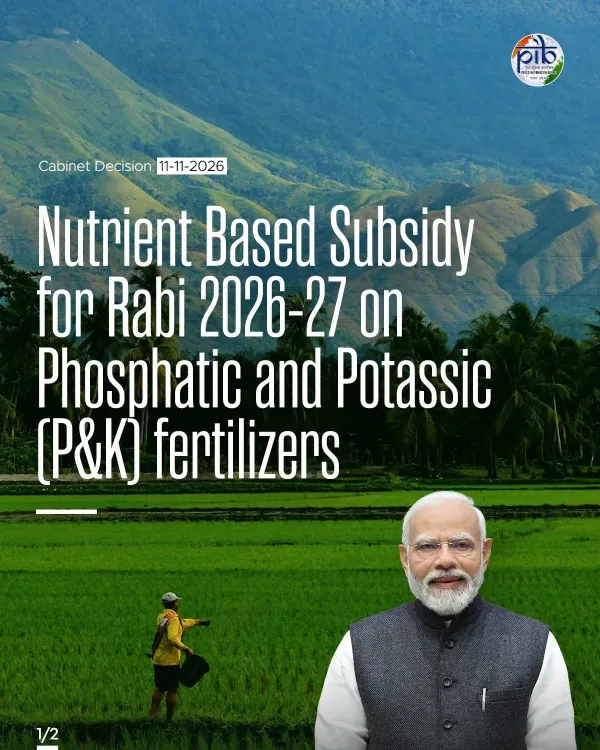
The Union Cabinet chaired by PM Modi approved NBS rates for P&K fertilisers for Rabi 2026-27 at ₹62,370.02 crore — a ₹24,417.73 crore rise over the previous Rabi season — to keep fertiliser prices affordable for farmers during the winter sowing window.
Key Takeaways
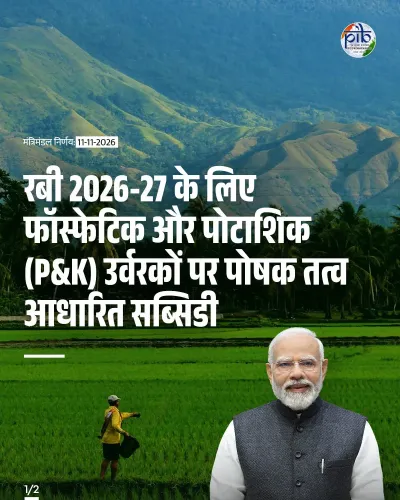
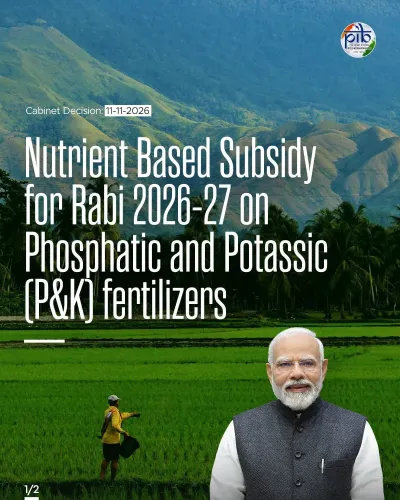
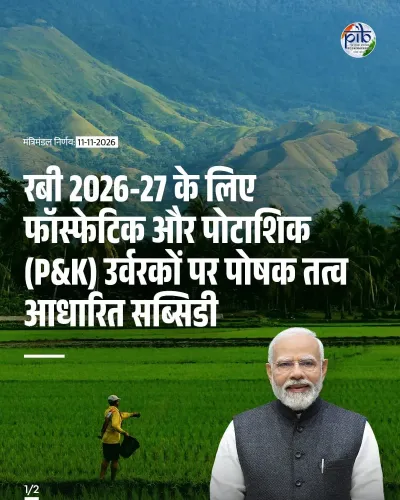
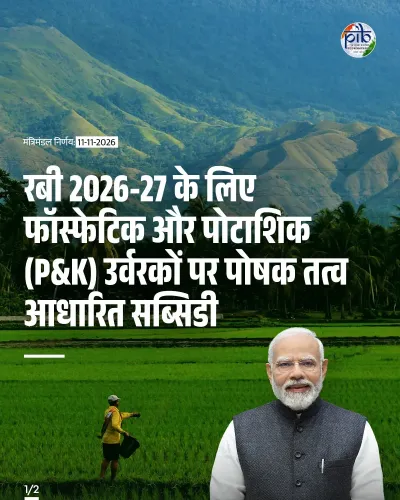
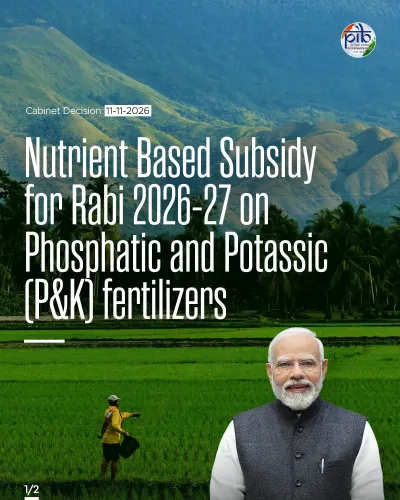
The Union Cabinet approved Nutrient Based Subsidy (NBS) rates for P&K fertilisers for Rabi 2026-27 on November 11, 2026 .
Total estimated budgetary requirement: ₹62,370.02 crore .
The allocation is up by ₹24,417.73 crore over the previous Rabi season — a significant year-on-year increase.
The NBS scheme , launched in April 2010 , links subsidies to nutrient content rather than product price, covering phosphorus, potassium, and sulphur inputs.
The decision aims to ensure affordable, timely availability of P&K fertilisers — including DAP and MOP — for farmers during the critical winter sowing season.
Nadda announced the decision in his capacity as Minister of Chemicals and Fertilizers .
A ₹62,370.02 crore commitment to India's farmers — that is the scale of the fertiliser subsidy decision the Union Cabinet cleared on Wednesday, November 11, 2026, as Union Health and Chemicals Minister J. P. Nadda announced the approval of Nutrient Based Subsidy (NBS) rates for Phosphatic and Potassic (P&K) fertilisers for the Rabi season 2026-27.
The Cabinet, chaired by Prime Minister Narendra Modi, cleared the seasonal NBS rates, with the budgetary allocation rising by ₹24,417.73 crore over the previous Rabi season — a sharp upward revision that signals both the scale of global price pressures on fertiliser markets and the government's intent to shield cultivators from that volatility.
What NBS does — and why the quantum matters
The Nutrient Based Subsidy scheme, launched in April 2010 under the Ministry of Chemicals and Fertilizers, broke from the old product-price-linked subsidy model. Instead of subsidising a bag of fertiliser at a flat rate, NBS ties central support to the actual nutrient content — nitrogen, phosphorus, potassium, and sulphur — in each fertiliser product. The goal: encourage balanced soil nutrition, let manufacturers compete on price, and keep fiscal outgo rational. Seasonal approvals happen twice a year — ahead of Kharif (summer sowing) and Rabi (winter sowing) — with the Cabinet calibrating rates against prevailing international prices and domestic demand forecasts. A jump of roughly ₹24,400 crore year-on-year is not routine housekeeping; it reflects a deliberate policy choice to absorb a larger share of input costs at the exchequer rather than pass them on to the farmer at the point of purchase.Rabi season stakes: wheat, mustard and winter crops
Rabi sowing — anchored by wheat, mustard, gram and barley — typically begins across northern and central India from October through December. P&K fertilisers are critical inputs at this stage: diammonium phosphate (DAP) and muriate of potash (MOP) go into the soil alongside urea to build root systems and boost yield potential. Any shortage or sharp price spike in this window directly translates into reduced applications, lower productivity, and ultimately, food-price pressure downstream. By locking in subsidised NBS rates before the sowing window deepens, the Cabinet decision is designed to keep retailer shelf prices within reach for smallholder farmers — the dominant category across India's agricultural landscape.Nadda's dual ministerial role and this decision
It is J. P. Nadda's portfolio as Minister of Chemicals and Fertilizers — not his health brief — that sits at the centre of this announcement. As the minister administratively responsible for fertiliser policy, Nadda oversees both the NBS framework and the larger urea subsidy architecture. His post on X framed the decision as 'a farmer-centric decision to rationalise subsidies, ensure timely availability of fertilisers and safeguard farmers' interests' — language that places the approval squarely within the government's broader agricultural welfare narrative heading into the winter crop season. With over a decade of NBS approvals as a template, the real question markets and farm organisations will now track is whether the enhanced allocation is sufficient to hold retail P&K prices stable through March 2027 — or whether a mid-season correction becomes necessary if global prices move sharply again.Point of View
417.73 crore surge in P&K subsidy allocation in a single Rabi cycle signals that global fertiliser markets remain far from settled, and New Delhi has made a conscious call to absorb that pressure fiscally rather than let it reach the farm gate. For the BJP government, the timing is politically loaded — a visible, large-ticket welfare decision anchored to Rabi sowing keeps the farmer-first narrative alive ahead of any state election cycle. The NBS framework itself, now in its sixteenth year, continues to serve as the government's preferred tool to balance fiscal discipline with agrarian welfare — but a ₹62,000-plus crore seasonal commitment raises genuine questions about long-term subsidy rationalisation. Analysts watching the fertiliser sector will also track whether this enhanced allocation softens pressure on domestic manufacturers or primarily flows through to imported fertiliser price management.
NationPress
11 Nov 2026
Frequently Asked Questions
What is the NBS scheme for P&K fertilisers in India?
The Nutrient Based Subsidy (NBS) scheme, introduced in April 2010, provides central subsidies on phosphatic and potassic fertilisers linked to their nutrient content — phosphorus, potassium, and sulphur — rather than a flat per-bag price. The Cabinet approves NBS rates twice a year, before the Kharif and Rabi sowing seasons.
How much has the Cabinet approved for P&K fertiliser subsidy for Rabi 2026-27?
The Union Cabinet cleared an NBS allocation of ₹62,370.02 crore for Rabi 2026-27, which is ₹24,417.73 crore higher than the previous Rabi season's budgetary requirement.
Why did the P&K fertiliser subsidy increase so much for Rabi 2026-27?
The government has not publicly detailed the exact reasons, but NBS rate revisions typically reflect changes in international fertiliser prices and domestic demand. A ₹24,417.73 crore rise suggests significantly elevated input costs that the government chose to absorb rather than pass on to farmers.
What does J. P. Nadda have to do with fertiliser subsidies?
J. P. Nadda serves as Union Minister of Chemicals and Fertilizers, the ministry that administers the NBS scheme and fertiliser pricing policy. He announced the Cabinet's approval of the Rabi 2026-27 NBS rates on November 11, 2026.
Which crops benefit from the P&K fertiliser subsidy in the Rabi season?
Rabi crops such as wheat, mustard, gram, and barley are the primary beneficiaries, as phosphatic (like DAP) and potassic (like MOP) fertilisers are key inputs during winter sowing from October through December across northern and central India.