Khattar Reports Progress on President Murmu's Sanitation Goals
Synopsis
Union Minister Manohar Lal Khattar reported to President Droupadi Murmu on 11 November 2026 that her five urban sanitation priorities — source segregation, waste-to-wealth, zero-waste colonies, Safai Mitra safety, and civic values for children — have seen concrete progress under Swachh Bharat Mission Urban 2.0.
Key Takeaways
Union Minister Manohar Lal Khattar publicly acknowledged President Droupadi Murmu's five urban sanitation priorities from a previous address.
The five themes are: source segregation , waste-to-wealth , zero-waste colonies , Safai Mitra safety , and civic values in children.
Khattar stated 'concrete progress' has been made in the direction of the President's suggestions.
Swachh Bharat Mission (Urban) 2.0 , whose guidelines were issued in 2021 , underpins all five priorities.
Implementation remains the responsibility of urban local bodies and state governments, with central oversight from the Ministry of Housing and Urban Affairs.
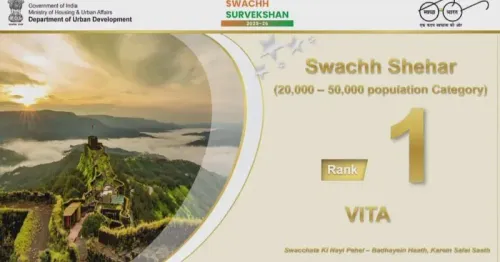
The next accountability test will be the forthcoming Swachhata rankings and Ministry progress reports on zero-waste colonies and Safai Mitra equipment.
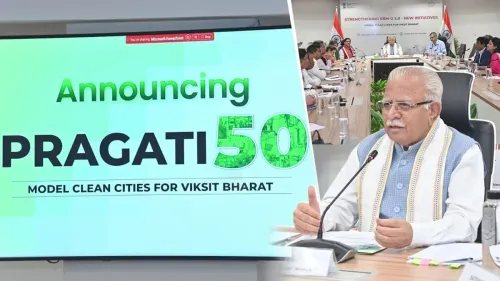
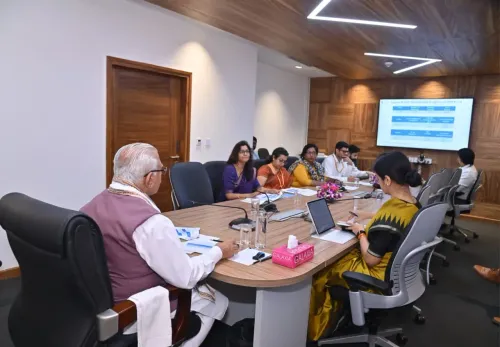
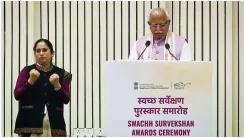
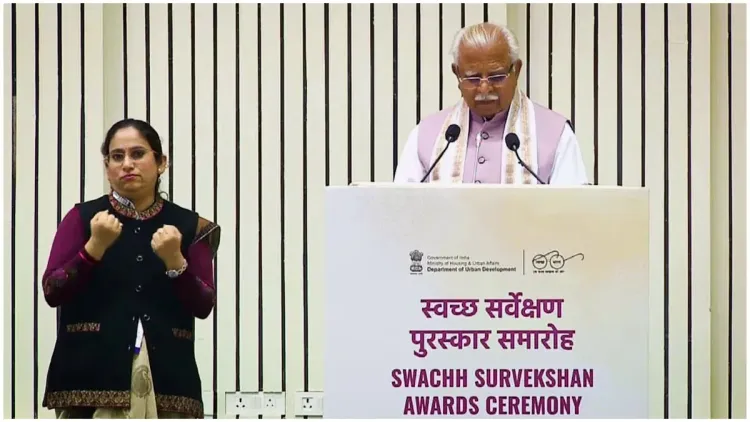
When President Droupadi Murmu used a public platform last year to call attention to source segregation, waste-to-wealth initiatives, zero-waste colonies, sanitation worker safety, and instilling civic values in children, it was a rare, high-level nudge from Rashtrapati Bhavan aimed squarely at urban India's cleanliness agenda. On Wednesday, 11 November 2026, Union Minister for Housing and Urban Affairs Manohar Lal Khattar responded from that same platform, telling the President directly that her suggestions have translated into 'concrete progress.'
Addressing President Murmu — tagging the official @rashtrapatibhvn handle — Khattar said, 'Mujhe prasannata hai ki aapke in sujhavon ki disha mein thos pragati hui hai' ('I am pleased that substantial progress has been made in the direction of your suggestions'). He specifically cited advances across five priorities the President had flagged: source segregation, waste-to-wealth conversion, zero-waste colonies, the safety of Safai Mitras (sanitation workers), and building a culture of success among children.
Five Themes the President Put on the Table
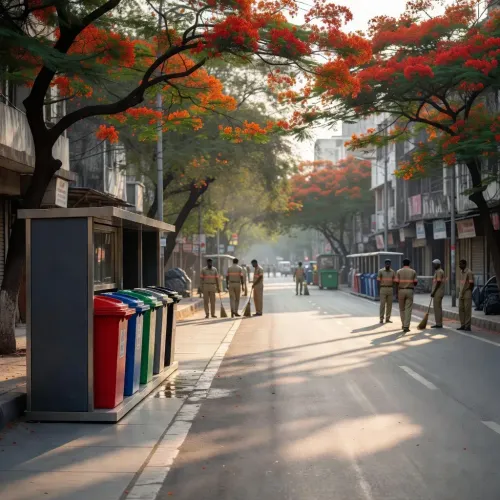
The five points Khattar referenced map directly onto the architecture of Swachh Bharat Mission (Urban) 2.0, the revised cleanliness programme whose guidelines were issued in 2021 with an explicit emphasis on door-to-door waste segregation at source and waste processing facilities. Source segregation — separating dry, wet, and hazardous waste before collection — has been a persistent weak link in Indian urban sanitation; zero-waste colonies represent the aspirational far end of that spectrum.
The 'waste-to-wealth' strand targets the economic side: converting organic waste to compost or biogas, and dry waste to recycled materials, so landfills shrink and municipalities generate revenue. Safai Mitra safety — protecting the lakhs of sanitation workers who handle hazardous waste and sewer work — has been a politically sensitive focus since mechanical cleaning mandates replaced manual scavenging requirements in policy, though ground-level compliance varies across states.
Presidential Platform, Ministerial Accountability
What makes this exchange notable is the accountability loop it represents. India's President is constitutionally a ceremonial head, but public addresses from Rashtrapati Bhavan carry significant moral authority — particularly on cross-cutting themes where the central government sets the framework and states execute. When Khattar, the minister who controls the Ministry of Housing and Urban Affairs and therefore the Swachh Bharat Mission's central purse, appears on the same stage and reports back to the President, it signals that the highest levels of the government view these targets as live and tracked — not filed away.
Implementation, as always, rests with urban local bodies and state governments. The next concrete test will come through the Swachhata rankings and the Ministry's own progress reports on zero-waste colonies and Safai Mitra equipment distribution — data points that will tell whether Khattar's 'concrete progress' claim holds up to scrutiny on the ground.
The minister's public, on-record acknowledgment of the President's agenda items is a political commitment now. Cities watching their ranking — and sanitation workers waiting for safety gear — will be watching what comes next.
Point of View
The Swachh Bharat Mission remains one of its most visible governance brands, and aligning it with Presidential endorsement reinforces its cross-partisan legitimacy. The Safai Mitra safety thread, however, is the one with the sharpest political edge: ground-level compliance with mechanical-cleaning mandates remains uneven, and any future ranking data that contradicts today's optimism will be measured against this very public commitment.
NationPress
11 Nov 2026
Frequently Asked Questions
What did Manohar Lal Khattar say to President Droupadi Murmu about sanitation?
Khattar said he was pleased that concrete progress had been made on the five sanitation priorities — source segregation, waste-to-wealth, zero-waste colonies, Safai Mitra safety, and civic values in children — that President Murmu had highlighted from the same platform the previous year.
What is Swachh Bharat Mission Urban 2.0?
Swachh Bharat Mission (Urban) 2.0 is the second phase of India's national urban cleanliness programme, with guidelines issued in 2021 that place special emphasis on door-to-door waste segregation at source and waste-to-wealth processing projects.
Who are Safai Mitras and why is their safety a priority?
Safai Mitras are sanitation workers responsible for waste collection and sewer maintenance in Indian cities. Their safety became a policy priority after national mandates required mechanical cleaning to replace manual scavenging, though ground-level compliance varies.
What are zero-waste colonies in India?
Zero-waste colonies are residential clusters that aim to eliminate waste going to landfills by practising full source segregation, composting organic waste, and recycling dry waste — they represent the highest-standard target under Swachh Bharat Mission Urban 2.0.
What is source segregation in waste management?
Source segregation means separating waste into categories — typically dry, wet, and hazardous — at the household or generation point before collection, so each stream can be processed or recycled efficiently rather than mixing in landfills.