Khattar Launches Pragati50 to Build 50 Model Cities
Synopsis
Union Minister Manohar Lal Khattar launched Pragati50 on 29 September 2026, creating a Model City Framework for 50 cities under MoHUA oversight, alongside a new startup cohort with IIT Kanpur, a citizen WhatsApp channel, and the CSIR-CMERI Swachh Bharat Test Bed.
Key Takeaways
Pragati50 designates 50 cities — spanning heritage, pilgrimage, tourism, economic, and administrative categories — as demonstration cities for integrated cleanliness outcomes.
MoHUA will provide direct monitoring and support to each city across the entire cleanliness value chain.
The 3rd Cohort of Swachhata Startups was onboarded in partnership with IIT Kanpur to accelerate sanitation innovation.
A new WhatsApp channel was launched for real-time citizen feedback and grievance redressal under the mission.
CSIR-CMERI unveiled the Swachh Bharat Test Bed , a dedicated facility for trialling solid waste management technologies before city-scale deployment.
Swachh Bharat Mission , launched in 2014 and expanded as SBM-U 2.0 in 2021 , now enters a demonstration-city phase focused on measurable, monitored excellence.
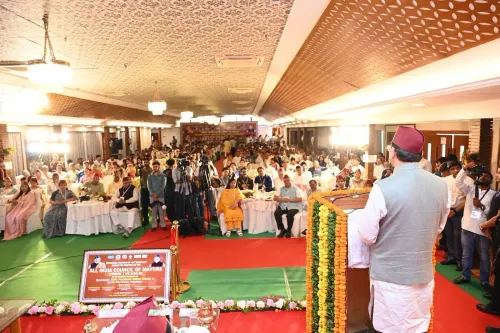
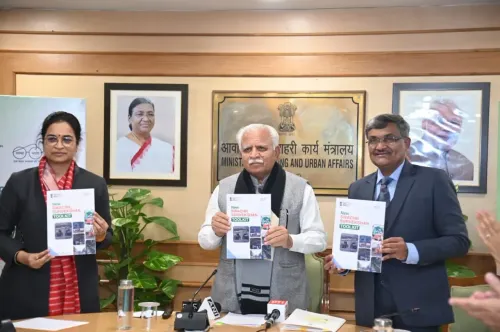
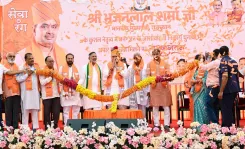
Fifty Indian cities are about to become laboratories for what clean urban living can look like — and the Union government just set the experiment in motion. Union Minister of Housing and Urban Affairs Manohar Lal Khattar on Tuesday, 29 September 2026 launched Pragati50, a flagship initiative to develop a Model City Framework covering 50 cities of economic, cultural, heritage, pilgrimage, tourism, and administrative significance across India.
What Pragati50 Actually Does — and Why 50 Cities
The framework designates these cities as 'demonstration cities' — meaning they will function as live showcases for integrated cleanliness outcomes across the entire sanitation value chain, from waste generation at source to final disposal. The Ministry of Housing and Urban Affairs (MoHUA) will provide close monitoring and direct support to each city, making this a hands-on central push rather than a distant policy directive.
The choice of 50 cities spanning multiple categories — heritage, pilgrimage, tourism, administrative hubs — is deliberate. It ensures the model is stress-tested across radically different urban profiles, from high-footfall pilgrim towns to commercial centres, before any broader national replication.
Startups, Test Beds, and a WhatsApp Line for Citizens
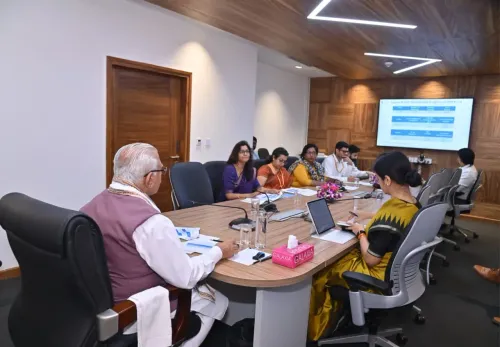
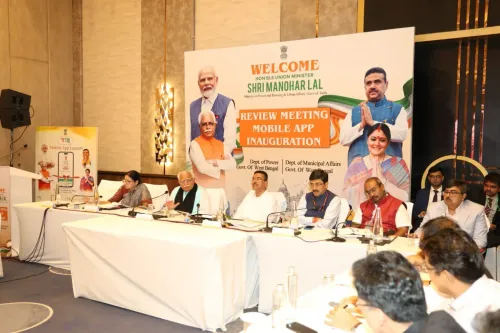
Pragati50 was not the only announcement on the day. The same meeting saw the onboarding of the 3rd Cohort of Swachhata Startups in partnership with IIT Kanpur, bringing fresh entrepreneurial energy into the sanitation innovation pipeline. A new WhatsApp channel was also launched to collect citizen feedback and grievances — a low-friction digital tool designed to pull ordinary residents into the accountability loop.
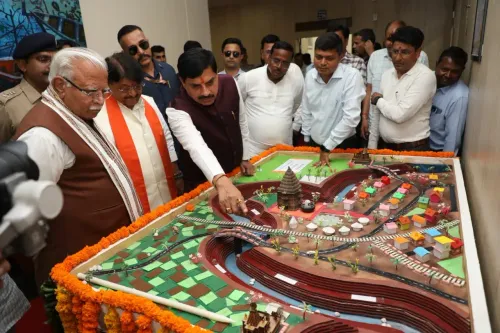
On the technology side, CSIR-CMERI unveiled the Swachh Bharat Test Bed, a dedicated facility for trialling solid waste management innovations before deployment at scale. Technical advisories for Swachh Bharat Mission-Urban 2.0 (SBM-U 2.0) were also released, tightening the operational guidance for urban local bodies already working within the mission's framework.
SBM-U 2.0's Twelve-Year Arc Reaches a New Phase
Swachh Bharat Mission was first launched on 2 October 2014 to eliminate open defecation and overhaul urban solid waste management. Its second phase, SBM-Urban 2.0, began in 2021 with a sharper focus on garbage-free cities, source segregation, and scientific waste processing. Pragati50 represents the mission's next structural layer — moving from broad coverage targets to demonstrable, monitored excellence in selected cities.
Khattar framed the day's announcements around three pillars: 'stronger innovation, greater citizen participation, and measurable outcomes on the ground.' The explicit emphasis on Jan Bhagidari (people's participation) signals that the government sees civic ownership — not just infrastructure — as the missing variable in making urban cleanliness stick.
MoHUA's Monitoring Role and What Cities Must Deliver
The weight of the initiative rests on MoHUA's monitoring architecture. By committing to 'close monitoring and support,' the ministry is putting its credibility behind whether these 50 cities actually deliver measurable improvements — not just plan them. Urban local bodies will be the ground-level executors, but the accountability chain runs directly to the central ministry.
For the Swachhata Startup cohort partnered with IIT Kanpur, the practical test is whether incubated solutions can move from campus to city streets within the mission's timeline. The CSIR-CMERI test bed gives those solutions a structured proving ground before that leap.
Fifty cities. One framework. A twelve-year mission now demanding results you can measure — not just count.
Point of View
Intensively monitored demonstration cities, a model borrowed from industrial-cluster policy and now applied to urban sanitation. By anchoring the initiative to IIT Kanpur's startup ecosystem and CSIR-CMERI's test-bed infrastructure, the government is signalling that technology commercialisation, not just civic campaigns, is now central to the mission's third act. The WhatsApp feedback channel is politically significant too: it creates a visible, low-barrier accountability tool that frames cleanliness as a citizen-government contract rather than a top-down directive. Whether 50 cities can deliver genuinely replicable models — rather than showcase islands — will define the initiative's legacy ahead of the next election cycle.
NationPress
29 Sept 2026
Frequently Asked Questions
What is Pragati50 launched by Manohar Lal Khattar?
Pragati50 is a Model City Framework launched by Union Minister Manohar Lal Khattar on 29 September 2026, covering 50 cities of economic, cultural, heritage, pilgrimage, tourism, and administrative significance to serve as demonstration cities for integrated urban cleanliness under MoHUA monitoring.
Which cities are included in the Pragati50 initiative?
The specific list of 50 cities has not been publicly detailed in the launch announcement. The framework covers cities spanning heritage, pilgrimage, tourism, economic, and administrative categories across India, with MoHUA to provide close oversight to each.
What is the Swachh Bharat Test Bed by CSIR-CMERI?
The Swachh Bharat Test Bed is a dedicated technology facility developed by CSIR-CMERI, unveiled alongside Pragati50, to trial and validate solid waste management innovations before they are deployed at scale in Indian cities under SBM-Urban 2.0.
How can citizens give feedback on Swachh Bharat Mission Urban 2.0?
A new WhatsApp channel was launched on 29 September 2026 specifically for citizens to submit feedback and grievances related to urban cleanliness, making it easier for residents to engage directly with the mission's accountability framework.
What is the 3rd Cohort of Swachhata Startups with IIT Kanpur?
The 3rd Cohort of Swachhata Startups is a group of sanitation-focused startups onboarded through a partnership between MoHUA and IIT Kanpur, aimed at incubating and scaling innovative technology solutions for urban cleanliness challenges under SBM-Urban 2.0.