Centre launches PRAGATI-50 to build 50 Model Cities for urban cleanliness
Synopsis
The Centre has picked 50 cities across 24 states as cleanliness benchmarks under the new PRAGATI-50 initiative, backed by a PRAGATI-style digital review portal, a national sanitation test bed at Durgapur, 75 startups in the waste chain, and updated solid waste rules — making this the most structured push under Swachh Bharat Mission–Urban 2.0 yet.
Key Takeaways
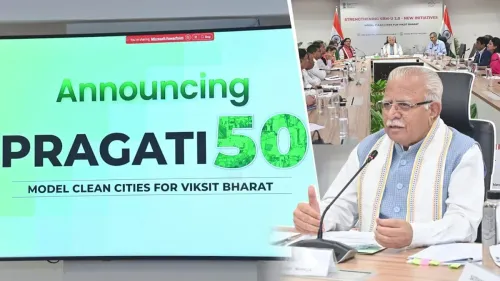
MoHUA launched PRAGATI-50 on 29 September 2026 , identifying 50 model cities across 24 states under Swachh Bharat Mission–Urban 2.0 .
A PRAGATI-like digital monitoring mechanism on the Swachhatam Portal will track progress, with dedicated Ministry officers assigned to each city.
The Swachh Bharat Test Bed and Innovation Centre was launched at Durgapur in collaboration with CSIR-CMERI .
13 new startups joined Cohort 3 of the Swachhata Startup programme with IIT Kanpur , taking the total to 75 startups across the waste value chain.
New Solid Waste Management Rules, 2026 guidelines and C&D waste SOPs were released to support ground-level implementation.
A WhatsApp channel was launched for citizens to register cleanliness complaints directly.
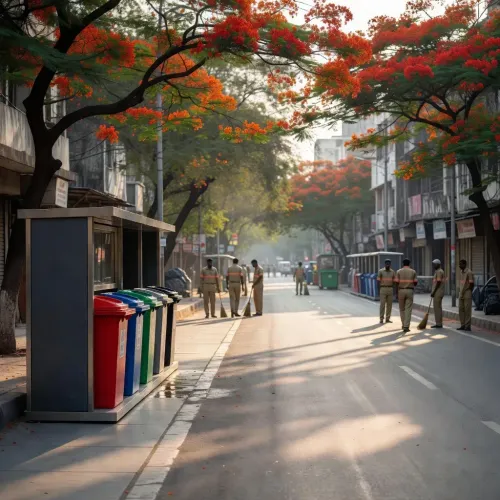
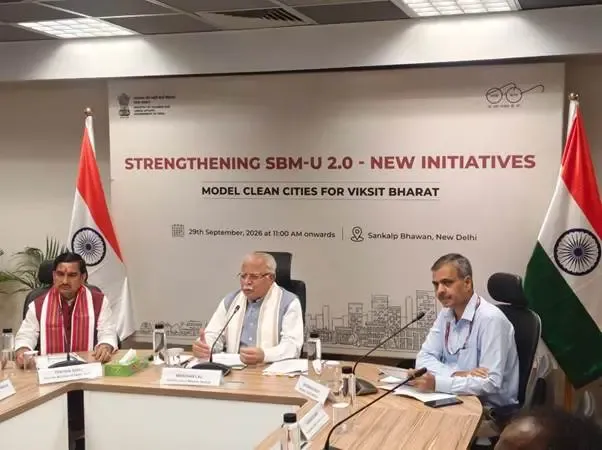
The Ministry of Housing and Urban Affairs (MoHUA) on 29 September 2026 launched the PRAGATI-50 initiative, identifying 50 model cities across 24 states to demonstrate higher benchmarks of urban cleanliness under the Swachh Bharat Mission–Urban 2.0 framework. The initiative aims to set a replicable standard of 'Swachhata' — covering solid waste management, used water management, sanitation, and citizen participation — through intensive technology-enabled monitoring.
What PRAGATI-50 Entails
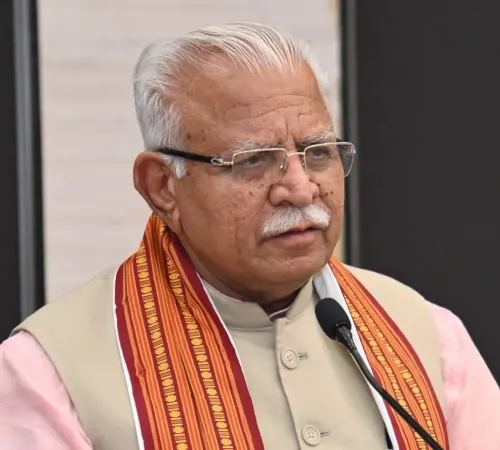
Union Minister for Housing and Urban Affairs Manohar Khattar said the selected cities would go beyond routine sanitation work to demonstrate 'sustained, high-performance parameters of visible cleanliness.' The cohort includes major cities, cultural heritage destinations, high-footfall tourism centres, and economic hubs, ensuring a diverse cross-section of urban India is represented.
'These 50 cities across 24 states will emerge as clean role-model cities for the rest of the country,' Khattar said at the launch. A PRAGATI-like digital review mechanism has been established on the Swachhatam Portal, with Ministry officers assigned to specific cities for regular supervision and handholding, according to Secretary, Department of Urban Development, Satendra Singh.
Key Initiatives Rolled Out Alongside
The launch event saw several parallel initiatives unveiled. CSIR-CMERI formally opened the Swachh Bharat Test Bed and Innovation Centre at Durgapur — a national facility for research, product development, testing, validation, certification, and capacity building in sanitation technologies. Separately, the third cohort of Swachhata Startups, developed in collaboration with the Startup Incubation and Innovation Centre (SIIC) at IIT Kanpur, was onboarded, adding 13 new startups to a programme that now spans 75 startups across the waste value chain.
The Reduce, Reuse and Recycle Centre at Sankalp Bhawan, New Delhi was inaugurated, and the Swachhata Behaviour Change Digital Kosh — a digital repository of campaigns, creatives, and communication resources for states and urban local bodies — was officially launched. A dedicated WhatsApp channel was also introduced to enable citizens to lodge cleanliness complaints directly.
Regulatory and Standards Support
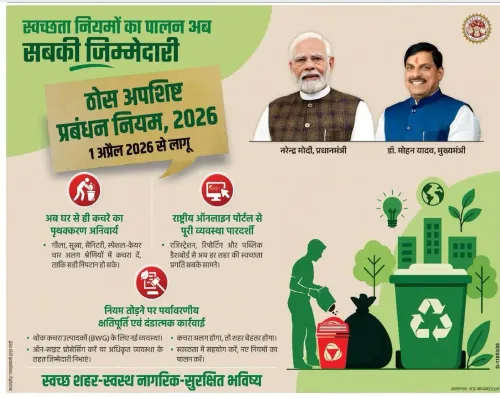
To support ground-level implementation, the Ministry released a Standard Operating Procedure for establishing Secondary Collection Centres for Construction and Demolition (C&D) Waste, as well as updated guidelines for source segregation of Municipal Solid Waste under the Solid Waste Management Rules, 2026. These are intended to standardise practices across urban local bodies nationwide.
State and Local Body Responsibility
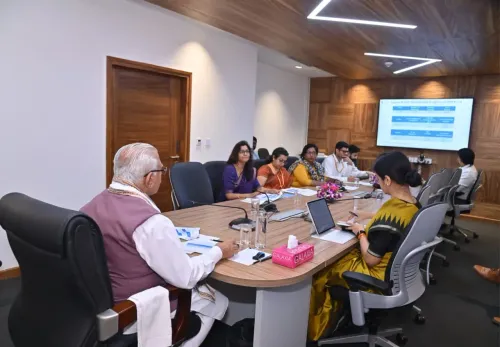
Minister of State for Housing and Urban Affairs Tokhan Sahu called on states and urban local bodies to prepare micro-level action plans and ensure their swift implementation. He said the initiative would help cities achieve Garbage Free City status within a stipulated timeframe and enable them to serve as role models for other urban centres. This comes amid broader Centre-driven pressure to accelerate urban sanitation outcomes ahead of key national milestones.
What Comes Next
With digital monitoring infrastructure in place and specific Ministry officers assigned to each of the 50 cities, the initiative enters an execution phase that will be closely tracked on the Swachhatam Portal. The success of PRAGATI-50 will likely inform whether the model is scaled to a wider set of cities in the next phase of Swachh Bharat Mission–Urban 2.0.
Point of View
A live digital portal, and defined timelines — rather than relying on self-reported rankings. The real test, however, is whether the 50 cities are selected on potential for genuine improvement or merely for visibility; a list that skews toward already-clean metros will flatter the programme without moving the national baseline. The parallel startup and innovation ecosystem is a meaningful addition, but 75 startups across the entire waste chain remains thin for a country of India's urban scale. Sustained behaviour change — the hardest variable — still depends on enforcement and local political will, neither of which a digital portal can substitute.
NationPress
29 Sept 2026
Frequently Asked Questions
What is the PRAGATI-50 initiative launched by the Centre?
PRAGATI-50 is a new government initiative under Swachh Bharat Mission–Urban 2.0 that identifies 50 model cities across 24 states to demonstrate higher benchmarks of urban cleanliness. Launched on 29 September 2026 by MoHUA, it uses a PRAGATI-style digital review mechanism on the Swachhatam Portal to monitor progress in solid waste management, sanitation, and citizen participation.
Which cities are included in the PRAGATI-50 model cities list?
The 50 cities span 24 states and include major cities, cultural heritage destinations, high-footfall tourism centres, and economic hubs, according to Minister Manohar Khattar. A full city-wise list was not disclosed at the launch event.
What is the Swachh Bharat Test Bed launched at Durgapur?
The Swachh Bharat Test Bed and Innovation Centre, launched at Durgapur in collaboration with CSIR-CMERI, is a national facility for research, product development, testing, validation, certification, and capacity building in sanitation technologies. It is designed to accelerate innovation in the urban sanitation sector.
How are startups involved in the Swachhata initiative?
MoHUA has engaged 75 startups across the waste value chain under its Swachhata Startup programme. The third cohort, developed with IIT Kanpur's Startup Incubation and Innovation Centre, added 13 new startups focused on sanitation and waste management solutions.
How can citizens participate in the PRAGATI-50 cleanliness initiative?
A dedicated WhatsApp channel has been launched to allow citizens to lodge cleanliness complaints and contribute to keeping their cities clean. The Swachhata Behaviour Change Digital Kosh also provides communication resources to promote sanitation awareness at the community level.