CM Dhami lauds PM Modi's urban missions: Swachh Bharat, AMRUT, Smart City
Synopsis
Uttarakhand Chief Minister Pushkar Dhami credited PM Narendra Modi's leadership for advancing urban development through the Swachh Bharat Mission, AMRUT and the Smart City Mission, saying these programmes have built a new culture of cleanliness and equipped residents with better civic facilities across the country's cities and towns.
Key Takeaways
Post issued by the Chief Minister's Office of Uttarakhand on 3 June 2026 , quoting CM Pushkar Singh Dhami .
Message praises PM Narendra Modi for urban development initiatives.
Three schemes named: Swachh Bharat Mission , AMRUT and Smart City Mission .
Swachh Bharat Mission launched 2 October 2014 ; AMRUT and Smart City Mission approved in 2015 .
No new scheme, allocation or statistic announced in the post.
Signals continued state-Centre alignment on urban policy delivery.
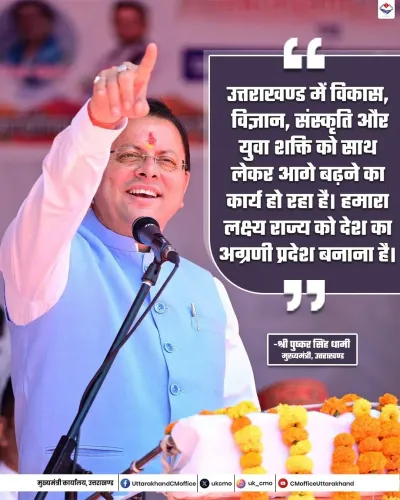
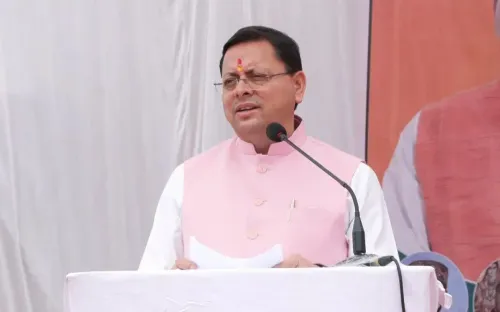
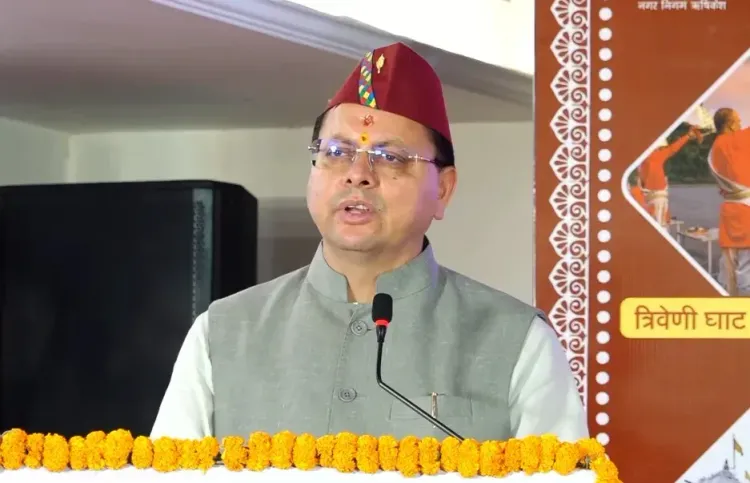
The Chief Minister's Office of Uttarakhand on 3 June 2026 posted a message from Chief Minister Pushkar Singh Dhami praising the urban development push under Prime Minister Narendra Modi, citing the Swachh Bharat Mission, AMRUT and the Smart City Mission as flagship interventions reshaping Indian towns and cities. The post, accompanied by an image, came from the official handle of the state government and aligns Uttarakhand with the Centre's decade-long urban policy thrust.
In the message, the Chief Minister said: 'Under the leadership of respected Prime Minister Shri Narendra Modi ji, several works are being carried out in the area of urban development. Today, through the Swachh Bharat Mission, a new work culture of cleanliness has developed in various cities and towns of the country. Through campaigns such as the AMRUT scheme and Smart City Mission, people are being equipped with better facilities.' The original Hindi line — 'साफ-सफाई की नई कार्य संस्कृति' (a new work culture of cleanliness) — was used to frame the behavioural shift the state government attributes to the central programme.
Context
The post is a state-level endorsement of three centrally sponsored urban schemes that form the backbone of the Union government's city modernisation agenda. Uttarakhand, with its mix of hill towns, pilgrimage centres and rapidly expanding plains districts, has been a participant in each of the missions referenced.
It is a routine policy-signalling message rather than an announcement of a new scheme or allocation. No fresh data, project list or financial outlay is contained in the text itself.
Policy backdrop
The Swachh Bharat Mission was launched on 2 October 2014 as a nationwide sanitation and cleanliness drive aimed at ending open defecation and overhauling solid waste management in urban and rural India. It has since become one of the most visible flagship programmes of the Modi government.
The Atal Mission for Rejuvenation and Urban Transformation (AMRUT) and the Smart City Mission were both approved by the Union Cabinet in 2015. AMRUT targets basic urban infrastructure — water supply, sewerage, drainage, green spaces and non-motorised transport — in selected cities, while the Smart City Mission was designed to develop 100 cities using technology-driven planning, mobility and citizen-service tools. AMRUT 2.0, announced in 2021, extended coverage to a larger universe of towns with sharper focus on water and sewerage.
Stakeholders and impact
The principal stakeholders are urban residents and municipal bodies in Uttarakhand's cities and towns, including Dehradun, Haridwar, Rishikesh, Haldwani and several smaller urban local bodies that have drawn funds from these missions. For hill towns, water supply, sewerage and solid waste management are persistent challenges complicated by terrain and seasonal tourist inflows.
By publicly crediting the missions, the Chief Minister is reinforcing the convergence between state implementation and central financing — a pattern visible across BJP-ruled states, where leaders periodically highlight scheme delivery as a marker of policy alignment with the Centre.
What's next
Attention will turn to the next progress reports for Uttarakhand under AMRUT and the Smart City Mission, particularly on water and sewerage indicators, and to state budget allocations for urban local bodies. With urban populations in the state's plains belt expanding, the political and administrative test will be whether sanitation gains under Swachh Bharat are sustained and whether smart-city investments translate into measurable service improvements in tier-2 and tier-3 towns.
For a state preparing for further urbanisation pressure from migration and pilgrimage tourism, the Chief Minister's framing positions central urban missions as the operating template for Uttarakhand's city-building decade ahead.
Point of View
Reaffirming that Uttarakhand's urban agenda runs on central rails. By naming three missions in one breath, the Chief Minister is foregrounding scheme convergence — sanitation, basic infrastructure and digital governance — as the political narrative for tier-2 and tier-3 cities. It also positions Uttarakhand to claim a share of credit as AMRUT 2.0 rollouts and Smart City completion timelines move into review territory. The real test, beyond messaging, lies in municipal-level delivery data.
NationPress
18 Oct 2026
Frequently Asked Questions
What did Uttarakhand CM Pushkar Dhami say about urban development?
CM Pushkar Dhami credited PM Narendra Modi's leadership for advancing urban development through the Swachh Bharat Mission, AMRUT and the Smart City Mission, saying these programmes have built a new cleanliness culture and improved civic facilities in cities and towns.
When was the Swachh Bharat Mission launched?
The Swachh Bharat Mission was launched on 2 October 2014 as a nationwide sanitation and cleanliness programme aimed at ending open defecation and improving waste management in urban and rural India.
What is the AMRUT scheme?
AMRUT, or the Atal Mission for Rejuvenation and Urban Transformation, is a central scheme approved in 2015 to upgrade basic urban infrastructure such as water supply, sewerage, drainage, green spaces and non-motorised transport in selected cities.
What is the Smart City Mission?
The Smart City Mission is a central government programme launched in 2015 to develop 100 cities using technology-driven urban planning, mobility solutions and improved citizen services.
Which Uttarakhand cities benefit from these urban missions?
Cities including Dehradun, Haridwar, Rishikesh and Haldwani, along with several smaller urban local bodies, have participated in the Swachh Bharat Mission, AMRUT and Smart City Mission initiatives in Uttarakhand.