CM Dhami: Uttarakhand advancing with development, science, culture and youth
Synopsis
Chief Minister Pushkar Singh Dhami declared on 2 July 2026 that Uttarakhand is advancing by uniting development, science, culture and youth energy — signalling a four-pillar governance vision for the Himalayan state.
Key Takeaways
CM Pushkar Singh Dhami stated on 2 July 2026 that Uttarakhand is progressing by integrating development, science, culture and youth power.
The remarks were shared by the Chief Minister's Office of Uttarakhand on its official X account.
Uttarakhand , formed in 2000 , faces chronic out-migration from hill districts, making youth-centric policy a governance priority.
The Char Dham road connectivity project illustrates the state's existing model of linking cultural heritage with infrastructure development.
Future budget sessions and scheme launches will indicate whether this four-pillar vision translates into concrete policy allocations.
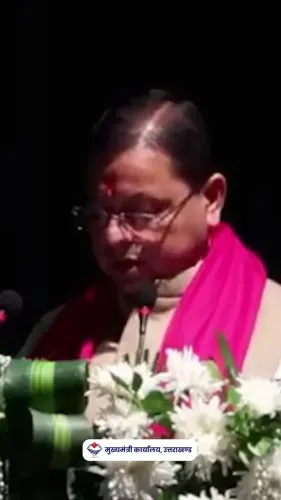
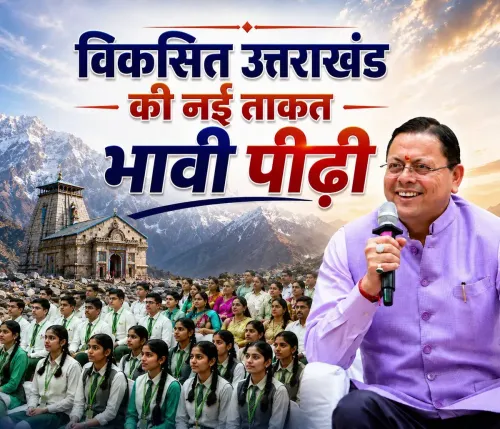
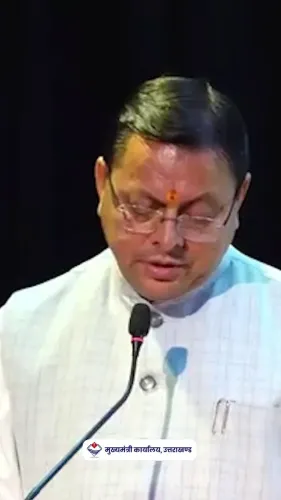
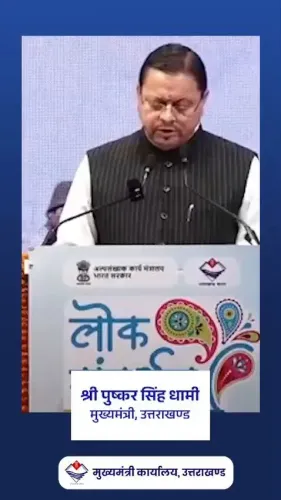
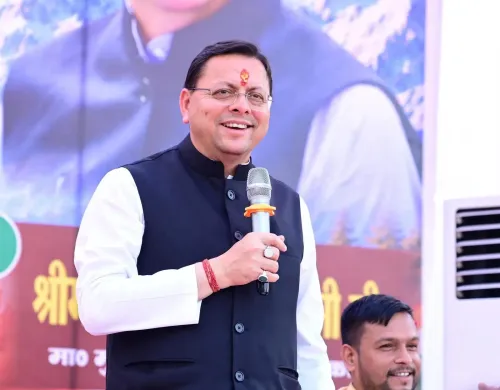
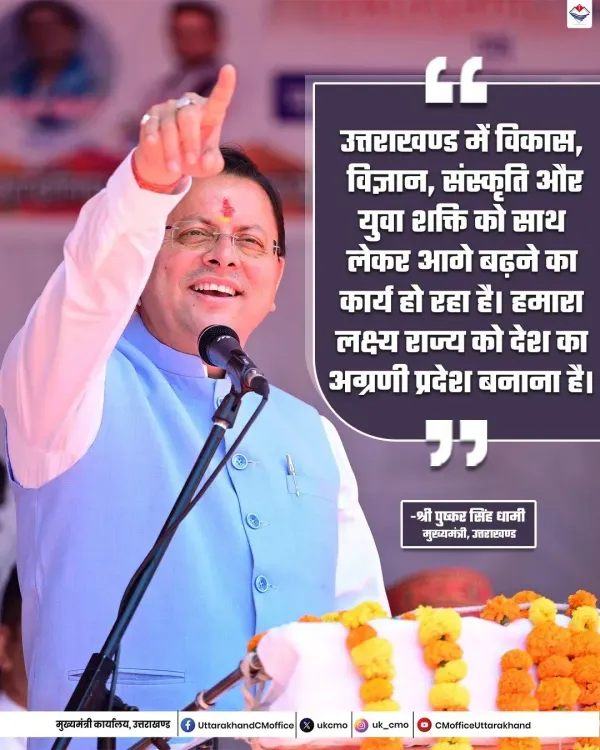
The Chief Minister's Office of Uttarakhand, on Thursday, 2 July 2026, shared remarks by Chief Minister Pushkar Singh Dhami affirming that the state is moving forward by integrating development, science, culture, and the energy of its youth.
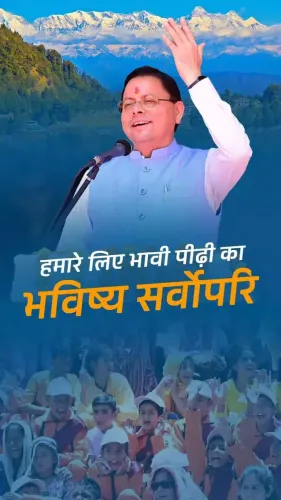
Addressing what appears to be a public gathering or official event, CM Dhami stated: 'Uttarakhand mein vikas, vigyan, sanskriti aur yuva shakti ko saath lekar aage badhne ka kaarya ho raha hai' — 'Work is being done in Uttarakhand to move forward by bringing together development, science, culture and the power of youth.'
Context
Uttarakhand, the Himalayan state carved out of Uttar Pradesh in November 2000, has long grappled with twin pressures: preserving its ecological and cultural heritage while stemming chronic out-migration of working-age residents. CM Dhami, who assumed office in 2021, has made youth retention and state-led development central planks of his administration's public messaging.
The framing of development alongside science and culture reflects a broader political philosophy that has gained traction in BJP-governed Himalayan states — presenting economic growth not as a departure from tradition but as an extension of it.
Policy Backdrop
Infrastructure connectivity has been a defining policy thread in Uttarakhand for over a decade. The Char Dham road connectivity project, which links the state's four major pilgrimage sites, exemplifies the state's effort to weave cultural tourism into its development architecture. Skill-building programmes targeting hill-district youth have similarly been positioned as tools for reversing migration trends.
Nationally, the emphasis on a 'demographic dividend' — channelling the energy of a young population into productive economic activity — has been a recurring theme in state-level governance discourse since the mid-2010s. Uttarakhand's relatively young population makes youth-centric policy particularly salient for the state government.
Stakeholders and Impact
The constituencies most directly addressed by CM Dhami's statement are Uttarakhand's youth and local communities in hill districts, where employment opportunities have historically lagged behind the plains. Science and technology initiatives, if backed by budget allocations, could support sectors such as agri-tech, eco-tourism, and renewable energy — all areas where the state holds natural comparative advantages.
Cultural stakeholders — including institutions linked to the state's pilgrimage economy and folk traditions — stand to benefit if the administration translates this messaging into dedicated scheme funding. The alignment of science with culture also signals an intent to attract investment without displacing heritage identity, a balance that hill states have found politically necessary.
What's Next
Observers will watch the Uttarakhand government's forthcoming budget sessions and scheme announcements for concrete allocations that operationalise this four-pillar vision of development, science, culture, and youth. Specific initiatives such as science parks, cultural tourism corridors, or expanded skill-development programmes in hill districts would indicate whether the statement marks a policy direction or remains aspirational rhetoric.
The degree to which CM Dhami backs this framework with measurable targets and inter-departmental coordination will determine its impact on the state's persistent out-migration challenge and its standing as a model for other Himalayan states.
Point of View
The invocation of 'yuva shakti' (youth power) carries political weight beyond symbolism. The pairing of science with culture is notable: it pre-empts the criticism that development comes at the cost of Uttarakhand's ecological and heritage identity. Whether this messaging graduates into measurable policy — skill parks, cultural tourism funding, science outreach in hill schools — will be the real test of its seriousness.
NationPress
1 Oct 2026
Frequently Asked Questions
What did Uttarakhand CM Pushkar Singh Dhami say about development?
CM Pushkar Singh Dhami stated that work is being done in Uttarakhand to move forward by bringing together development, science, culture and the power of youth, as shared by the Chief Minister's Office on 2 July 2026.
What is Uttarakhand's approach to youth development and out-migration?
Uttarakhand has pursued skill-building programmes and infrastructure projects such as the Char Dham road connectivity scheme to create local opportunities and reduce chronic out-migration from its hill districts.
Who is Pushkar Singh Dhami and when did he become Chief Minister of Uttarakhand?
Pushkar Singh Dhami is the Chief Minister of Uttarakhand who assumed office in 2021. He represents the BJP and has focused his administration on state development, cultural promotion and youth retention.
What is the Char Dham road project in Uttarakhand?
The Char Dham road connectivity project is a major infrastructure initiative linking Uttarakhand's four key pilgrimage sites — Yamunotri, Gangotri, Kedarnath and Badrinath — with all-weather roads, blending cultural tourism with development.
What are Uttarakhand's main development challenges?
Uttarakhand's primary development challenges include out-migration of working-age youth from hill districts, balancing ecological conservation with economic growth, and building connectivity and employment in remote Himalayan areas.