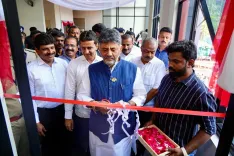
CM Sukhu: Free asset transfer to boost HP revenue, development
Synopsis
Chief Minister Sukhvinder Singh Sukhu says certain assets will be transferred free of cost to Himachal Pradesh, promising higher state revenue and faster development — a move rooted in the state's long push for greater control over its natural resources.
Key Takeaways
CM Thakur Sukhvinder Singh Sukhu announced that specific assets will be transferred to Himachal Pradesh free of cost.
The transfer is expected to increase the state's revenue and accelerate development across Himachal.
Residents are expected to gain greater benefit from their own natural resources as a result.
Himachal Pradesh has long sought higher royalties and greater control over hydropower and other resource projects within its borders.
The specific asset or project involved has not yet been publicly identified; a follow-up government order is awaited.
Sukhu's Congress government has been in office since December 2022 , with resource sovereignty a stated economic priority.
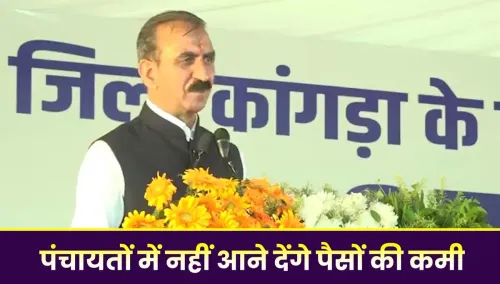
A promise of more money in Himachal Pradesh's coffers and faster development on the ground — that is the thrust of a statement attributed to Chief Minister Thakur Sukhvinder Singh Sukhu, shared by the Chief Minister's Office of Himachal Pradesh on Sunday, 15 November 2026. The CM declared that certain assets would be transferred free of cost to the state, directly benefiting its people.
Posting in Hindi, the CMO quoted Sukhu as saying: 'निःशुल्क हस्तांतरित होंगी। इससे प्रदेश की आय बढ़ेगी, विकास को गति मिलेगी और हिमाचल के लोगों को अपने संसाधनों का अधिक लाभ मिलेगा।' — translated: 'These will be transferred free of cost. This will increase the state's revenue, accelerate development, and ensure that the people of Himachal get greater benefit from their own resources.'Himachal's long fight for a bigger share of its own wealth
Himachal Pradesh has historically been one of India's most resource-rich hill states — blessed with rivers that generate enormous hydropower, forests that yield timber and medicinal produce, and minerals that underpin construction across the northern plains. Yet for decades, a large share of the economic value derived from these resources has flowed out of the state, to central public-sector enterprises or private developers operating under terms critics call unfavourable.
State governments across India periodically move to renegotiate these arrangements — pushing for higher royalties, equity stakes, or outright asset transfers as projects near the end of their concession periods. Sukhu's Congress government, in office since December 2022, has consistently framed resource sovereignty as a core plank of its economic agenda for the mountain state.
What 'free of cost' transfer means for state finances
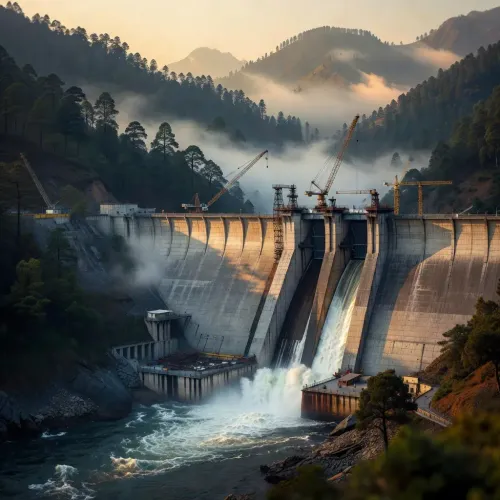
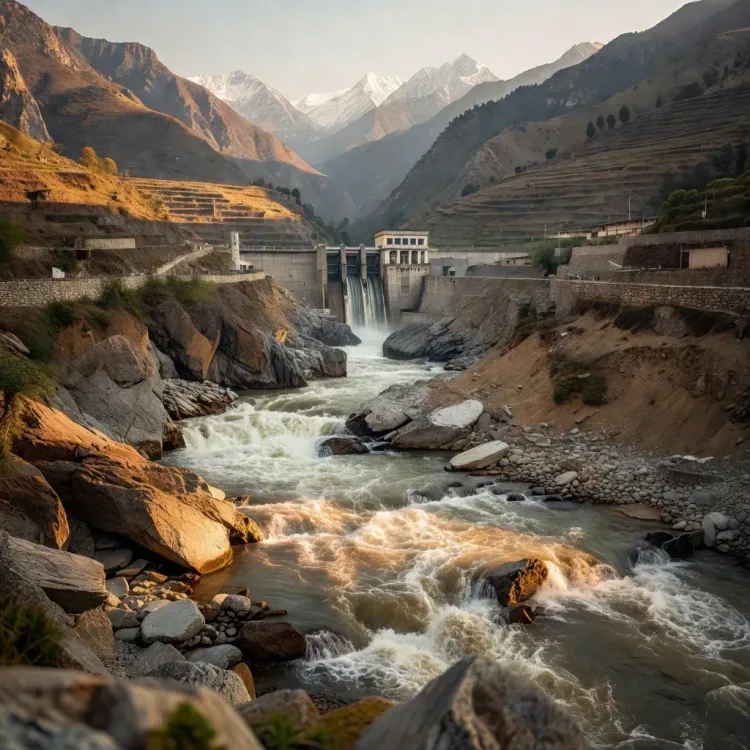
When assets — typically hydropower plants or infrastructure built by outside developers — are transferred to the state without payment at the conclusion of a project agreement, Himachal gains a revenue-generating asset at zero acquisition cost. The logic is straightforward: the state bore the environmental burden and displacement costs during construction; it should own the asset once the developer has recovered investment and profit.
Such transfers can meaningfully lift a state's own-revenue figures, reducing dependence on central transfers and borrowings. For a fiscally stressed state like Himachal — which carries a heavy debt burden relative to its GDP — that shift matters enormously. Every rupee earned from an owned power plant is a rupee the state does not have to borrow.
The specific asset or project referenced in the CM's statement has not been detailed in the post. Any government order or assembly resolution spelling out which assets are involved, and the projected revenue impact, will be the critical next data point.
Point of View
Free asset transfers are both a political win — 'your resources, your benefit' — and a genuine structural remedy. The critical variable is execution: without a detailed government order naming the assets and their estimated revenue yield, the announcement remains a signal rather than a policy. Watchers should track whether this triggers broader renegotiation of hydropower agreements, which would have implications for energy developers operating across the Himalayan region.
NationPress
15 Nov 2026
Frequently Asked Questions
What did CM Sukhu announce about asset transfer in Himachal Pradesh?
Chief Minister Sukhvinder Singh Sukhu announced that certain assets would be transferred to Himachal Pradesh free of cost, which he said would increase state revenue and accelerate development for its residents.
Which assets will be transferred free of cost to Himachal Pradesh?
The specific assets have not been named in the CM's statement. A follow-up government order or assembly resolution is expected to identify them and detail the projected revenue impact.
How will free asset transfer increase Himachal Pradesh's revenue?
When a revenue-generating asset such as a hydropower plant is transferred to the state without any acquisition cost, the state can earn income from it directly — reducing dependence on central grants and borrowings.
Why does Himachal Pradesh push for greater control over its natural resources?
Himachal Pradesh is rich in hydropower, minerals, and forests, but historically a large share of economic value from these resources has gone to central or private developers. The state has long sought higher royalties and ownership to capture more of that value locally.
When did Sukhvinder Singh Sukhu become Chief Minister of Himachal Pradesh?
Thakur Sukhvinder Singh Sukhu became Chief Minister of Himachal Pradesh in December 2022, after the Congress party won the state assembly elections.