CM Sukhu flags 2 MW solar plant boost for Spiti Valley

Synopsis
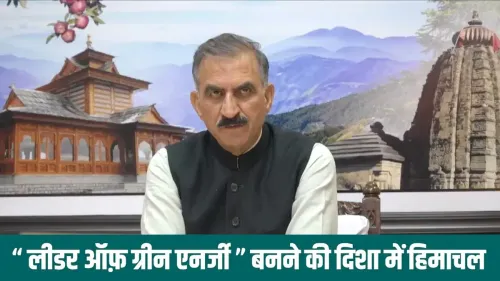
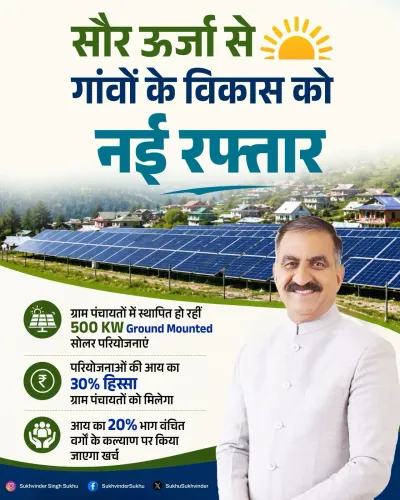
Himachal Pradesh CM Sukhvinder Singh Sukhu has highlighted the installation of a 2 MW solar plant in Spiti Valley, saying the project has brought joy to local women and reflects the government's commitment to energy access in one of India's most remote high-altitude regions.
Key Takeaways
CM Sukhvinder Singh Sukhu announced a 2 MW solar plant installed in Spiti Valley , Himachal Pradesh, on 18 October 2026 .
Spiti Valley sits above 3,800 metres altitude in Lahaul and Spiti district , making conventional grid extension costly and unreliable.
The plant is expected to reduce dependence on diesel generators, which are expensive and difficult to supply across high-altitude mountain passes.
CM Sukhu specifically highlighted the positive impact on local women, framing energy access as a gender-welfare achievement.
The project aligns with India's National Solar Mission (launched 2010 ), which targets renewables in remote and off-grid areas.
Himachal Pradesh has a broader pattern of small-scale solar and hybrid renewable installations in its Himalayan tribal valleys to address energy deficits.
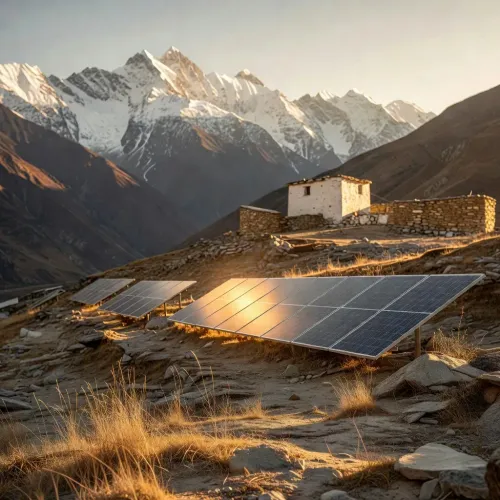
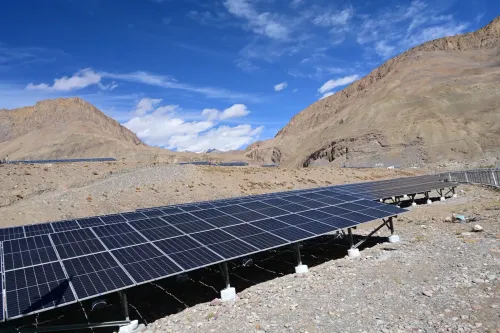
At one of India's most remote frontiers — a high-altitude cold desert where winter temperatures plunge to minus 30°C and grid cables simply cannot follow the terrain — Himachal Pradesh Chief Minister Sukhvinder Singh Sukhu is pointing to a 2-megawatt solar plant in Spiti Valley as proof that the state's energy ambitions reach even its hardest corners.
In a post on X on Sunday, 18 October 2026, CM Sukhu wrote in Hindi: 'स्पीति घाटी के कर्मठ भाइयों-बहनों के प्रति मेरे मन में गहरा सम्मान है' ('I hold deep respect for the hardworking brothers and sisters of Spiti Valley'). He noted that seeing the smiles on women's faces after the solar plant was installed gave him 'a sense of peace', and said the trust and affection of local residents motivates the government 'to work with even greater dedication.'
Why a 2 MW plant matters in Spiti
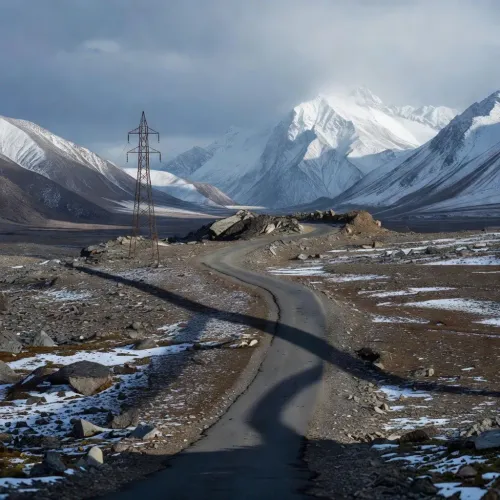
Spiti Valley, nestled in the Lahaul and Spiti district of Himachal Pradesh, sits at altitudes averaging above 3,800 metres. Conventional grid extension here is punishingly expensive and prone to disruption from landslides and heavy snowfall. For decades, many villages depended on diesel generators — costly, polluting, and unreliable.
A 2 MW solar installation at this altitude, where solar irradiance is exceptionally high despite the cold, can meaningfully shift energy access for a scattered population. Reduced diesel dependence cuts both household costs and the logistical burden of trucking fuel over mountain passes that close for months each year. For women — who typically manage household energy needs — the difference between reliable power and none at all is visceral and daily.
Sukhu's tribal outreach and the solar push in HP's highlands
CM Sukhu, who took office in December 2022, has placed development in remote tribal regions at the centre of his administration's narrative. Himachal Pradesh governments across party lines have historically backed small-scale solar and micro-hydro installations in high-altitude valleys, partly because the economics of Himalayan renewables are compelling: abundant sun and water, zero fuel import costs, and a clear public-service mandate.
This effort also aligns with the National Solar Mission, launched in 2010, which explicitly targeted grid-connected solar capacity across India including off-grid and remote-area applications. State-level execution in tribal pockets like Spiti and the broader Lahaul-Spiti region represents the last-mile test of that national ambition — where the policy rubber meets the mountain road.
The political signal in Sunday's post is deliberate: Sukhu is tying infrastructure delivery directly to the emotional and social dignity of Spiti's residents, not just a kilowatt count. The image he centres — women's faces lit up — frames energy access as a gender-welfare win, not merely an engineering milestone. That framing has become a consistent feature of how the Congress-led Himachal government presents rural development.
Whether maintenance infrastructure, local technical capacity, and grid integration keep pace with the installation will determine whether the plant's promise holds through Spiti's brutal winters. But right now, in one of India's most spectacular and unforgiving valleys, the lights are on.
Point of View
Which faces the perennial challenge of governing a mountainous state on thin fiscal margins, small-scale renewables offer a cost-effective way to signal delivery without the capital outlay of large dams or transmission lines. The deliberate emotional framing — women's smiling faces as the headline metric — also signals that the administration is calibrating its communication for a constituency that responds to dignity and recognition, not just statistics. The longer test will be operational sustainability: Spiti's winters are unforgiving, and a solar plant that goes dark in January tells a very different political story.
NationPress
18 Oct 2026
Frequently Asked Questions
What is the 2 MW solar plant installed in Spiti Valley?
It is a 2-megawatt solar power installation in Spiti Valley, Himachal Pradesh, highlighted by Chief Minister Sukhvinder Singh Sukhu in October 2026 as a step towards addressing energy deficits in the remote high-altitude region.
Why does Spiti Valley need solar power instead of regular grid electricity?
Spiti Valley sits above 3,800 metres in the Lahaul and Spiti district, where extreme terrain, landslides, and heavy snowfall make conventional grid extension very expensive and unreliable. Solar power offers a more practical off-grid or distributed energy solution.
Who benefits from the Spiti Valley solar plant?
Local residents of Spiti Valley benefit, with Chief Minister Sukhu specifically noting a positive impact on women in the area, who typically manage household energy needs and stand to gain most from reliable, affordable power.
What is the National Solar Mission and how does this project relate to it?
The National Solar Mission was launched by the Government of India in 2010 to scale up solar power capacity, including in remote and off-grid areas. The Spiti Valley installation represents a state-level execution of that national ambition in a tribal high-altitude region.
What has CM Sukhvinder Singh Sukhu done for Himachal Pradesh's remote areas?
Since taking office in December 2022, CM Sukhu has focused on development in remote tribal regions, including infrastructure and clean-energy projects in high-altitude valleys such as Spiti and Lahaul-Spiti.