CM Sukhu Launches Solar Projects to Fund Panchayats, Welfare
Synopsis
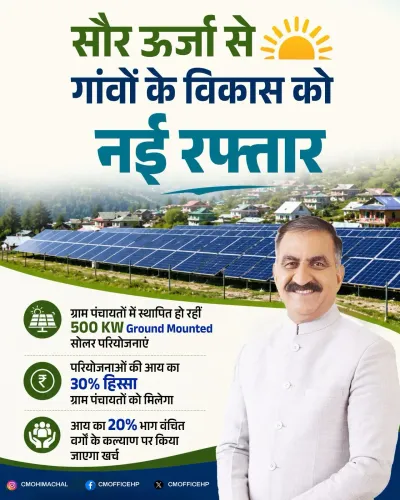
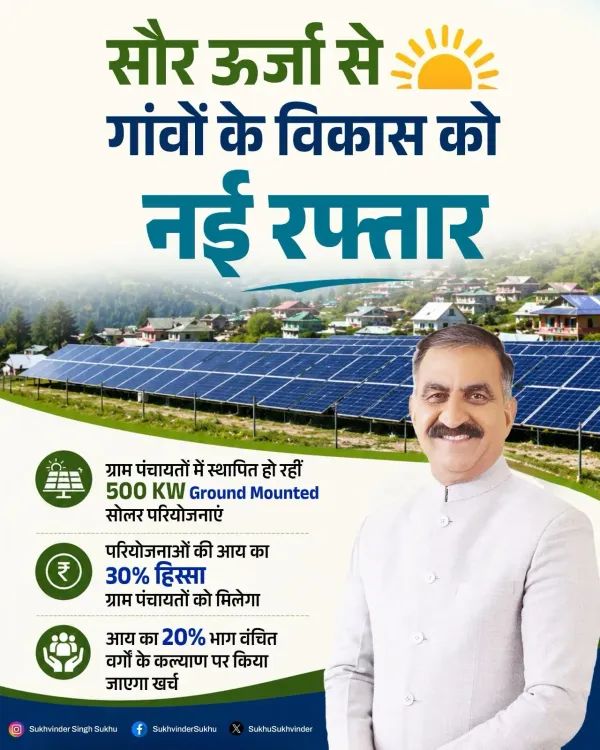
Chief Minister Sukhvinder Singh Sukhu has announced 500 kW ground-mounted solar projects in Himachal Pradesh gram panchayats. Revenue will be split — 30% to panchayats and 20% to marginalised communities — combining clean energy goals with rural economic empowerment and social welfare.
Key Takeaways
500 kW ground-mounted solar projects are being installed in gram panchayats across Himachal Pradesh .
30% of project revenue will go directly to the respective gram panchayat .
20% of revenue is earmarked for the welfare of deprived and needy sections of society.
The initiative is framed as combining clean energy , local empowerment , and social responsibility .
The scheme fits India's broader push toward decentralised renewables and its 2030 non-fossil energy targets .
Specific rollout timelines and the number of panchayats covered have not yet been officially disclosed.
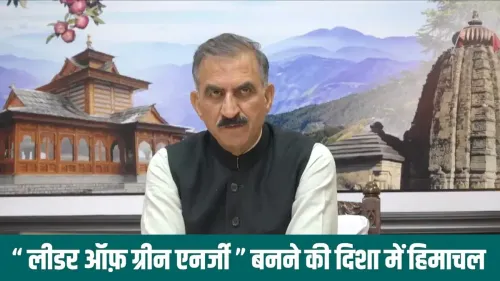
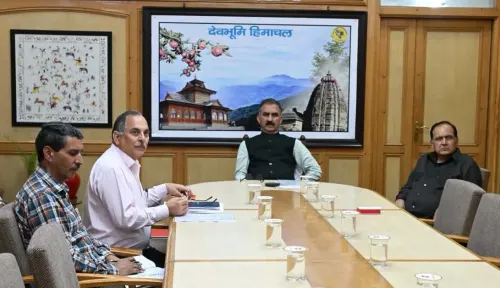
Himachal Pradesh Chief Minister Sukhvinder Singh Sukhu announced on Tuesday, 16 June 2026 that his government is installing 500 kW ground-mounted solar energy projects in gram panchayats across the state, with revenue from these installations to be shared with local bodies and marginalised communities.
Posting in Hindi on X, CM Sukhu wrote: 'आज ऊर्जा की बढ़ती आवश्यकताओं और पर्यावरणीय चुनौतियों के बीच विकास को टिकाऊ और संतुलित बनाना आवश्यक है' ('Today, amid growing energy needs and environmental challenges, it is essential to make development sustainable and balanced'). He added that the initiative combines clean energy, local empowerment, and social responsibility.
Context
Under the scheme, 30% of the income generated from each solar project will be directed to the respective gram panchayat, while 20% will be set aside for the welfare of deprived and needy sections of society. The remaining revenue is expected to support broader operational and state-level energy objectives. The Chief Minister framed the initiative as a step toward making gram panchayats 'economically strong' and giving 'new direction to inclusive and sustainable development.'
Himachal Pradesh has historically depended on hydropower as its primary renewable energy source. This solar push represents a deliberate diversification, particularly relevant as climate variability increasingly affects river flows and hydro generation capacity in the Himalayan state.
Policy Backdrop
India's National Solar Mission, launched in 2010 and revised in 2014, laid the groundwork for decentralised solar installations at the state level. Himachal Pradesh followed with its own Solar Power Policy in 2016, opening the sector to both private and public players alongside the dominant hydropower sector.
The revenue-sharing model announced by CM Sukhu fits a broader national pattern in which states link solar asset deployment with direct financial benefits for gram panchayats. Several states have piloted similar structures as a way to align India's 2030 non-fossil energy capacity targets with rural economic development goals under the Panchayati Raj framework.
Stakeholders and Impact
Gram panchayats — the elected local bodies responsible for village governance under India's Panchayati Raj system — stand to gain a direct, recurring revenue stream independent of central or state grants. For rural communities in Himachal Pradesh, where geographic remoteness can limit economic opportunity, a locally anchored income source could meaningfully strengthen panchayat finances.
The 20% welfare allocation targets 'deprived and needy' households, signalling that the scheme is designed not merely as an energy infrastructure project but as a social-transfer mechanism embedded within a green energy rollout. Marginalised rural households are the primary intended beneficiaries of this component.
What's Next
The government has not yet publicly detailed the number of gram panchayats to be covered in the first phase, the precise selection criteria, or the timeline for revenue disbursement to begin. Observers will watch upcoming Himachal Pradesh state budget sessions and assembly proceedings for operational specifics, including tender processes and monitoring mechanisms.
If implemented at scale, the model could serve as a template for other hill states seeking to balance renewable energy expansion with direct rural economic benefit — a convergence that aligns with both India's climate commitments and its rural development agenda.
Point of View
The Himachal government is also hedging against criticism that climate policy bypasses the poor. The broader significance lies in whether this model scales and gets replicated, which would mark a genuine shift in how Indian states approach decentralised solar deployment.
NationPress
22 Sept 2026
Frequently Asked Questions
What is CM Sukhu's solar scheme for gram panchayats in Himachal Pradesh?
Chief Minister Sukhvinder Singh Sukhu has announced the installation of 500 kW ground-mounted solar energy projects in gram panchayats across Himachal Pradesh, with 30% of the revenue going to panchayats and 20% to the welfare of deprived and needy communities.
How much revenue will gram panchayats get from the Himachal Pradesh solar project?
Gram panchayats will receive 30% of the income generated from the 500 kW solar projects installed in their jurisdiction under the scheme announced by CM Sukhu.
Who benefits from the welfare fund in Himachal Pradesh's solar energy scheme?
20% of the revenue from the solar projects is designated for the welfare of deprived and needy sections of society in the respective panchayat areas.
How does Himachal Pradesh's solar policy fit India's renewable energy goals?
The scheme aligns with India's National Solar Mission and the country's 2030 non-fossil energy capacity targets by promoting decentralised solar installations that also generate local economic benefits.
What is the status of Himachal Pradesh's solar energy rollout under CM Sukhu?
As of June 2026, CM Sukhu has announced the scheme but specific details such as the number of panchayats to be covered and disbursement timelines have not yet been officially confirmed.