HP CM Office Launches 500 kW Solar Plants in Gram Panchayats
Synopsis
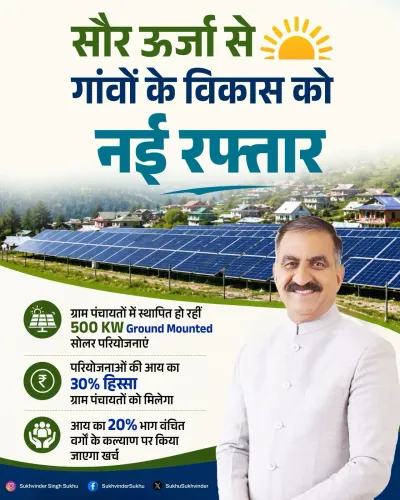
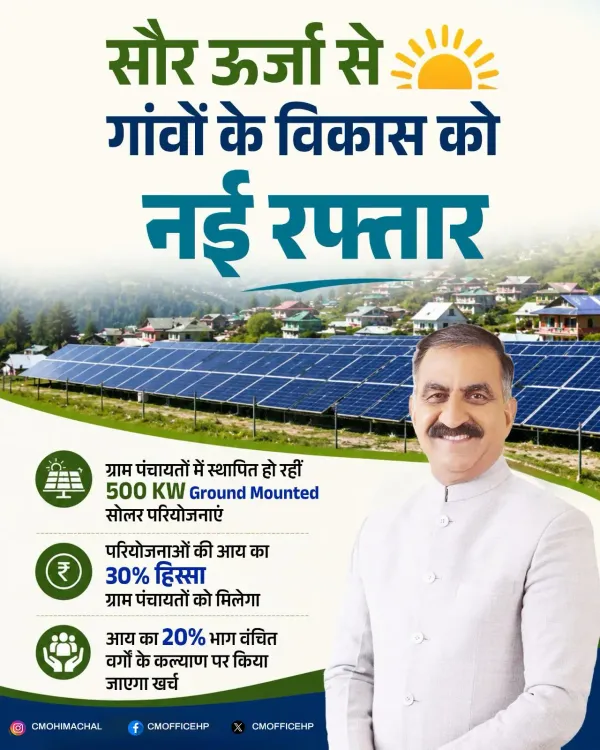
The Chief Minister's Office of Himachal Pradesh announced on 16 June 2026 that the state is installing 500 kW ground-mounted solar plants in gram panchayats, aiming to make rural development sustainable amid rising energy demand and environmental challenges.
Key Takeaways
The Chief Minister's Office of Himachal Pradesh announced ground-mounted solar projects on 16 June 2026 .
Each installation will have a capacity of 500 kW , located at the gram panchayat level.
Himachal Pradesh is diversifying from hydropower to solar to reduce transmission losses in hilly terrain.
The initiative aligns with India's 500 GW non-fossil fuel target by 2030 .
Gram panchayats serve as the implementation units, embedding energy infrastructure within rural governance.
Rollout timelines, funding details, and the number of villages targeted have not yet been disclosed.
The Chief Minister's Office of Himachal Pradesh announced on Tuesday, 16 June 2026 that the state government is installing 500 kW capacity ground-mounted solar energy projects across gram panchayats, framing the initiative as a step toward sustainable and balanced development amid rising energy demands and environmental pressures.
The official post, shared in Hindi, stated: 'आज ऊर्जा की बढ़ती आवश्यकताओं और पर्यावरणीय चुनौतियों के बीच विकास को टिकाऊ और संतुलित बनाना आवश्यक है' — 'Today, amid growing energy needs and environmental challenges, it is essential to make development sustainable and balanced.'
Context
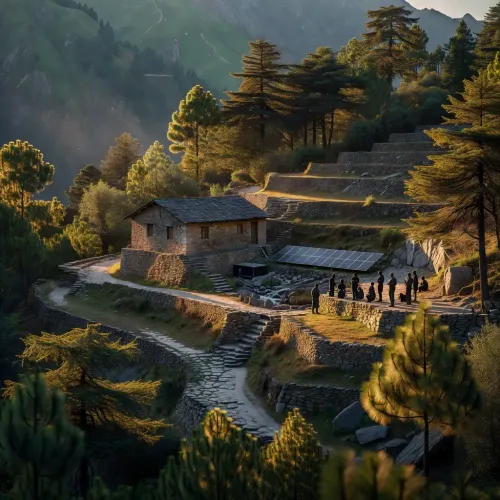
Himachal Pradesh, a mountainous northern state that has long relied on hydropower as its primary electricity source, is now diversifying into solar energy to reduce dependence on a single generation source. Ground-mounted solar installations at the gram panchayat level bring power generation closer to rural consumers, reducing transmission losses that are a particular challenge in hilly terrain.
The state's move aligns with a broader national push toward decentralised renewable energy, as India targets 500 GW of non-fossil fuel capacity by 2030. Himalayan states face unique ecological sensitivities, making low-impact solar installations on available flat land a pragmatic choice alongside existing hydropower infrastructure.
Policy Backdrop
India's Jawaharlal Nehru National Solar Mission, launched in 2010, laid the foundation for grid-connected and off-grid solar installations across the country, providing a policy and financial framework that state governments have built upon over the years. Himachal Pradesh's gram panchayat solar programme reflects this lineage, channelling central intent into village-level infrastructure.
Gram panchayats — India's village-level local self-government bodies — are the chosen implementation units here, a decision that embeds energy infrastructure within existing rural governance structures. This approach enables community oversight and can support local revenue generation if surplus power is fed into the grid.
Stakeholders and Impact
Rural communities across Himachal Pradesh stand as the primary beneficiaries, with each 500 kW ground-mounted plant capable of meeting a significant share of a gram panchayat's electricity needs. Reduced reliance on grid power from distant hydroelectric stations could lower energy costs and improve supply reliability in remote villages.
Environmental stakeholders will also watch the rollout closely. Ground-mounted solar in ecologically sensitive Himalayan zones requires careful land-use planning to avoid disruption to local biodiversity, and the government's framing of 'balanced development' suggests awareness of this tension. The success of the programme may set a template for other hill states pursuing similar transitions.
What's Next
Attention will now turn to the specific rollout timelines, funding allocations, and the pace at which 500 kW plants are commissioned in identified gram panchayats across the state. The government has not yet detailed which panchayats will receive installations in the first phase or the total number of villages targeted.
As India accelerates its renewable energy transition ahead of its 2030 targets, Himachal Pradesh's decentralised solar model could serve as a replicable blueprint for other Himalayan and hilly states seeking to supplement hydropower with lower-footprint generation sources.
Point of View
Making rural communities direct stakeholders in the clean energy transition. By framing the initiative around 'sustainable and balanced development,' the CM Office is signalling environmental consciousness at a time when Himalayan ecology is under increasing scrutiny. The 500 kW per panchayat scale is modest but replicable — its real test will be in execution speed and whether the state can demonstrate commissioned capacity rather than announced intent. If the rollout proceeds on schedule, it could strengthen Himachal Pradesh's positioning as a model for decentralised renewable energy among India's hill states.
NationPress
19 Sept 2026
Frequently Asked Questions
What is the Himachal Pradesh government's new solar energy project for gram panchayats?
The Himachal Pradesh government is installing 500 kW capacity ground-mounted solar energy plants in gram panchayats across the state to support sustainable rural electrification and reduce dependence on hydropower.
Why is Himachal Pradesh installing solar plants in gram panchayats?
Himachal Pradesh is expanding into solar energy to diversify from hydropower, reduce transmission losses in hilly terrain, and align with India's national target of 500 GW of non-fossil fuel capacity by 2030.
What is a ground-mounted solar energy project?
A ground-mounted solar project consists of solar panels installed on the ground rather than on rooftops, typically on open or flat land, and is suited to generating larger amounts of electricity for community or grid use.
How does this initiative connect to India's National Solar Mission?
India's Jawaharlal Nehru National Solar Mission, launched in 2010, created the policy and financial framework for solar expansion nationwide; Himachal Pradesh's gram panchayat solar programme builds on this foundation at the village level.
Which villages in Himachal Pradesh will get the 500 kW solar plants first?
The government has not yet announced which specific gram panchayats will receive installations in the first phase or the total number of villages targeted; rollout timelines and funding details are awaited.