Amit Shah distributes Mahatari Vandan 33rd instalment at Chhattisgarh Rajyotsav
Synopsis
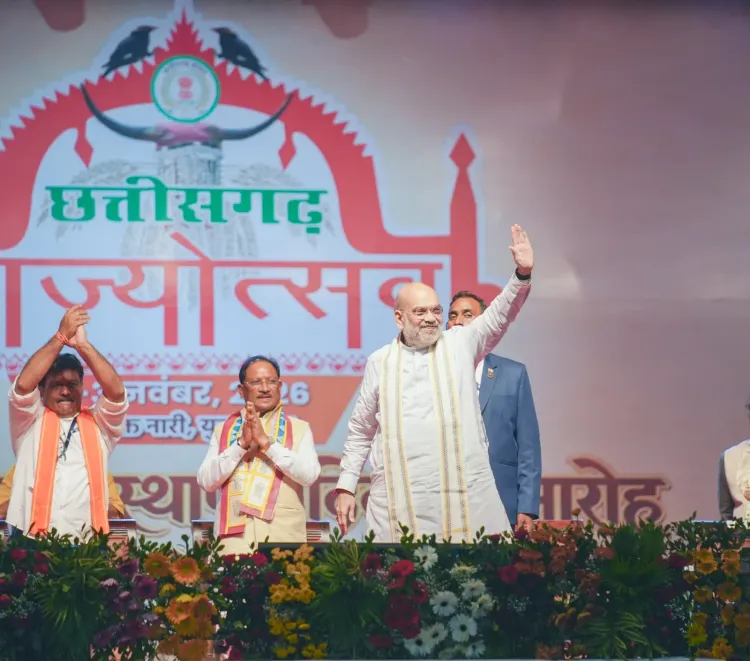
Union Home Minister Amit Shah attended Chhattisgarh's Rajyotsav in Nava Raipur on 3 November 2026, distributing the 33rd instalment of the Mahatari Vandan Yojana, honouring state achievers, and declaring Chhattisgarh free of Maoist violence under the Modi government.
Key Takeaways
Amit Shah addressed the Chhattisgarh Rajyotsav Samaroh at Nava Raipur on 3 November 2026 .
The 33rd instalment of Mahatari Vandan Yojana , a women's welfare scheme, was distributed at the public event.
Shah declared Chhattisgarh Naxal-free , crediting intensified anti-Naxal operations under Prime Minister Narendra Modi .
Shah accused past Congress governments of providing political shelter to Maoist groups in the state.
State achievers were felicitated with medals and awards at the ceremony.
Chhattisgarh was formed from Madhya Pradesh in November 2000 ; coordinated anti-Naxal operations intensified significantly after 2014 .
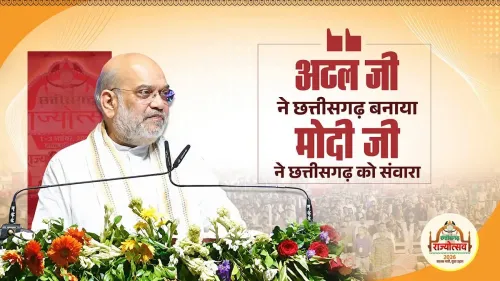
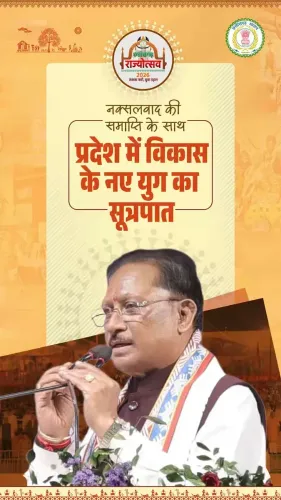
A state once synonymous with Maoist terror celebrated its founding anniversary on Tuesday, 3 November 2026, with Union Home Minister Amit Shah standing at the podium in Nava Raipur — distributing welfare cheques, honouring local luminaries, and declaring Chhattisgarh free of Naxal violence. The symbolism was deliberate and impossible to miss.
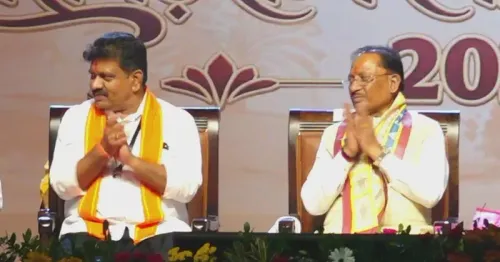
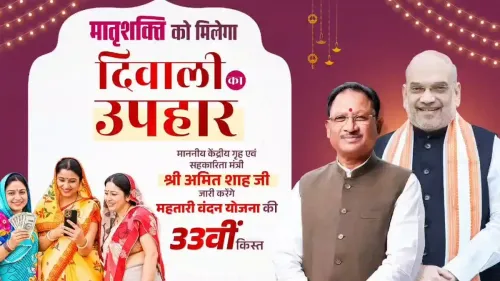
Shah addressed residents at the Chhattisgarh Rajyotsav Samaroh — the state's annual statehood celebration — and released the 33rd instalment of the Mahatari Vandan Yojana, a flagship welfare scheme that provides monthly financial assistance to women across the state. Dignitaries and achievers from across the state were also felicitated with medals and awards at the event.
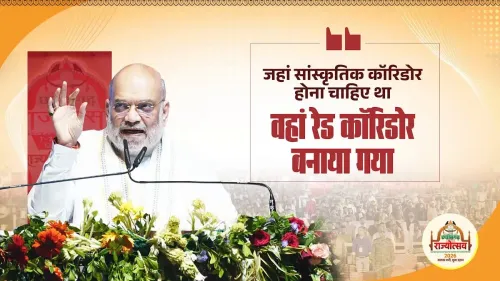
From 'Red Corridor' to Rajyotsav stage
Chhattisgarh was carved out of Madhya Pradesh in November 2000 to improve regional governance — but for much of its early existence, large swathes of the state were effectively controlled by Maoist insurgents. The 'Red Corridor' through its Bastar heartland became shorthand for ambushes, forced displacement, and stalled development.
Shah's remarks drew a sharp political contrast. 'Maowadiyon ne dashkon tak Chhattisgarh ko hinsa ke andhkar mein dhakele rakha' ('Maoists pushed Chhattisgarh into decades of violent darkness'), he said, adding that Congress governments had provided political shelter to these groups. That accusation — a recurring BJP talking point — draws on a contested history of counter-insurgency policy choices made during Congress tenures at both the state and central level.
The Modi government significantly intensified coordinated anti-Naxal operations after 2014, deploying central paramilitary forces in concert with state police and targeting the insurgency's logistical networks. Official data over the past decade has recorded a measurable decline in Naxal-linked incidents, and the government has periodically claimed territorial gains in previously insurgent-held districts.
Mahatari Vandan: welfare reaching the erstwhile war zones
The Mahatari Vandan Yojana is a Chhattisgarh state scheme designed to deliver direct monthly financial transfers to women beneficiaries. The distribution of its 33rd instalment at a public Rajyotsav event is part of a broader BJP communication strategy: linking hard-won security gains directly to the welfare dividends that flow once a region stabilises.
The optics carry weight. Releasing money for women in districts that, not long ago, were off-limits to government officials is the clearest possible argument that the security situation has genuinely changed on the ground.
Culture, heritage, and the new Chhattisgarh identity
Beyond security and welfare, Shah highlighted Chhattisgarh's push to project its art, heritage, and traditions to a national and global audience. The Rajyotsav platform served as a showcase for that cultural assertion — local performers, award recipients, and community leaders sharing a stage once unimaginable in a conflict-ridden state.
The awards ceremony, conferring medals on 'Pradesh ki vibhutiyaan' ('the state's distinguished personalities'), underlined the BJP's effort to build a positive civic identity around a state that spent its formative years defined almost entirely by insurgency.
If Chhattisgarh's Rajyotsav is now a celebration rather than a security concern, the next test is whether that calm holds — and whether welfare schemes like Mahatari Vandan translate into durable, measurable improvements in women's economic lives across the state's most remote corners.
Point of View
Welfare, and cultural pride bundled into a single event. By distributing Mahatari Vandan instalments on the statehood stage, the BJP makes the argument that internal-security gains are the prerequisite for welfare delivery — a framing that doubles as an attack on Congress-era governance. The 'Naxal-free' declaration, if it holds, would mark one of the most significant counter-insurgency milestones in post-independence India; if violence resurges, it becomes a liability. The broader pattern — staging welfare disbursements in former conflict zones — is now a settled BJP playbook across the Red Corridor states.
NationPress
3 Nov 2026
Frequently Asked Questions
What is Mahatari Vandan Yojana?
Mahatari Vandan Yojana is a Chhattisgarh state welfare scheme that provides monthly direct financial assistance to women beneficiaries across the state. Its 33rd instalment was distributed at the Rajyotsav event in Nava Raipur on 3 November 2026.
Is Chhattisgarh fully Naxal-free now?
The BJP government and Union Home Minister Amit Shah have declared Chhattisgarh Naxal-free, citing a significant decline in Maoist incidents following intensified central and state anti-Naxal operations since 2014. An independent, formal verification of 'full' eradication is an ongoing policy milestone.
When was Chhattisgarh formed as a state?
Chhattisgarh was carved out of Madhya Pradesh in November 2000 to improve regional governance in an area historically underserved and later heavily affected by Maoist insurgency.
What did Amit Shah say about Congress and Naxals?
Shah stated that while Maoists kept Chhattisgarh in violent darkness for decades, Congress governments provided political shelter to these groups. Congress disputes such characterisations of its counter-insurgency record.
What is Chhattisgarh Rajyotsav?
Chhattisgarh Rajyotsav is the annual statehood celebration marking the day Chhattisgarh was established as a separate state in November 2000. It features cultural performances, award ceremonies, and government announcements.