Nadda accuses Congress, SP of eroding Election Commission's credibility
Synopsis
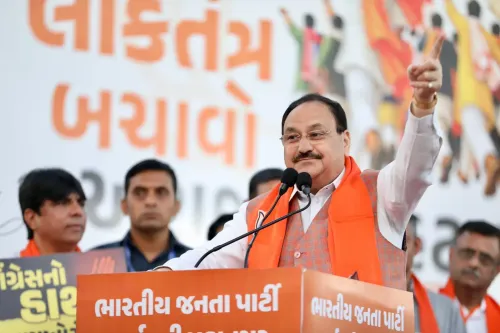
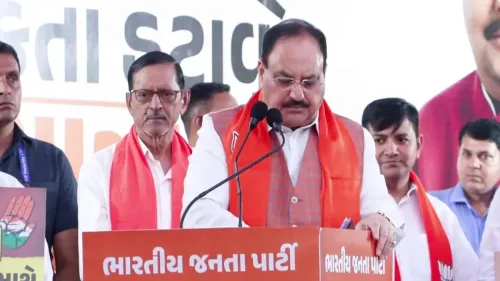
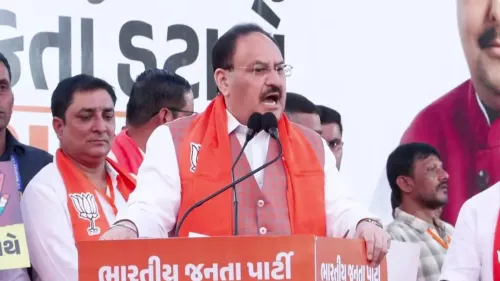
Union Health Minister and BJP president J. P. Nadda has accused the Congress, Samajwadi Party, and the INDIA alliance of deliberately eroding public trust in the Election Commission of India, invoking India's identity as the 'Mother of Democracy' in a sharp political broadside posted on 3 November 2026.
Key Takeaways
Nadda , BJP national president and Union Health Minister, accused Congress , Samajwadi Party , and the INDIA alliance of a 'despicable attempt' to destroy public faith in the Election Commission of India .
Nadda invoked India's self-described identity as the 'Mother of Democracy' and cited decades of credibility built by the Election Commission and the Supreme Court .
The post was made on Tuesday, 3 November 2026 under the hashtag #SaveDemocracyRemoveAnarchy .
The Election Commission of India was established in 1950 under Article 324 of the Constitution to superintend free and fair elections.
Opposition parties including Congress and Samajwadi Party have historically raised questions about EVMs and electoral procedures, which ruling-party figures have consistently countered.
No formal response from the Election Commission or named opposition parties has been confirmed at the time of publication.
India calls itself the Mata of Democracy — the Mother of Democracy — a claim built over decades on the credibility of institutions like the Election Commission of India and the Supreme Court. On Tuesday, 3 November 2026, Union Health Minister and BJP national president J. P. Nadda turned that founding claim into a political charge, accusing the Indian National Congress, the Samajwadi Party, and the broader INDIA alliance of a deliberate and 'despicable attempt' to shatter public trust in the Election Commission.
What Nadda said — and what it means
Posting under the hashtag #SaveDemocracyRemoveAnarchy, Nadda wrote: 'Bharat ko Mother of Democracy kaha jaata hai. Dashakon ki mehnat se Election Commission aur Supreme Court ne desh-duniya mein apni vishvasniyata banayi hai.' — 'India is called the Mother of Democracy. Decades of effort have built the credibility of the Election Commission and the Supreme Court at home and abroad.' He then pivoted sharply: Congress, the Samajwadi Party, and the INDIA alliance are engaged in a 'kutisit prayas' — a vile, malicious effort — to break the public's faith in the Election Commission.
The framing is deliberate. By anchoring his attack in the language of constitutional heritage, Nadda positions criticism of the Election Commission not merely as political disagreement but as an assault on India's democratic identity itself. The choice to name three specific entities — a national party, a regional heavyweight, and the coalition they anchor — signals a coordinated messaging effort, not a casual aside.
Decades of institutional credibility — and the battle over it
The Election Commission of India, established in 1950 under Article 324 of the Constitution, has built its global standing through successive elections conducted across a nation of continental scale. The Supreme Court of India has reinforced that standing through landmark rulings on electoral autonomy over the decades. Together, the two institutions form the backbone of India's claim to being a functioning, large-scale democracy.
Opposition parties — including Congress and the Samajwadi Party — have periodically contested aspects of that process, raising questions about Electronic Voting Machines and procedural fairness. BJP and ruling-party figures have, with equal consistency, defended institutional independence and framed such criticism as motivated delegitimisation. Nadda's post follows that pattern, but the hashtag and the explicit naming of the INDIA alliance suggest a sharper, more coordinated counter-offensive heading into what is likely a charged electoral period.
The 'Mother of Democracy' frame on the global stage
India's self-description as the 'Mother of Democracy' is not merely domestic rhetoric — it has been a recurring theme in international forums, used to assert India's democratic credentials on the world stage. When a senior BJP leader invokes it to accuse the opposition of undermining the Election Commission, the argument simultaneously plays at home and pitches outward: that attacks on the body conducting Indian elections are attacks on something far larger than a domestic political dispute.
Whether the opposition parties respond formally — or whether the Election Commission itself weighs in — will determine how far this exchange travels beyond a social media post. For now, Nadda has drawn a sharp line: defend the institution, or be seen as tearing democracy apart.
Point of View
The BJP converts opposition criticism of the Election Commission into an act of national betrayal rather than legitimate political contestation. The explicit naming of Congress, Samajwadi Party, and the INDIA alliance together — rather than a generic 'opposition' — suggests a targeted attempt to hold the coalition collectively accountable in the public imagination ahead of what is likely an electorally sensitive period. The hashtag #SaveDemocracyRemoveAnarchy goes further, pre-emptively defining the narrative stakes: it is not governance being debated, but democracy itself. This is a well-worn BJP playbook, but the intensity of the framing indicates the ruling party sees institutional legitimacy as a frontline battleground, not a background assumption.
NationPress
4 Nov 2026
Frequently Asked Questions
What did JP Nadda say about the Election Commission in November 2026?
On 3 November 2026, J. P. Nadda accused the Congress, Samajwadi Party, and the INDIA alliance of making a deliberate and 'despicable attempt' to break public trust in the Election Commission of India, invoking India's identity as the 'Mother of Democracy'.
Why is India called the Mother of Democracy?
India describes itself as the 'Mother of Democracy' to assert its long democratic heritage and the scale of its electoral processes, a phrase used in international forums to highlight the country's tradition of free elections and constitutional governance.
What is the Election Commission of India and when was it established?
The Election Commission of India is the constitutional body established in 1950 under Article 324 of the Constitution to superintend, direct, and control the conduct of elections to Parliament and state legislatures.
What is the INDIA alliance?
The INDIA alliance is an opposition coalition of parties, including the Indian National Congress and the Samajwadi Party, formed to contest elections against the BJP-led ruling government.
Has the opposition questioned the Election Commission before?
Yes, opposition parties including Congress and the Samajwadi Party have periodically raised questions about the electoral process, including concerns about Electronic Voting Machines and procedural fairness, prompting consistent rebuttals from ruling-party leaders.