White House Claims Trump Delivering on Income, Border, Crime

Synopsis
The White House posted a three-part governance scorecard on November 4, 2026, asserting all-time high personal incomes, a secure border, and historic-low violent crime under President Trump. Official data releases from the BEA and FBI will serve as the independent check on each claim.
Key Takeaways
The White House posted on November 4, 2026 asserting three milestone achievements under President Trump .
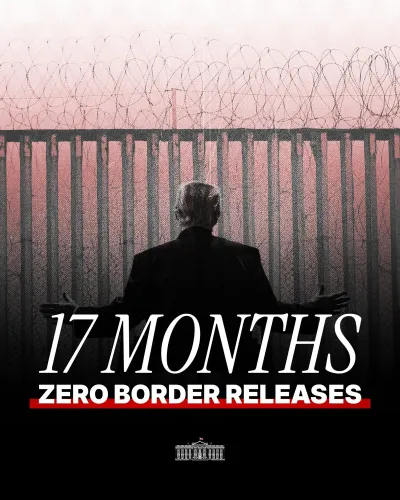
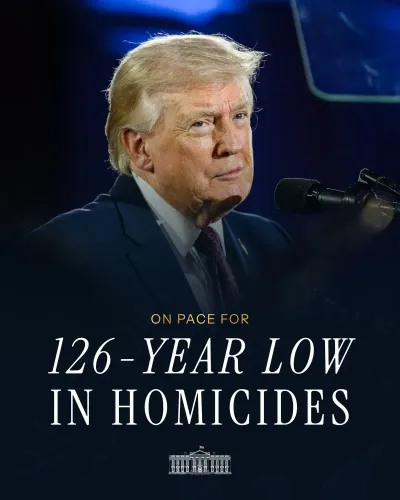
The three claims are: personal incomes at all-time highs, a secure border, and violent crime at historic lows.
The messaging mirrors a long-standing White House strategy of bundling economic, security, and public-safety indicators into a single political argument.
The Tax Cuts and Jobs Act of 2017 and a series of border-enforcement executive actions form the stated policy foundations for these outcomes.
Upcoming releases from the Bureau of Economic Analysis , CBP , and FBI will provide independent verification of the administration's claims.
The White House stepped into the new week with a sweeping scorecard, declaring that President Donald Trump has delivered on three of his signature campaign promises — personal incomes, border security, and violent crime — all in a single post on Wednesday, November 4, 2026.
Three metrics, one political argument
The official White House account posted a compact but loaded claim: 'Personal incomes at all time highs. Our border is secure. Violent crime is at historic lows.' The framing is a deliberate trifecta — economic wellbeing, national security, and public safety — each one a pillar of Trump's electoral pitch since his first run in 2016.
This kind of packaged messaging has been a consistent feature of White House communications across both Trump terms. Pairing income data with border and crime statistics allows the administration to signal delivery across voter blocs simultaneously — suburban households watching their paychecks, border-state communities, and law-and-order conservatives.
The policy foundations behind the claims
The income and tax strand traces back to the Tax Cuts and Jobs Act of 2017, which reduced individual income tax rates with the explicit goal of lifting after-tax personal earnings. The administration has long pointed to that legislation as a structural driver of household income growth.
On the border, a series of executive actions beginning in 2017 — expanded enforcement, funding requests for physical barriers, and revised asylum processing rules — formed the operational backbone of Trump's border agenda. The White House post signals those measures are now producing the outcome the administration promised.
The violent crime claim echoes data trends that showed falling crime rates in parts of the country during the first Trump term, though analysts have consistently noted that crime statistics are shaped by a range of socioeconomic factors beyond any single administration's policies.
What the independent data will show
The real test of these claims lies in imminent official releases. The Bureau of Economic Analysis personal income data for 2026, the Customs and Border Protection southwest border encounter statistics, and the FBI Uniform Crime Report for calendar year 2026 will either corroborate or complicate the White House's scorecard. Until those figures land, the claims remain the administration's own characterisation.
For now, the post is a clean signal of how the Trump White House intends to frame the political moment — not as a work in progress, but as a mission delivered.
Point of View
Border, and crime in one breath, the administration is reinforcing a unified 'America First delivered' narrative ahead of any upcoming electoral or legislative cycle. However, the credibility of such sweeping claims will hinge entirely on the independent data soon due from federal statistical agencies — making this post as much a hostage to forthcoming numbers as it is a victory lap.
NationPress
4 Nov 2026
Frequently Asked Questions
What did the White House claim about personal incomes in November 2026?
The White House stated that personal incomes in the United States are at all-time highs, attributing the achievement to President Trump's policies, particularly the tax and economic agenda of his administration.
Has violent crime in the US actually reached historic lows under Trump?
The White House has asserted that violent crime is at historic lows, but the claim is pending independent verification from the FBI Uniform Crime Report for calendar year 2026, which has not yet been publicly released.
What is the Tax Cuts and Jobs Act and how does it relate to personal incomes?
The Tax Cuts and Jobs Act of 2017 reduced individual income tax rates in the United States with the stated aim of increasing after-tax personal earnings. The Trump administration has consistently cited it as a structural driver of household income growth.
What data will confirm or challenge the White House's border and crime claims?
Upcoming official releases — including CBP southwest border encounter statistics and the FBI Uniform Crime Report for 2026 — will provide independent benchmarks against which the White House's claims can be assessed.
Why does the White House combine income, border, and crime data in one post?
Bundling economic, security, and public-safety metrics into a single message allows the administration to address multiple voter constituencies simultaneously — a communication strategy that has been a feature of White House messaging since Trump's first term.